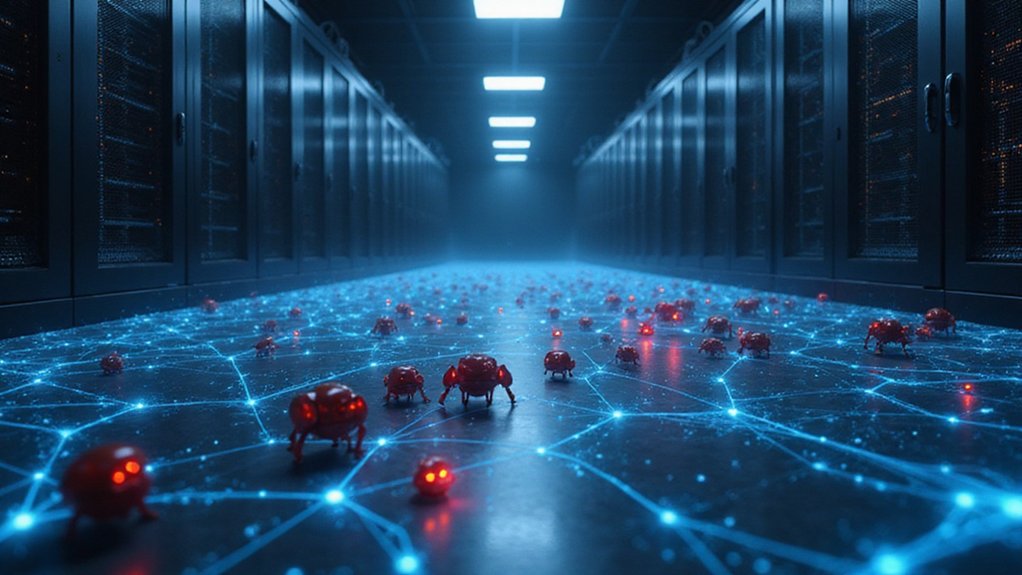

Artificial intelligence is changing the way critical infrastructure is protected — but it’s also creating new dangers. Power grids, water systems, and transportation networks are using AI to spot threats faster. Yet the same technology is helping attackers cause more harm.
On the defensive side, AI’s helping security teams detect unusual activity before it becomes a crisis. It can sort through massive amounts of threat data quickly. It also powers chatbots that handle customer service and speeds up software development. These are real gains for infrastructure operators.
AI doesn’t just detect threats faster — it gives defenders the time and clarity to actually respond.
But AI’s also opening new doors for cybercriminals. Security experts say AI’s expanding the attack surface for critical systems. Hackers are using AI to write malware, launch targeted phishing attacks, and even create deepfake fraud schemes. A recent survey found that 65% of security professionals don’t feel ready to handle AI-powered threats.
One growing concern is evolutionary trojans. These are malicious programs that change their shape to avoid being caught. Traditional antivirus tools that rely on known signatures can’t keep up. Trojans can quietly move through systems, steal data, and spy on operations for long periods. Nation-state hacker groups are already using AI tools to power these attacks.
Location spoofing is another rising threat. Some trojans can trick GPS-based systems into thinking they’re somewhere else. Airports, cities, and drone systems that rely on location data are especially vulnerable. Criminals, terrorists, and even hobbyists can exploit these weaknesses.
When AI attacks hit smart infrastructure, the damage doesn’t stay in one place. A cyberattack on an electric vehicle charging network, for example, could ripple out and hurt other connected systems. These chain reactions make AI-driven attacks especially dangerous.
To fight back, operators are turning to tools like machine learning endpoint detection and Zero Trust security models. These systems watch for strange behavior rather than just known threats. Evolutionary trojans further complicate defenses by using domain generation algorithms to constantly shift their command-and-control channels, making them harder to block or trace.
Government policy’s also stepping in, with executive orders now requiring AI risk assessments for critical systems. Ransomware remains the top threat, and defenders say they need to keep adapting fast. Industry experts warn that MSPs and infrastructure operators who fail to adopt AI-driven defenses risk falling into a serious competitive disadvantage in security. A key challenge facing many organizations is the ambiguity in ownership of AI risk within corporate structures, making it harder to mount a coordinated defense.
References
- https://cset.georgetown.edu/publication/securing-critical-infrastructure-in-the-age-of-ai/
- https://www.deepwatch.com/glossary/evolutionary-trojans/
- https://www.sentra.io/blog/ai-in-data-security-key-risks-and-how-to-address-them
- https://securityanddefence.pl/Trojan-spoofing-A-threat-to-critical-infrastructure
- https://academic.oup.com/iti/article/doi/10.1093/iti/liaf007/8122270
- https://www.cyber.gc.ca/en/guidance/national-cyber-threat-assessment-2025-2026
- https://homeland.house.gov/wp-content/uploads/2026/03/Subcommittee-on-Cybersecurity-and-Infrastructure-Protection-Hearing-Testimony.pdf