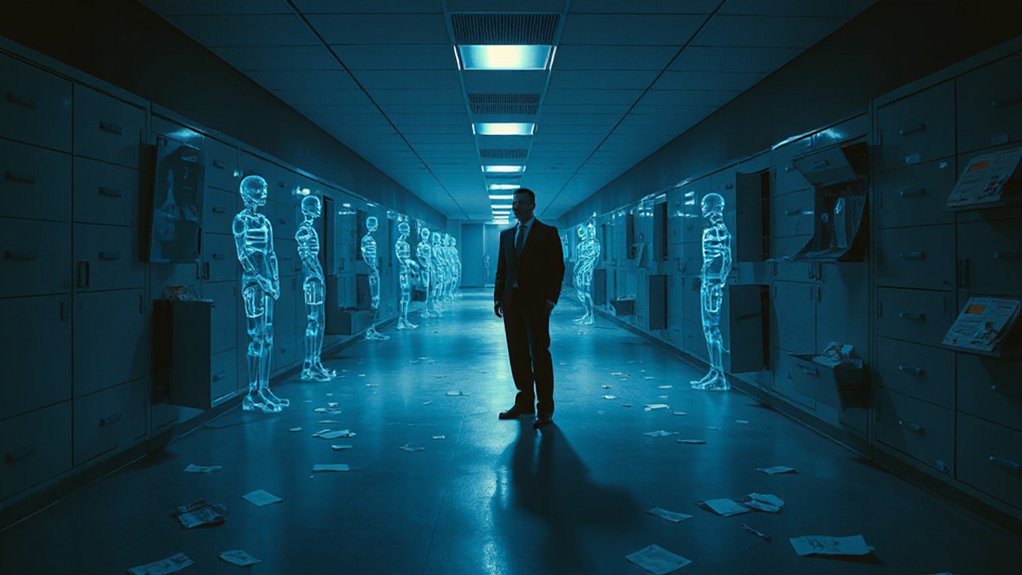

Artificial intelligence is changing industries faster than many expected. From music to medicine, AI’s reach is growing. And for many workers, the question isn’t just how AI will change their field. It’s whether their job will survive at all.
In music, AI’s already making waves. A German track called “Verknallt in einen Talahon” became one of the first fully AI-generated songs to chart in 2024. Then in early 2026, a Swedish folk-pop track by a virtual artist named Jacub became a major hit before listeners learned it was AI-made. Voice cloning technology has reached near-indistinguishable levels since 2023. AI’s gone from polishing human vocals to building entire artists from scratch.
Healthcare’s also seeing big changes. AI can now analyze terabytes of medical data in real time. It helps identify diseases, build treatment plans, and even predict illness before it starts. Experts say AI’s visual perception and decision-making skills have improved problem-solving in medical settings. Notably, AI outperforms doctors in detecting breast cancer from mammograms, enabling earlier and more accurate diagnoses than traditional methods.
Industrial workplaces are using AI too. Factories and plants rely on AI to monitor equipment, spot hazards, and predict when machines might fail. This cuts downtime and lowers costs. Workers also get automated safety alerts to help avoid accidents.
But there’s a harder side to this story. AI’s directly threatening jobs across many fields. Some traditional professions may disappear entirely. New jobs are emerging, but they often need skills many workers don’t have yet. That gap is widening. Unemployment could rise as AI fills roles once held by people.
Despite all this disruption, AI’s economic impact may be smaller than expected right now. Goldman Sachs economist Jan Hatzius noted that AI’s contribution to economic growth in 2025 was “pretty close to zero.” Most goods used to build AI infrastructure are imported, so domestic benefits are limited. Some experts also worry that too much computing power is being built and won’t get used. Communities near planned facilities are also pushing back, as growing community resistance against data center expansion signals a broader public concern about AI’s environmental and energy costs.
Still, AI’s scientific achievements are real. AlphaFold solved a major biology puzzle by predicting protein structures. Its creator, Demis Hassabis, won the 2024 Nobel Prize in Chemistry. Platforms like Suno and Udio have made music creation as simple as typing a text prompt, raising urgent questions about ownership and control in creative industries. AI’s story is far from over.
References
- https://www.chosun.com/english/industry-en/2026/04/30/UG54CKEHEBDGJDOHQVL3YVZ4AI/
- https://prospect.org/2026/01/05/2026-trump-midterms-economy-data-center-hollywood-warner-bros/
- https://vman-sea.com/arts-culture/has-ai-already-invaded-the-music-airwaves/
- https://en.mugtama.com/articles/artificial_intelligence_evolution_or_intellectual_invasion_
- https://mtsoln.com/blog/ai-news-727/the-tech-that-will-invade-our-lives-in-2026-5110