
While many companies rushed to replace workers with artificial intelligence, a surprising trend is now emerging across businesses nationwide. Recent data shows that 55% of companies that implemented AI-driven layoffs now regret their decisions. This buyer’s remorse comes after many organizations discovered the true impact of removing human talent.
The numbers tell a concerning story. About 39% of companies have laid off staff due to automation or AI adoption. Another 34% of leaders report employees voluntarily left positions following AI implementations. These departures have created unexpected problems for businesses that thought AI would simply fill the gaps.
Many companies acted without proper planning. A quarter of leaders still don’t understand which roles face the most risk from AI. This lack of clarity led to hasty decisions with serious consequences. Organizations lost valuable human expertise they didn’t realize they needed until it was gone.
Hasty AI adoption decisions left companies mourning the loss of irreplaceable human expertise they didn’t value until too late.
The aftermath has been challenging. Companies report widespread confusion, drops in productivity, and disruptions in workplace morale. An alarming 57% of employees admitted to making errors linked to AI-related mistakes. Additionally, 47% of employers worry about uncontrolled AI use by their remaining staff.
Employee concerns are growing too. About 35% of workers now fear potential layoffs, up from 30% in February. This anxiety affects workplace performance and satisfaction. Many feel uncertain about their future as AI becomes more common. Predictions suggest approximately 14% of workers will need to switch careers by 2030 as AI continues to transform industries.
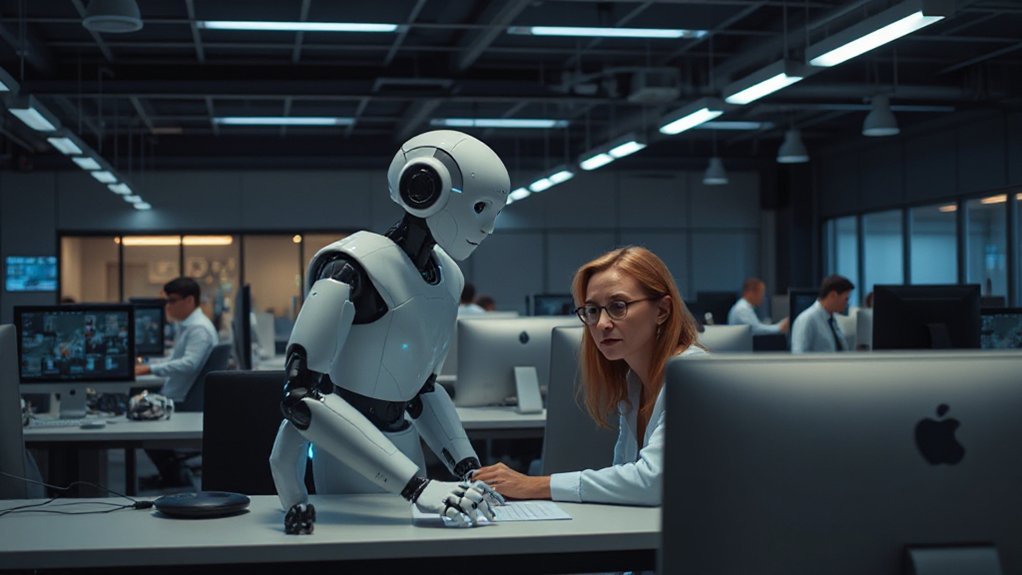
Companies are learning important lessons from these missteps. There’s a growing recognition that humans and AI must work together rather than one replacing the other. Klarna’s experience demonstrates this reality as they discovered their automation-first approach failed to deliver the desired customer experience outcomes.
Businesses are shifting from replacement strategies to augmentation approaches. They’re investing more in training programs that help employees work alongside AI. Companies are increasingly focusing on strategic reskilling initiatives to prepare their workforce for effective collaboration with AI technologies.
The future direction is becoming clearer. Rather than cutting staff, forward-thinking organizations now focus on reskilling workers and creating thoughtful AI integration plans.
They’re developing better frameworks for determining where AI truly adds value while preserving essential human contributions.
References
- https://www.techrepublic.com/article/news-leaders-regret-ai-driven-layoffs/
- https://www.thehrdigest.com/55-of-companies-regret-ai-layoffs-hr-leaders-need-to-take-note/
- https://opentools.ai/news/the-ai-layoff-regret-why-over-half-of-companies-are-reconsidering-their-choices
- https://www.hrdive.com/news/ai-may-fuel-mistakes-at-work/746879/
- https://www.techradar.com/pro/over-half-of-uk-businesses-who-replaced-workers-with-ai-regret-their-decision