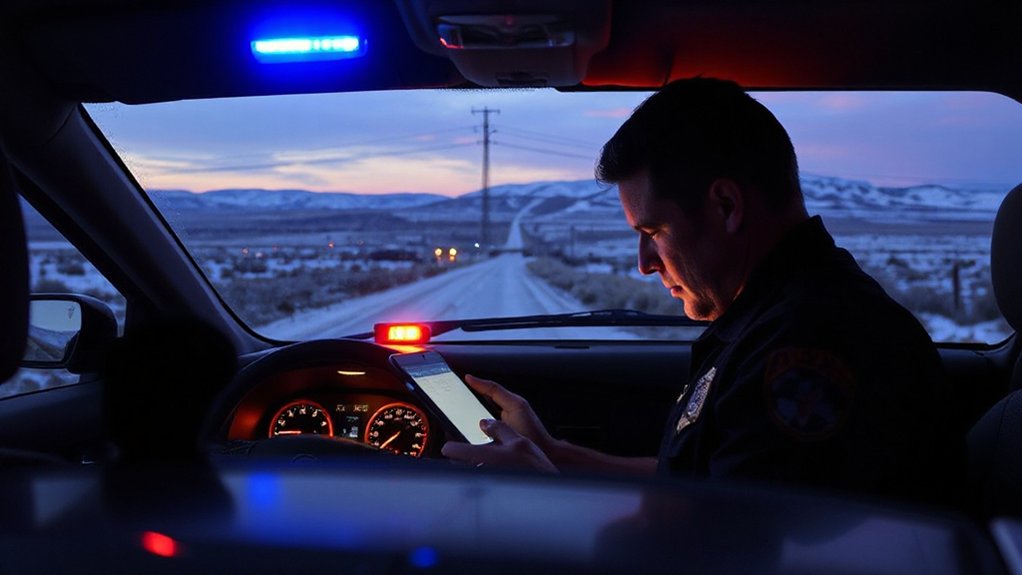

Several police departments across Wyoming are testing artificial intelligence tools that can draft police reports from body-camera footage. Casper, Sheridan, and Evanston are among the departments trying out the technology. The Casper Police Department approved a 60-day trial of a system called TRULEO to review body-camera video. The Wyoming Department of Public Safety has also planned to use AI for report writing.
The goal is simple. Officials say officers spend too many hours on paperwork. AI could cut that time and keep officers on patrol. Some tools work by listening to body-camera audio and using that information to create a first draft of a report. Axon’s Draft One, for example, generates a preliminary report from audio and related data. The draft may include blank spots or prompts where officers need to fill in missing details. Officers must review and edit the draft before it becomes final. Other AI tools focus on sorting and reviewing body-camera footage rather than writing full reports.
AI drafts the report from body-camera audio, but officers must review and fill in the gaps before it’s final.
Supporters say the technology can also translate multiple languages during encounters in real time. Departments using similar tools in other states have reported big drops in report-writing time. The increased efficiency is expected to give officers more time for patrol and investigation, allowing for increased focus on other cases.
But Wyoming doesn’t yet have laws written specifically for AI-generated police reports. No state law requires departments to save the original AI draft after an officer edits it. No law requires the final report to say AI helped write it. Lawmakers have started looking at AI in government, but they haven’t created rules tailored to police reports. One legislative amendment reportedly exempted law enforcement uses tied to investigating or prosecuting crimes.
That gap worries some legal observers. A police report can be used to search a home, arrest someone, or prosecute a criminal case. If AI makes a mistake or adds incorrect facts, that error could end up in court. Critics say both prosecutors and defense attorneys should be able to see the original AI output alongside the final report. Former Attorney General Gay Woodhouse has raised concerns about AI’s tendency to generate plausible but inaccurate information, which could have serious consequences when such errors influence decisions about evidence in criminal cases.
Officers are still expected to testify about what they personally saw, even when AI helped write the report. For now, Wyoming’s AI experiment is moving faster than the rules meant to govern it.
References
- https://cowboystatedaily.com/2026/08/23/wyoming-police-departments-test-using-ai-to-generate-reports-look-at-evidence/
- https://www.wgvunews.org/news/2025-06-05/wyoming-department-of-public-safety-to-use-ai-to-write-reports
- https://x.com/daily_cowboy/status/2091595196140331504
- https://cowboystatedaily.com/2026/08/23/cowboy-state-daily-video-newscast-monday-august-24-2026/
- https://cowboystatedaily.com/category/crime-justice/
- https://govlaunch.com/projects/casper-wy-police-to-test-ai-software-for-reviewing-bodycam-footage-and-officer-performance
- https://www.govtech.com/artificial-intelligence/casper-wyo-will-use-ai-to-analyze-police-bodycam-footage
- https://boulderreportinglab.org/2024/09/24/boulder-police-department-is-using-ai-to-write-its-crime-reports-while-some-urge-caution/
- https://ww2.wyomingmi.gov/WDPS/DORS/Start-report.html
- https://www.dailywire.com/news/nationwide-ai-mass-surveillance-system-takes-root-in-another-state