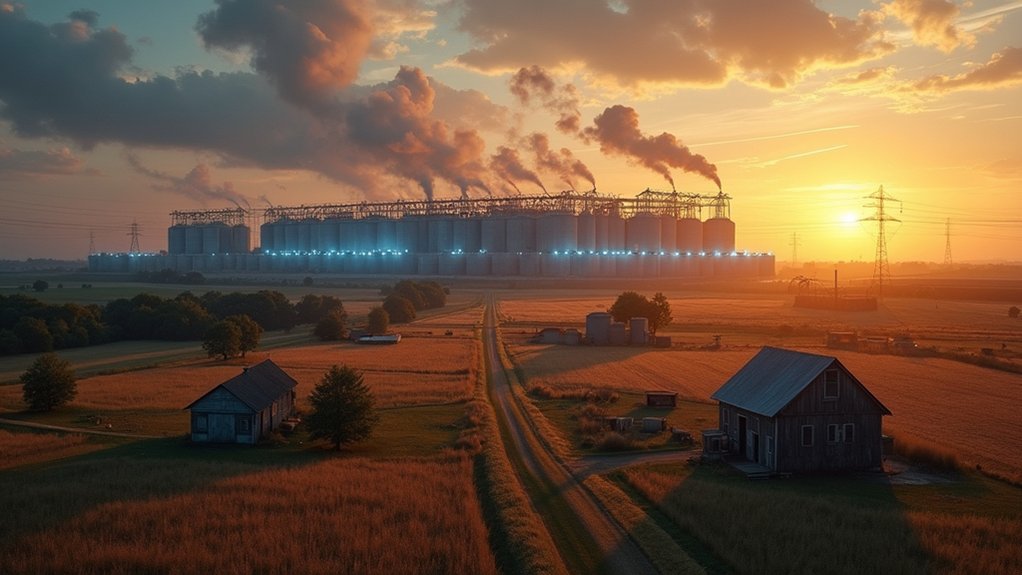

Rural communities across America are fighting against tech giants building AI data centers in their backyards. These facilities strain local electrical grids, consume millions of gallons of water, and rarely deliver promised economic benefits. Grassroots activists have successfully blocked projects in states like Missouri and Virginia through organized protests. Communities demand environmental impact studies and transparency in corporate dealings. This modern David versus Goliath struggle highlights the growing tension between technological progress and local interests.
As tech giants race to build massive AI data centers across rural America, small communities are finding themselves caught in a high-stakes battle for resources. These industrial-scale facilities are straining local infrastructure designed for much smaller populations, not corporate giants.
In places like Ireland, data centers now consume up to 21% of the entire country’s electricity. This massive power drain can overtax rural electrical grids and even lead to outages. Water supplies face similar pressure, with data centers using millions of gallons for cooling systems. This often leaves less water for farms and homes, especially in drought-prone areas.
Despite promises of economic benefits, many communities don’t see the payoff. While construction creates temporary jobs, completed data centers typically employ few local workers. Most profits flow back to parent companies rather than staying in town. Tax incentives given to attract these facilities can actually reduce local government revenue. Opposition to these facilities continues to grow in rural areas across Indiana, Virginia, Missouri, and Illinois.
Environmental concerns are mounting too. Data centers create large carbon footprints unless they use renewable energy. Similar to the criticism of biomass efficiency, these facilities often fail to deliver on sustainable energy promises. Their water usage has earned them the label “water hogs” in many regions. Expanded facilities can disrupt local ecosystems and take over farmland. The emergence of generative AI technologies in late 2022 has further accelerated the demand for these resource-intensive data centers.
Communities aren’t taking this lying down. Grassroots campaigns like Peaceful Peculiar in Missouri have successfully blocked data center projects. Activists share tactics across regions, connecting with international advocacy networks to strengthen their efforts. Public protests have erupted in multiple countries, sometimes leading to government officials resigning over controversial data center plans.
In response, companies face growing pressure for transparency. Many communities now demand environmental impact studies before approval. Secret deals between tech firms and local governments draw particularly fierce criticism.
The conflict resembles a modern David versus Goliath story, with small towns challenging some of the world’s most powerful companies. As AI continues to grow, these rural communities are fighting to guarantee development doesn’t come at the expense of their resources, environment, and way of life.
References
- https://futurism.com/small-towns-ai-data-centers
- https://www.datacenterfrontier.com/machine-learning/article/55262504/turning-of-the-tides-an-analysis-of-recent-us-presidential-support-for-data-centers-and-digital-infrastructure
- https://www.amundsendavislaw.com/alert-rural-illinois-data-center-boom-landowners-are-you-ready
- https://news.mongabay.com/2023/11/the-cloud-vs-drought-water-hog-data-centers-threaten-latin-america-critics-say/
- https://www.raconteur.net/technology/data-centre-protests-on-the-rise