
The US-China Relations Committee head is calling for cooperation on AI despite growing tensions between the nations. Both countries lead in AI development but face challenges from export controls and security concerns. Recent agreements like the UN resolution and Bletchley Declaration show potential for teamwork on responsible AI development. The nations account for over 90% of global AI investments, making their collaboration essential for global progress. The future of international AI governance hangs in the balance.
As tensions between the United States and China continue to rise, their relationship in artificial intelligence development remains complex and contradictory. The head of the US-China Relations Committee recently called for cooperation in AI development despite growing rivalry between the world’s two largest economies.
Both nations have made significant strides in AI technology. China’s DeepSeek recently launched an AI model that rivals OpenAI’s latest versions but costs much less to use. Meanwhile, the US is focusing on strict export controls to slow China’s progress while heavily investing in its own AI sector.
Despite competitive tensions, there are signs of potential teamwork. Both countries supported UN resolutions on AI cooperation in 2024 and signed the Bletchley Declaration at the UK Safety Summit in 2023. President Biden and President Xi discussed AI risks at the Woodside Summit in November 2023, demonstrating high-level engagement on the issue. These agreements show a shared interest in responsible AI development.
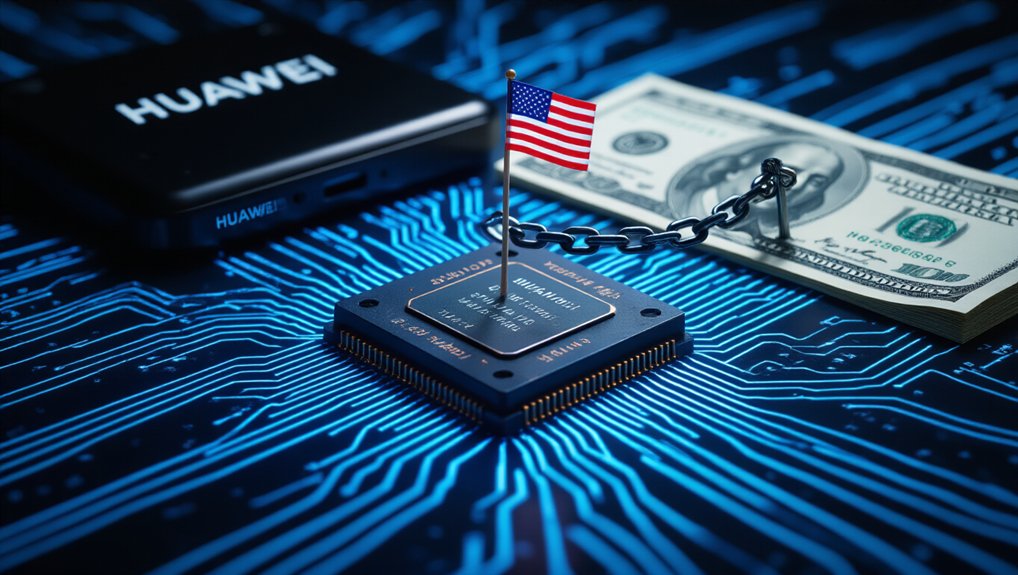
However, serious challenges remain. The US has restricted China’s access to advanced AI chips, citing national security concerns. China responded by stockpiling GPUs and developing alternative supply chains. Senator Hawley recently introduced legislation to further separate American AI from Chinese influence. The two nations account for over 90% of global AI investments, highlighting their dominance in the field.
Scientific collaboration, once a bright spot in US-China relations, is now at risk. Studies show that 45% of China’s high-impact research involves US scientists, while 30% of US international research involves Chinese researchers. The delay in renewing a key science and technology treaty threatens this productive partnership.
China has disclosed over 40 AI initiatives since 2017 and is embracing open-source AI development. The US has created a three-tiered framework for AI access and is building global networks for AI safety practices.
Experts warn that continued decoupling could have long-term negative consequences for both nations. They suggest finding areas for cooperation, like risk management protocols, while competing in other areas. Military AI applications remain a definite deal-breaker in negotiations, highlighting the limits of potential teamwork in this critical technology field. Bridging the gap in AI access for developing countries could serve as a meaningful area for US-China collaboration that benefits the global community.