
How safe are your private conversations with AI chatbots? Research reveals troubling security gaps that put user privacy at risk. Despite promises of encryption, experts have found critical flaws that allow attackers to intercept private messages.
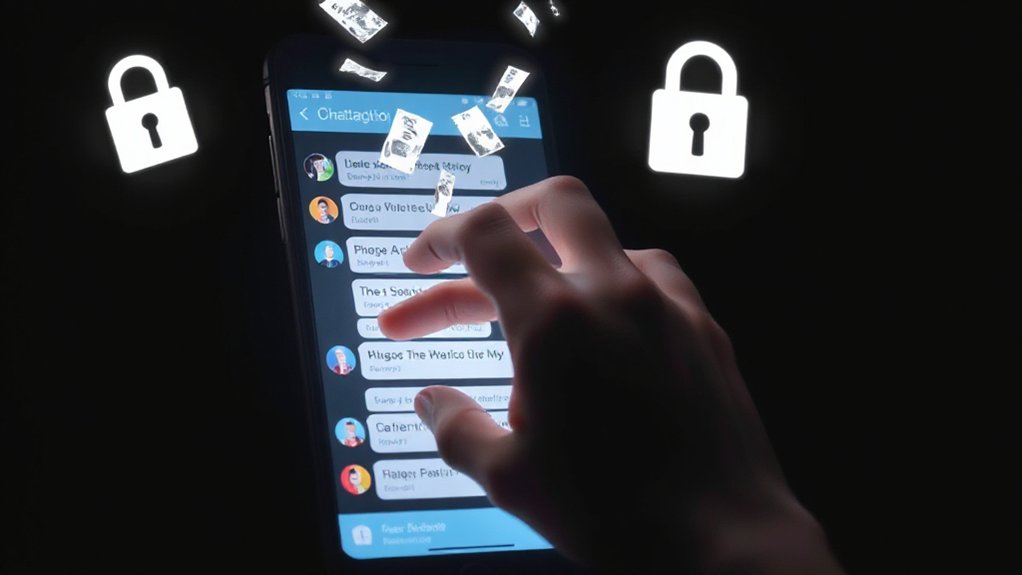
The most concerning vulnerability is called the “Whisper Leak” attack. It doesn’t break encryption directly. Instead, it analyzes metadata like packet sizes and timing to figure out what users are saying. Attackers can rebuild conversations by studying these patterns without ever decrypting the actual messages. The non-deterministic nature of AI models makes these vulnerabilities even harder to predict and mitigate consistently.
This means government agencies or internet service providers could monitor sensitive topics like political opinions or financial information, even when users think their conversations are secure. The attack works by analyzing token sequences and message timing to reconstruct plausible sentences.
Another serious threat comes from prompt injection attacks. Hackers can hide malicious instructions in user inputs, tricking AI assistants into executing unauthorized commands. These hidden prompts can be embedded in documents or disguised in chat inputs. Military and cybersecurity experts warn that both state and non-state actors are already exploiting this weakness.
Insecure APIs create additional risks. Studies show 57% of AI-powered APIs are externally accessible, and 89% use weak authentication methods. This poor security makes chatbots vulnerable to hijacking and data breaches. When multiple clients share LLM infrastructures, one breach can affect everyone on the platform. These security issues are compounded by the fact that AI tools collect vast amounts of data without explicit user consent or knowledge.
Misconfiguration has already led to major data exposures. In one incident, a recruitment chatbot leaked personal information of 64 million job applicants, including names, email addresses, phone numbers, and behavioral assessments.
While some protection is possible through VPNs, the responsibility primarily falls on chatbot providers to implement necessary security patches. Microsoft and OpenAI have assessed risks and deployed critical fixes, but many LLM providers haven’t fixed these flaws yet. As AI chatbots become more integrated into daily life, these vulnerabilities highlight the urgent need for stronger security standards in the industry.
References
- https://www.egnyte.com/blog/post/ai-chatbot-security-understanding-key-risks-and-testing-best-practices/
- https://www.livescience.com/technology/artificial-intelligence/popular-ai-chatbots-have-an-alarming-encryption-flaw-meaning-hackers-may-have-easily-intercepted-messages
- https://www.defensenews.com/land/2025/11/10/military-experts-warn-security-hole-in-most-ai-chatbots-can-sow-chaos/
- https://www.blackfog.com/understanding-the-biggest-ai-security-vulnerabilities-of-2025/
- https://www.crescendo.ai/blog/conversational-ai-security-issues
- https://www.kaspersky.com/blog/new-llm-attack-vectors-2025/54323/
- https://www.halock.com/misconfiguration-of-an-ai-chatbot-exposes-data-of-64-million-applicants/
- https://news.stanford.edu/stories/2025/10/ai-chatbot-privacy-concerns-risks-research
- https://redbotsecurity.com/prompt-injection-attacks-ai-security-2025/