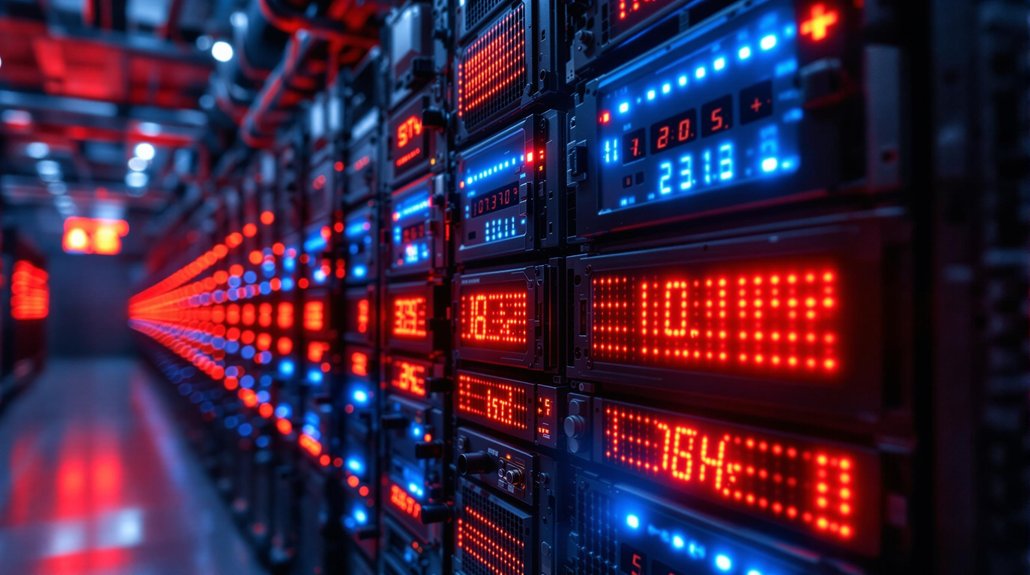

The AI boom is driving a power crisis as data centers consume electricity at unprecedented rates. Global data center energy use currently accounts for 1% of electricity consumption but is expected to double by 2025. Training a single AI model can use as much electricity as hundreds of homes annually. Major tech companies are building more hyperscale facilities and exploring cooling innovations to address these challenges. The environmental implications extend far beyond the tech industry.
As advanced computing technologies reshape the global landscape, data centers are facing unprecedented growth in power demands due to the AI boom. These facilities that house computer systems are now consuming electricity at rates that worry energy experts. The massive computational power needed to run AI models is creating a surge in energy use that wasn’t expected so soon.
Training just one AI model can use as much electricity as hundreds of homes do in a year. The specialized chips that run these AI programs, like GPUs, use much more power than traditional computer processors. This has led to a projected 160% increase in data center power needs in the coming years. Data centers collectively consume more electricity than many individual countries worldwide.
AI training devours electricity at alarming rates, with powerful GPUs driving massive spikes in data center energy consumption.
Data centers already use 1% of the world’s electricity, but that’s expected to double to 2% by 2025. In the United States, these facilities consumed over 4% of the country’s total electricity in 2022. Experts predict this could reach 9% by 2030. China’s AI data centers used 140 billion kilowatt-hours in 2024, making up 1.4% of the nation’s power use.
The environmental impact of this energy surge is significant. If powered by fossil fuels, AI computing creates substantial greenhouse gas emissions. This growth challenges global efforts to reduce carbon emissions, especially in countries that still rely heavily on coal for electricity. Major technological companies are investing heavily in carbon-free energy sources to address mounting sustainability concerns.
Cooling these powerful chips is another major energy drain. Cooling systems account for nearly 40% of a data center’s energy use. Companies are exploring new cooling technologies like liquid cooling to handle the intense heat from AI processors. Direct-to-chip liquid cooling systems can reduce energy consumption by up to 40% while enabling heat recovery.
To meet AI demands, the tech industry is building more hyperscale data centers with specialized power systems. These facilities need custom configurations to support high-density AI hardware. As AI continues to advance, the pressure on electrical grids will likely increase, requiring new solutions to balance computing needs with energy constraints.