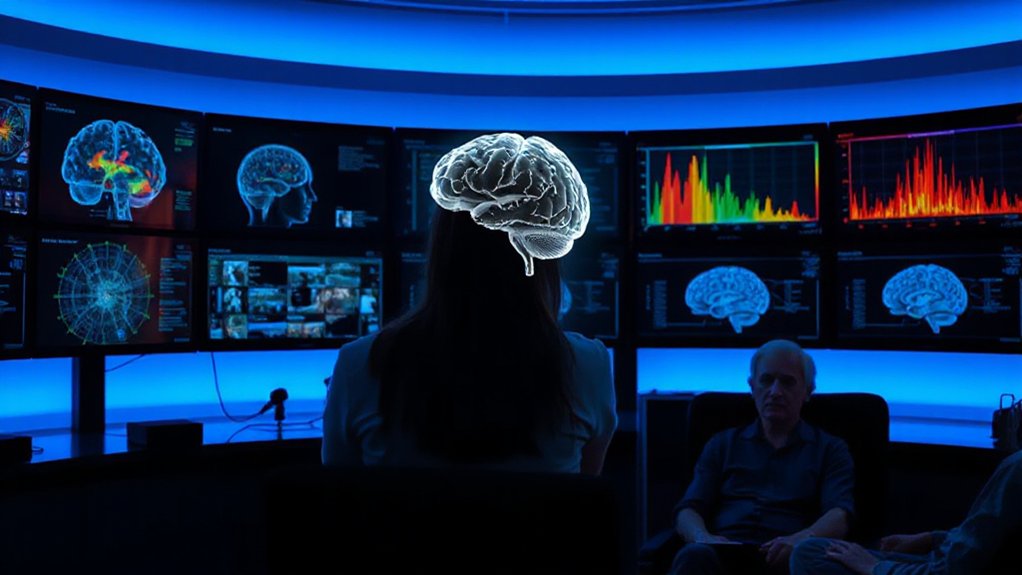

While traditional psychology has relied heavily on human expertise alone, artificial intelligence (AI) is now transforming how mental health professionals diagnose, treat, and research psychological conditions. Deep learning systems can spot patterns in patient data that humans might miss. These AI tools help identify people at high risk for mental health problems by examining medical records and even analyzing brain scans.
AI doesn’t just help with diagnosis. It’s also changing how therapists provide treatment. Smart programs can create personalized therapy plans based on a patient’s specific needs. Some AI systems monitor a person’s daily activities through sensors or social media to detect changes that might signal worsening mental health. This early warning system helps doctors step in before a crisis occurs. AI-powered conversational agents like Woebot have demonstrated effectiveness in delivering cognitive behavioral therapy to patients.
In psychology education, AI serves as both teacher and tool. It creates training content, supports clinical decision-making, and even helps assess a student’s empathy skills. AI can provide feedback on how well a therapist communicates with patients, improving the quality of care. Programs like Lyssn and mpathic analyze therapy conversations to measure how well therapists connect with their clients. The AI healthcare market’s annual growth rate of 36.1% reflects the increasing adoption of these technologies in mental health settings.
Despite these advances, challenges remain. AI systems can contain biases based on the data they were trained on. There are also serious concerns about patient privacy and data security. The AI market in mental healthcare is projected to grow from 5 billion dollars to 45 billion dollars by 2026, showing tremendous potential despite current challenges. Experts stress that AI should support human therapists, not replace them. The human connection remains essential to effective therapy.
Research shows AI-enhanced therapy produces good short-term results, but more studies are needed to understand long-term benefits. Scientists are also using AI to analyze large datasets and generate new theories about human behavior. This helps psychology advance as a science.
As this technology continues to develop, finding the right balance between machine analysis and human understanding will be vital for psychology’s future. AI offers powerful tools, but understanding the human mind still requires a human touch.
References
- https://pmc.ncbi.nlm.nih.gov/articles/PMC8968136/
- https://pmc.ncbi.nlm.nih.gov/articles/PMC8349367/
- https://mededu.jmir.org/2025/1/e75238
- https://www.apa.org/monitor/2025/01/trends-harnessing-power-of-artificial-intelligence
- https://cpa.ca/docs/File/CPD/Artificial Intelligence and Psychology EN 2024.pdf
- https://hai.stanford.edu/news/johannes-eichstaedt-exploring-intersection-psychology-and-ai
- https://positivepsychology.com/artificial-intelligence-in-psychology/
- https://www.nature.com/articles/s44159-025-00416-2
- https://www.apaservices.org/practice/news/artificial-intelligence-psychologists-work