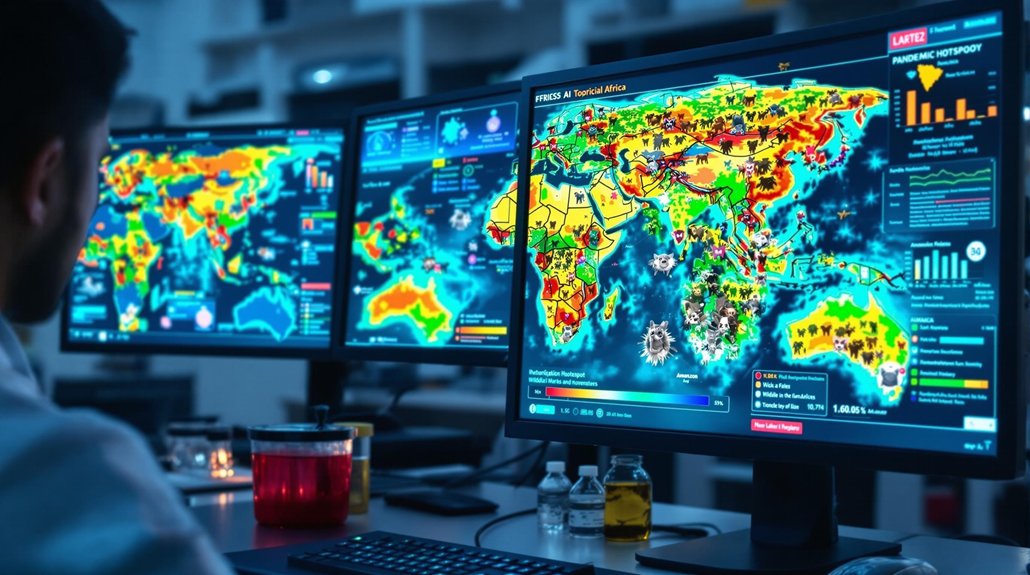

AI systems are now helping scientists predict which wild animals might spark future pandemics. Researchers have developed machine learning models that analyze animal traits and virus genetics to identify potential disease carriers. These tools successfully pinpointed likely mpox hosts, including rodents, cats, and canids, while highlighting hotspot regions in Southeast Asia, Africa, and the Amazon. Though not perfect, these AI predictions are being integrated with CDC and WHO strategies to enhance global pandemic preparedness efforts.
While scientists have long worried about diseases jumping from animals to humans, new artificial intelligence tools are now helping identify which wild animals might trigger the next pandemic. Researchers have developed machine learning models that analyze host traits and virus genetics to predict which animals could carry dangerous viruses like mpox.
Washington State University scientists recently published findings in Communications Biology that show how AI can spot potential disease reservoirs more accurately than previous methods. The system correctly identified rodents, cats, canids, skunks, mustelids, and raccoons as likely mpox hosts, while properly excluding rats.
The AI model also pinpointed Southeast Asia, equatorial Africa, and the Amazon as hotspot regions where new outbreaks might occur. These areas overlap with regions that have low smallpox vaccination rates, raising concerns about vulnerability to related viruses.
“These tools help us target wildlife surveillance more efficiently,” explains one researcher. Instead of testing thousands of animal species randomly, scientists can focus on the most likely carriers. The model can be fine-tuned with viruses beyond orthopoxviruses to address various infectious diseases. This targeted approach could help prevent future pandemics before they start.
AI-powered wildlife surveillance brings precision to pandemic prevention efforts by identifying likely disease carriers before outbreaks occur.
However, AI prediction isn’t perfect. The technology sometimes makes mistakes, like incorrectly suggesting pigs as COVID-19 hosts. Interpreting results requires biological expertise, and limited data for some species can reduce accuracy.
Major health organizations are already incorporating AI into their strategies. The CDC’s Insight Net and WHO’s Hub for Pandemic and Epidemic Intelligence use machine learning alongside traditional research methods to inform public health decisions.
Beyond predicting animal hosts, AI analyzes air travel patterns to assess how diseases might spread globally. With approximately 75% of emerging viruses originating from animal populations, these predictive tools are increasingly crucial for public health preparedness. It also monitors social media for early signs of outbreaks and helps officials allocate resources efficiently during health emergencies. Similar to medical imaging analysis in healthcare settings, these AI systems can identify patterns that humans might miss.
Future improvements will include more diverse datasets and better data processing techniques. Experts hope international collaboration will strengthen these systems while addressing privacy concerns, ultimately creating a more robust early warning system for potential pandemics.