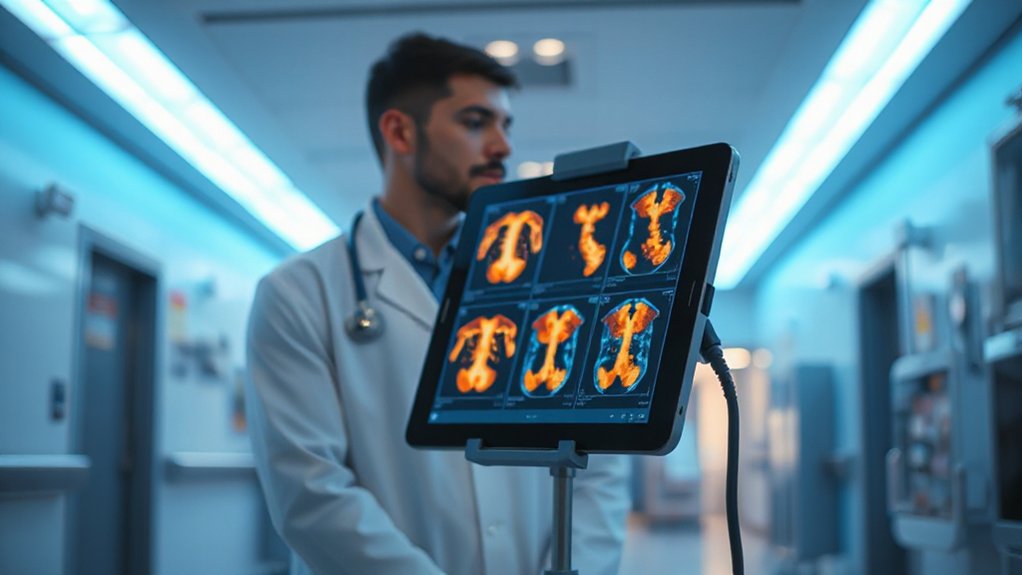

Mount Sinai’s new center combines AI technology with pediatric medicine to transform children’s healthcare. Machine learning algorithms detect conditions like sepsis earlier, while AI improves visibility of brain tumors in medical images. The technology creates personalized treatment plans for conditions such as Crohn’s disease and predicts asthma attacks. Despite data privacy challenges, Mount Sinai is developing ethical guidelines for responsible AI use. Their innovations promise better outcomes for young patients.
While doctors have always worked hard to keep children healthy, artificial intelligence is now giving them powerful new tools to do an even better job. Mount Sinai’s new center combines AI technology with pediatric medicine to improve how doctors diagnose and treat children’s illnesses.
The center uses machine learning algorithms that can spot dangerous conditions like sepsis earlier than traditional methods. These AI tools also help doctors see brain tumors and rare disorders more clearly in medical images. They can even identify genetic epilepsies sooner, giving patients a better chance at effective treatment.
AI doesn’t just help find problems—it creates personalized solutions too. The technology can design custom treatment plans for children with Crohn’s disease and predict when a child with asthma might have an attack. It also helps doctors choose the right cancer treatments and medication doses for each unique patient. AI-powered virtual health assistants provide families with personalized health information and guidance for managing their children’s chronic conditions.
Hospital efficiency improves with AI as well. The technology handles routine paperwork so doctors can spend more time with patients. AI simulations create realistic training scenarios for pediatric healthcare staff to develop specialized skills without risk to actual patients. Virtual assistants answer families’ medical questions, while predictive models help hospitals prepare for busy times in the emergency department. The data privacy concerns remain a critical challenge as these systems require access to sensitive patient information.
However, this new technology brings challenges. Mount Sinai’s team must protect children’s private data and guarantee their AI models work fairly for all patients. They’re using techniques like federated learning to train models while keeping data secure, and explainable AI to help doctors understand how the technology makes decisions.
Mount Sinai joins other leading children’s hospitals like Boston Children’s and Stanford Children’s in pioneering AI healthcare. These institutions share a commitment to developing AI that’s trustworthy and effective.
The future looks promising as Mount Sinai’s center works to improve AI model diversity, create ethical guidelines, and make the technology work seamlessly with doctors’ existing routines. Their goal is simple: use AI to give every child the best possible care.