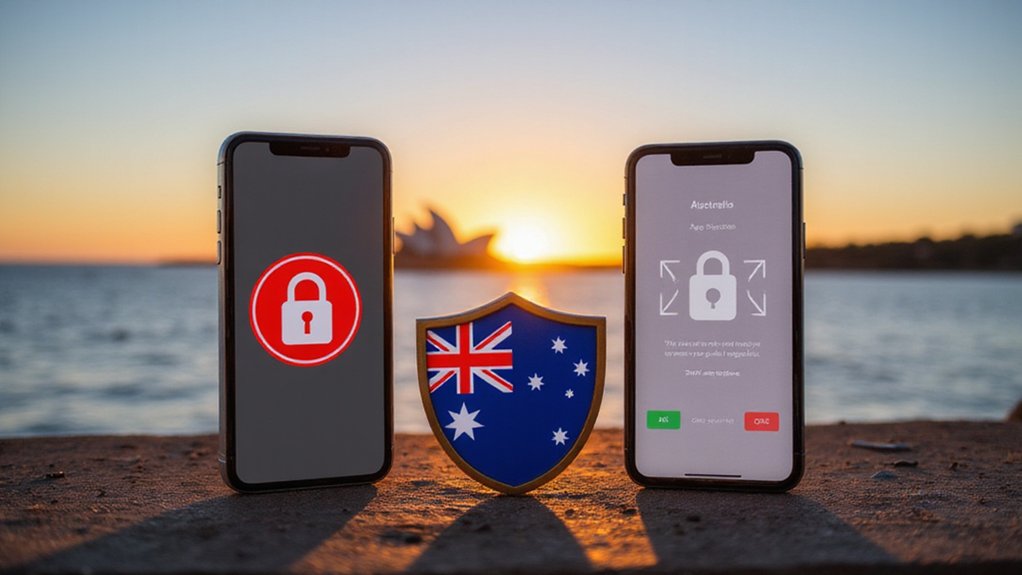

While Australians enjoy their daily search for cat videos and dinner recipes, the government has quietly registered a new online safety code that will soon force Google to verify users’ ages. The change comes courtesy of Australia’s eSafety Commissioner, who’s partnered with tech giants to introduce these requirements by the end of 2025. Nothing like a surprise digital ID check to spice up your mundane internet browsing.
The rules target search engines specifically—Google, Microsoft Bing, and whoever else dares enter the search market. With Google commanding over 90% market share in Australia, they’ll feel the brunt of it. Logged-in users will face mandatory age checks, while anonymous searchers can still roam freely. For now.
Once identified as under 18, users will automatically have the strongest safety settings enabled. SafeSearch on steroids, basically. The goal? Prevent minors from stumbling across explicit content while searching for homework help. Or whatever else kids search for these days.
These age checks won’t be simple birthday popups. Options include verification (government ID), estimation (facial recognition), or inference (behavioral data). Platforms get to choose their poison. The technology will likely mirror methods planned for Australia’s upcoming under-16 social media ban. Because one digital nanny state feature deserves another.
The impact could be messy. Many Australians stay perpetually logged into their Google accounts across devices. Family sharing might get awkward when Dad’s account suddenly thinks it’s being used by a 12-year-old. Expect more sign-outs and age confirmations in your future.
Companies have six months to comply once the rules are published. Penalties aren’t small change—up to $49.5 million per breach. That’s enough to make even Google sweat. The rules also require platforms to provide crisis prevention information when users search for sensitive topics like self-harm or eating disorders.
The code doesn’t apply to social platforms or app store search, which have their own regulations. But it does cover AI features like Google Gemini. These measures reflect growing criticism from privacy advocates that voice concerns about age verification systems becoming invasive surveillance technologies. Because even artificial intelligence needs a proper age verification these days.
References
- https://ia.acs.org.au/article/2025/australians-to-face-age-checks-from-search-engines.html
- https://www.mediapost.com/publications/article/407092/australians-face-search-engine-age-checks.html
- https://www.mediapost.com/publications/article/407092/
- https://www.sbs.com.au/news/article/why-australians-will-soon-need-to-verify-their-age-to-log-in-to-search-tools/c20ofisf9
- https://www.resetera.com/threads/australians-to-face-age-checks-from-search-engines-by-the-end-of-2025.1234740/