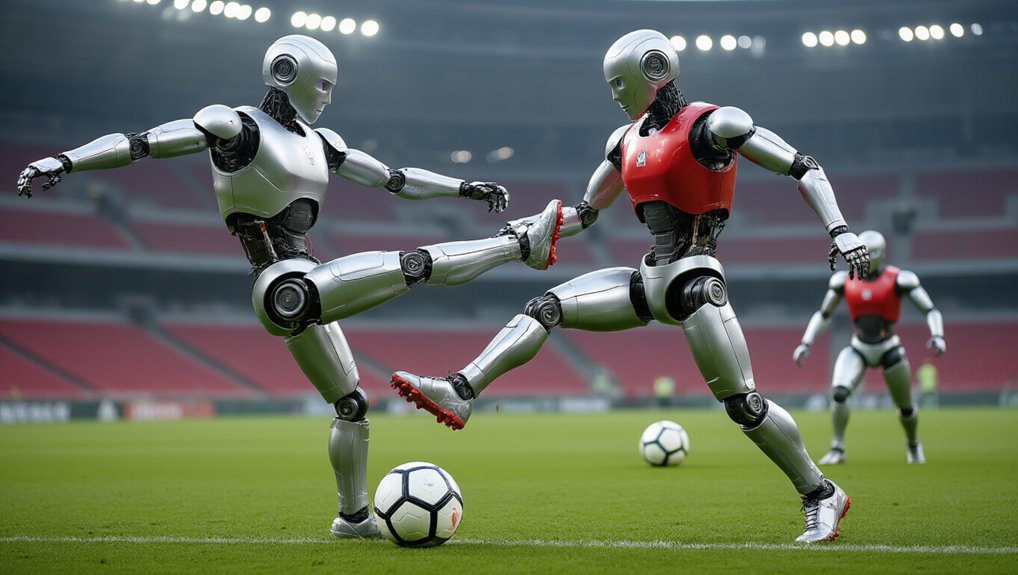

The field erupts with mechanical precision as humanoid robots charge after a regulation soccer ball. This isn’t science fiction—it’s Beijing, June 2025, where China just hosted its first fully autonomous 3-on-3 humanoid robot soccer match. No humans calling plays. No remote controls. Just machines making split-second decisions that would make Messi scratch his head.
The RoboCup project has come a long way since 1993. Started by dreamers who thought robots might someday play soccer better than humans, it’s now showcasing matches where robots actually look like they know what they’re doing. Sort of.
Four teams competed in Beijing’s preview of the upcoming World Humanoid Robot Games. These metal athletes communicated with each other, coordinated passes, and even picked themselves up after taking a tumble. Well, most of the time. Staff occasionally had to rescue the fallen robots that couldn’t quite manage the whole “getting up” part. Still working on that one, engineers.
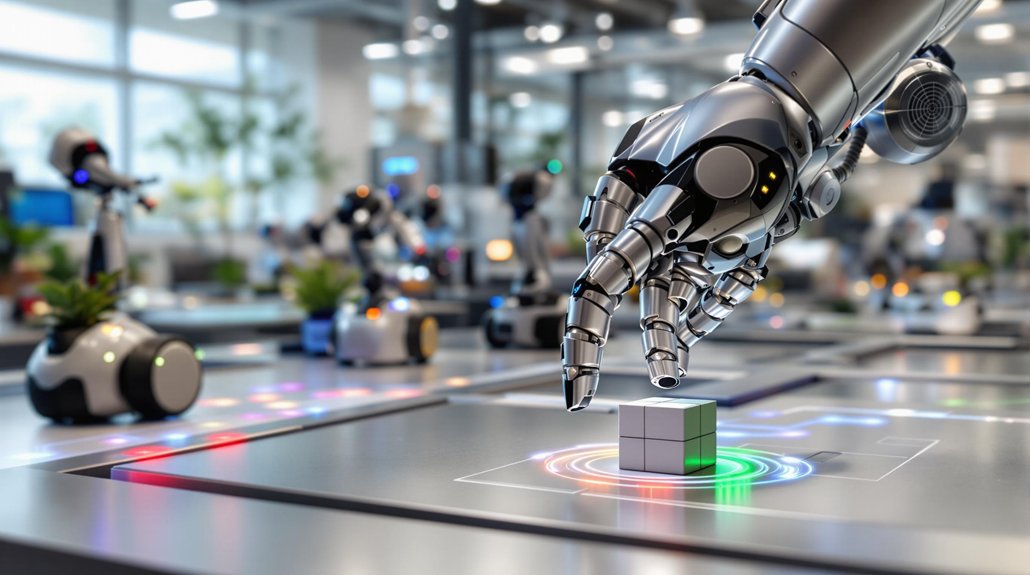
The technology behind these soccer bots is impressive. Advanced visual sensors let them spot the ball without those embarrassing colored markers fields used to need. They make decisions in real-time, process opponent behavior, and execute multi-step plays without a human pressing a single button. These AI systems incorporate deep learning techniques to analyze player movements and identify optimal strategies during gameplay.
Gone are the days of color-coded fields—these bots see, think, and execute plays with zero human input.
Will these robots beat human World Cup champions by 2050 as originally planned? Let’s not get ahead of ourselves. They’re still tripping over their own feet sometimes. The ambitious long-term goal of defeating the world’s best human players remains a driving force for thousands of researchers worldwide.
But the implications go beyond sports. China’s strategic investment in this technology signals something bigger: AI and robotics development disguised as entertainment. Smart move. These soccer matches serve as public demonstrations that get kids excited about STEM while testing real-world robotics applications.
The inaugural tournament saw Tsinghua University’s THU Robotics claim the championship with an impressive 5-3 victory against China Agricultural University’s Mountain Sea team, showcasing the competitive nature of this emerging sport.
The robots aren’t ready for Premier League contracts yet. But watching them play, you can’t help but wonder how long until they’re not just playing soccer, but teaching us new ways to play it. Game on, humans.