
AI afterlife services create digital versions of deceased loved ones, often leading to family conflicts. These technologies use personal data to simulate conversations through avatars that text, speak, or appear in mixed reality. While some find comfort in maintained connections, others worry about unhealthy attachments and exploitation. Disputes arise over who controls a person’s digital identity after death. The growing grief tech industry operates with minimal regulation, raising serious privacy and ethical concerns.
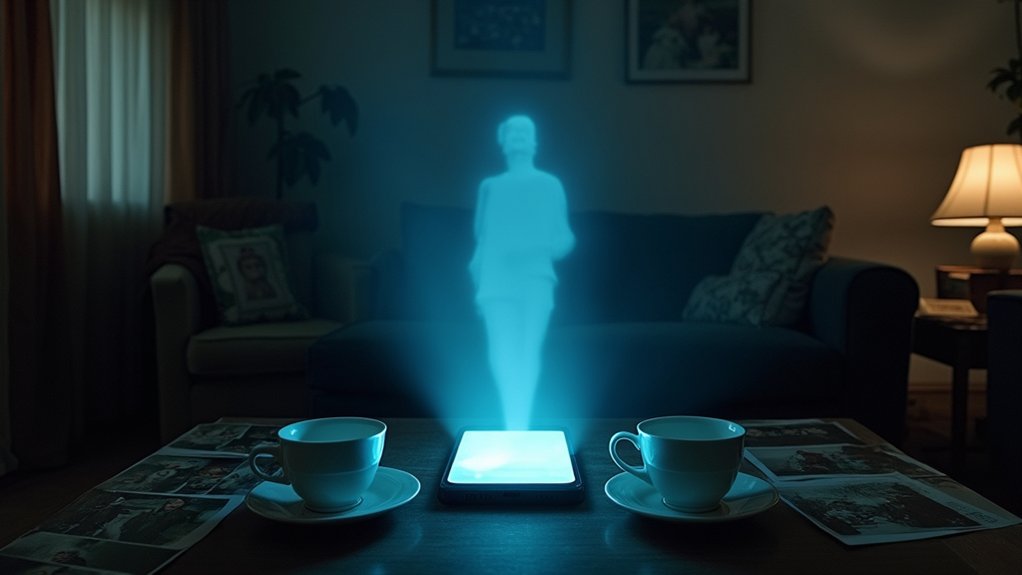
While grieving loved ones once relied on photos and memories to stay connected, a new tech industry is changing how people remember those who’ve passed away. Known as “Grief Tech,” this growing field uses artificial intelligence to create digital versions of deceased individuals. These services collect data from social media, emails, and voice recordings to build interactive avatars that can text, speak, or appear in mixed reality.
In the age of AI, our deceased loved ones can now be digitally resurrected through voice recordings and social media footprints.
The technology works by analyzing a person’s digital footprint. AI algorithms learn speech patterns and personality traits to simulate conversations. Some systems can even recreate unique mannerisms and recall memories. Companies promise these digital ghosts will provide comfort and allow relationships to continue after death.
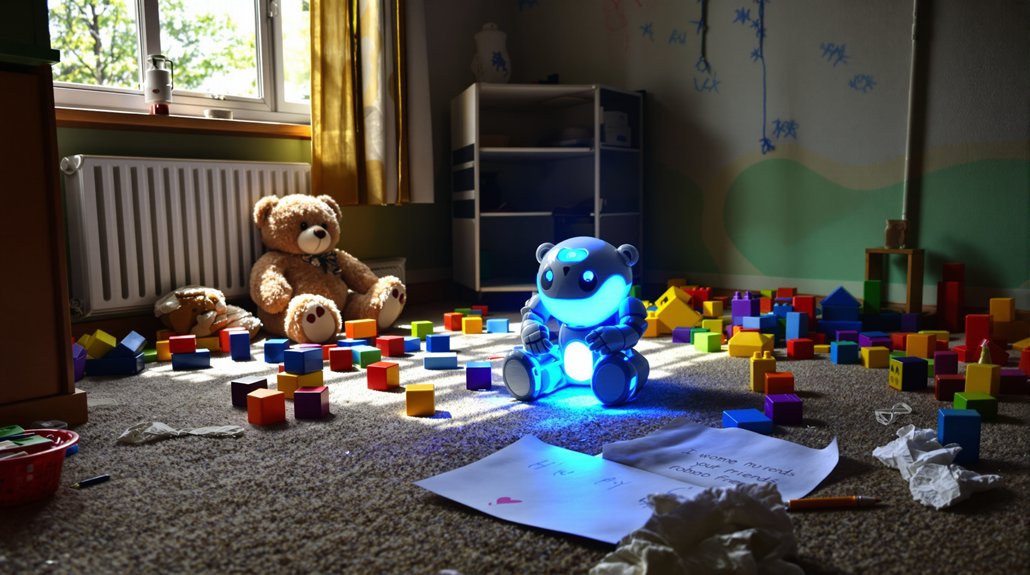
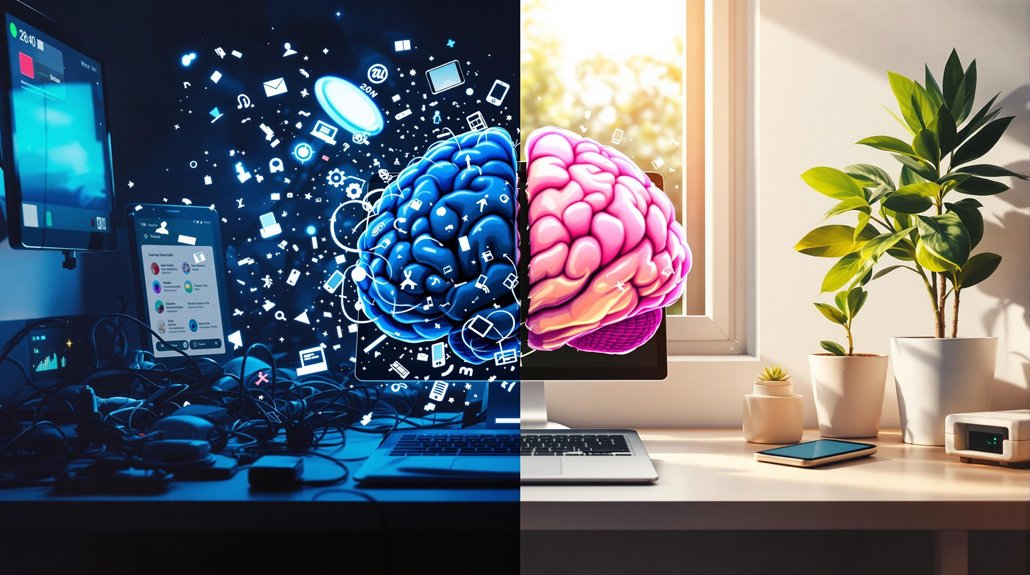
For some families, these services offer a sense of closure. They can say goodbye or have conversations they missed before their loved one died. However, not everyone finds this helpful. Many experts worry these technologies might interfere with natural grief processes. Instead of moving forward, some users become dependent on digital simulations.
Family conflicts are emerging as a major problem. Relatives often disagree about creating or using these avatars. Questions about who owns a person’s digital identity after death remain unresolved. Some family members view these services as exploitative or disrespectful to the dead. In the United States, many states have passed legislation allowing digital accounts to be included in wills.
The industry also raises serious privacy concerns. Creating these avatars requires sharing intimate personal data. There’s little regulation protecting this sensitive information from misuse or security breaches. These concerns are amplified by the lack of guidelines governing the ethical use of AI in grief technology.
Different cultures and countries are approaching these questions in various ways, with China seeing rapid growth in AI resurrection services.
As major tech companies consider entering the market, society faces difficult questions about how we remember the dead. The line between healthy remembrance and unhealthy attachment is blurring. Without clear legal frameworks and ethical guidelines, families will continue to struggle with these digital ghosts, sometimes tearing apart relationships among those left behind.
References
- https://www.milwaukeeindependent.com/syndicated/digital-afterlife-artificial-intelligence-redefining-death-memory-immortality/
- https://academic.oup.com/ijlit/article/doi/10.1093/ijlit/eaae029/7945382
- https://arxiv.org/html/2502.10924v1
- https://theoutpost.ai/news-story/ai-s-ethical-dilemma-the-rise-of-digital-afterlife-services-7721/
- https://opentools.ai/news/digital-afterlife-ais-impact-on-death-memory-and-immortality