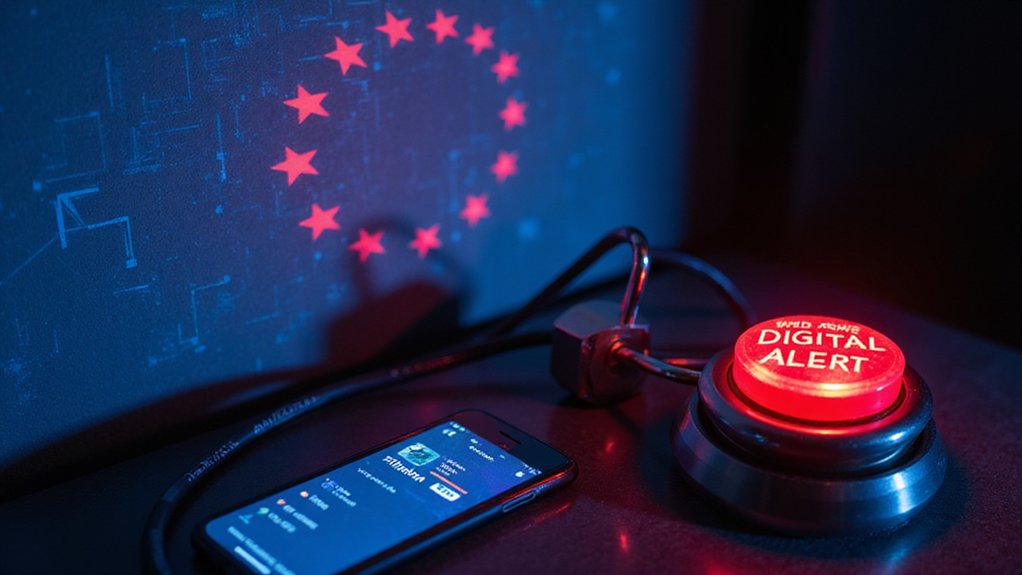

The EU has intensified actions against TikTok, banning the app from official devices and launching formal proceedings for potential Digital Services Act violations. Officials now use burner phones when traveling to high-surveillance countries. Meanwhile, the EU is equally concerned about AI systems’ data processing capabilities and security risks. Content promoting harmful trends like “SkinnyTok” remains under scrutiny. The EU’s digital battlefield continues expanding as technology evolves faster than regulatory frameworks.
As concerns about data privacy and security continue to grow, the European Union is ramping up its battle against TikTok and potential AI threats. Major EU bodies including the European Commission, Parliament, and Council have banned TikTok from official devices due to cybersecurity concerns. Staff and MEPs are also strongly encouraged to remove the app from their personal devices.
The EU’s actions against TikTok come amid serious allegations about the platform’s data handling practices. These concerns have intensified following reports of Russian interference in Romania’s 2024 presidential election. The European Commission has launched formal proceedings against TikTok for potential breaches of the Digital Services Act.
TikTok isn’t the only platform facing scrutiny. The EU is enforcing its digital rulebook across multiple tech giants including X, Meta, and Apple. Officials emphasize that these rules are applied without bias, regardless of a company’s country of origin or leadership. The Commission’s investigations could lead to significant fines against platforms like X that fail to comply with regulations. The primary goal is to protect users and make sure all companies comply with EU digital laws.
The “SkinnyTok” trend, which promotes extreme thinness and eating disorders, has drawn particular attention from European digital ministers. With 87% of Europeans viewing data privacy as a human right, these concerns reflect broader anxieties about social media’s impact. They’re investigating this content as potentially harmful to children, adding another layer to TikTok’s regulatory challenges. A comprehensive national mental health survey in France is examining TikTok’s psychological effects on young users.
Beyond social media concerns, EU officials are increasingly worried about broader security threats. Staff traveling to high-surveillance countries like the U.S., Ukraine, and China are now equipped with burner phones and stripped-down laptops. These measures reflect growing geopolitical tensions and fears of electronic surveillance.
AI systems represent another emerging security frontier. The EU views artificial intelligence as a potential threat due to its ability to process vast amounts of data, raising serious privacy and cybersecurity concerns. Officials are pushing for robust regulatory frameworks to manage these risks as technological advancements outpace current security measures.
This multi-front digital battle shows how seriously the EU takes threats to its citizens’ digital safety, whether they come from social media platforms or emerging AI technologies.
References
- https://www.euronews.com/next/2025/04/24/from-tiktok-to-ai-what-the-eu-now-calls-a-security-threat
- https://www.politico.eu/article/european-commission-ursula-von-der-leyen-warns-x-meta-tiktok-rules-ceo/
- https://www.politico.eu/article/eu-regulators-looking-into-skinnytok-trend-tiktok/
- https://ec.europa.eu/commission/presscorner/detail/en/ip_24_6487
- https://www.euronews.com/next/2025/01/17/which-countries-have-banned-tiktok-cybersecurity-data-privacy-espionage-fears