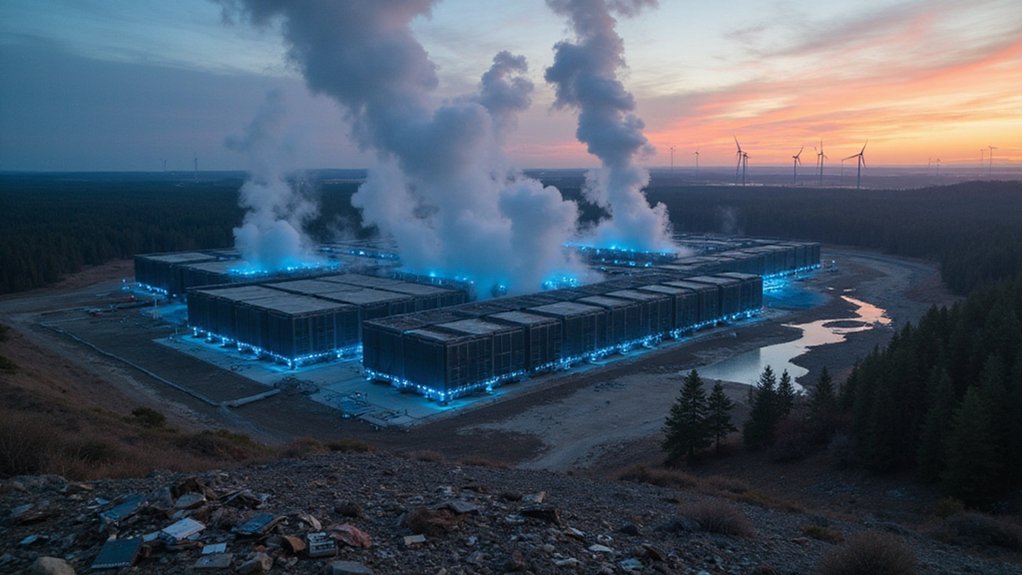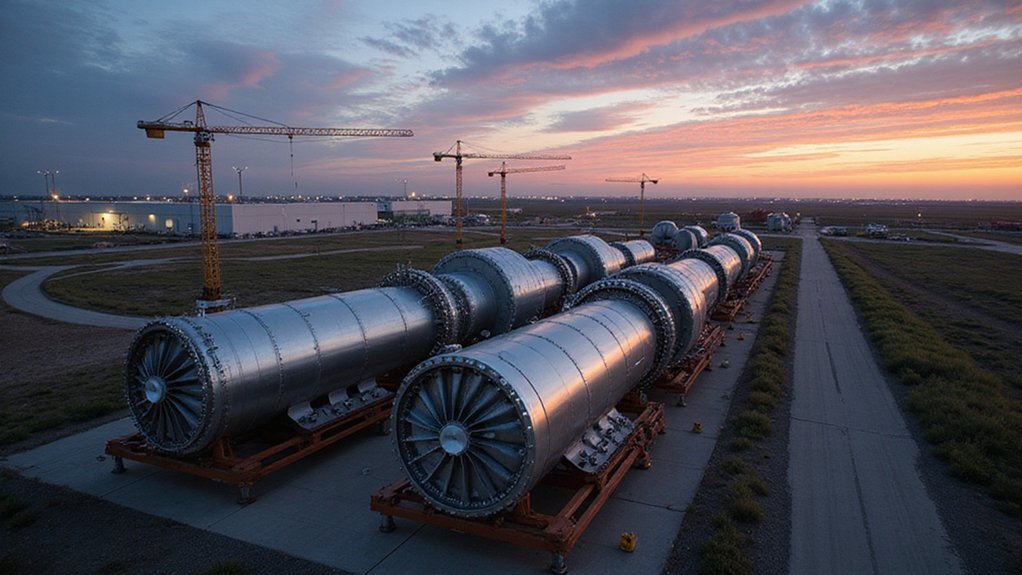

Nearly thirty gas turbines are heading to OpenAI’s massive Stargate data center in Abilene, Texas, marking a significant shift in how AI giants power their energy-hungry operations. The consortium reportedly acquired 29 GE Vernova LM2500XPRESS units – basically fancy jet engines on the ground – with each cranking out 34MW of power. Do the math and you’ve got a whopping 986MW potential output. Not exactly your grandpa’s backup generator.
AI giants are bringing jet engines to the data center game—because when you’re burning through that much compute, the grid just can’t keep up.
The move mirrors Elon Musk’s playbook at his xAI facilities in Memphis and Colossus. When your AI models need more juice than the local grid can handle, why not make your own? Traditional power infrastructure just can’t keep up with these computational beasts. Too slow, too unreliable, too yesterday.
These aren’t your run-of-the-mill emergency generators. The turbines will serve as both primary and backup power sources, running 24/7 to feed the data center’s voracious appetite. The price tag? A cool $500 million just for installation and development. Pocket change for a consortium backed by OpenAI, Oracle, SoftBank, and MGX, who’ve committed up to $500 billion for AI infrastructure.
Unlike some competitors going nuclear (literally – Meta’s signing long-term nuclear power agreements), Stargate’s going all-in on gas. Faster deployment, quicker start-up times. Who has time to wait for grid upgrades? Not the AI race leaders. Currently, permits only allow for 10 turbines at the site, far short of the 29 acquired. The project also includes Solar Turbines to supply half of the natural gas turbines in this massive power solution.
Of course, burning natural gas isn’t exactly winning environmental awards. They’re installing Selective Catalytic Reduction systems to cut down on nitrogen oxide emissions, but let’s be real – it’s still fossil fuel combustion. The consortium has filed for permits under Title V of the Clean Air Act. Regulators and locals aren’t thrilled about potential air quality impacts.
It’s the classic tech dilemma – move fast and break things, even if the thing might be clean air. But in the AI arms race, power trumps pollution concerns. Grid constraints? Solved. Environmental targets? We’ll worry about those tomorrow.
References
- https://www.tomshardware.com/tech-industry/artificial-intelligence/openai-follows-elon-musks-lead-gas-turbines-to-be-deployed-at-its-first-stargate-site-for-additional-power
- https://www.datacenterdynamics.com/en/news/natural-gas-plant-planned-for-stargate-ai-data-center-campus-report/
- https://www.theregister.com/2025/05/08/xai_turbines_colossus/
- https://www.bloomberg.com/news/articles/2025-06-04/ai-s-urgent-need-for-power-spurs-return-of-dirtier-gas-turbines
- https://ai-rockstars.com/openai-launches-stargate-uae-first-international-ai-infrastructure-with-1-gigawatt-cluster/