
Germany is tackling its plastic waste crisis through an innovative recycling initiative. Scientists from Hochschule Bremen and Fraunhofer IFAM have developed a process that transforms polypropylene waste into high-purity 3D printing filaments. The technology achieves 99.8% material purity, turning everyday plastic packaging into valuable manufacturing materials. This supports the EU’s goal of using 10-35% recycled materials in packaging by 2030. The breakthrough offers a promising solution to Germany’s 5.6 million tons of annual plastic waste.
German scientists are turning mountains of trash into treasure with a groundbreaking recycling process. Each year, Germans discard about 5.6 million tons of plastic packaging after using it just once. For decades, most of this waste wasn’t recycled, instead ending up in landfills or incinerators.
The problem has grown worse over time. Plastic waste has tripled in Germany in the last 30 years, with packaging being the biggest contributor. Less than one-third of this waste gets recycled, creating serious environmental challenges. This dramatic increase is evident when comparing the 2.1 million tons produced in 1994 to today’s 5.6 million tons.
Now, German researchers have developed innovative methods to transform this waste into valuable 3D printing material. A notable collaboration between Hochschule Bremen and Fraunhofer IFAM led this revolutionary recycling initiative. They’re focusing on polypropylene, a common household plastic that’s found in many everyday items. Their process includes grinding, washing, and using special detection technology to remove impurities.
Turning yesterday’s yogurt containers into tomorrow’s innovations through cutting-edge German recycling science.
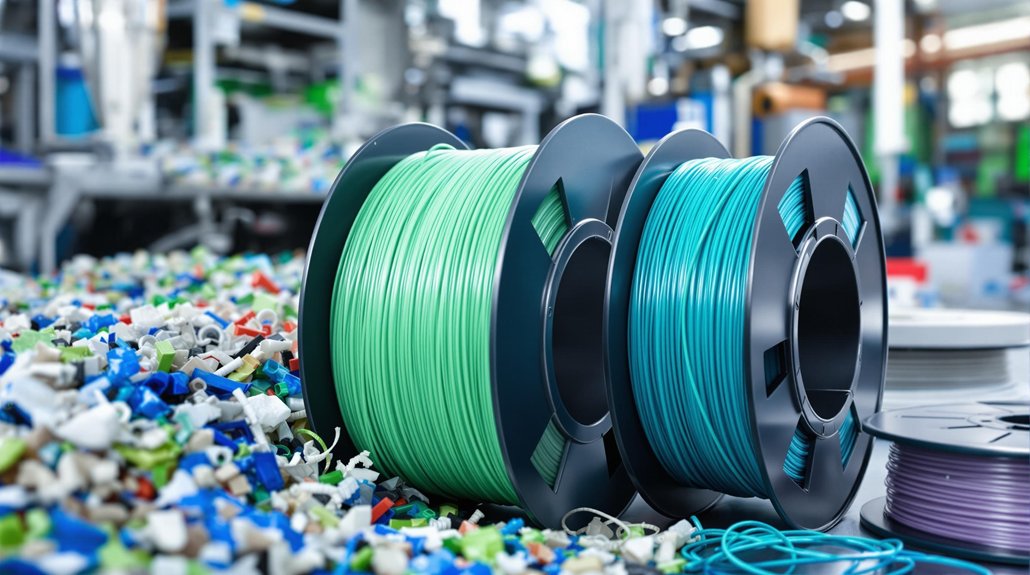
The cleaning and sorting techniques are impressive. Using float-sink methods and near-infrared technology, the scientists can achieve material purity of 99.8%. This high-quality material is then processed through industrial extruders to create smooth, 2mm-thick filaments that work with standard 3D printers.
The benefits extend beyond waste reduction. This recycling method reduces dependence on crude oil-derived plastics and supports a circular economy. It also helps address climate change by conserving energy and resources. Companies are taking notice because of new regulations that require more recycled content in products.
The EU Packaging and Packaging Waste Regulation requires 10-35% recycled materials in packaging by 2030, increasing to 25-65% by 2035. These rules are pushing industries to find sustainable solutions like this one.
The recycled materials can even be enhanced with additives like glass fibers, making them suitable for high-quality components in aviation and automotive industries.
While challenges remain, especially with contaminated consumer waste, this innovation represents a significant step forward in Germany’s fight against plastic pollution.