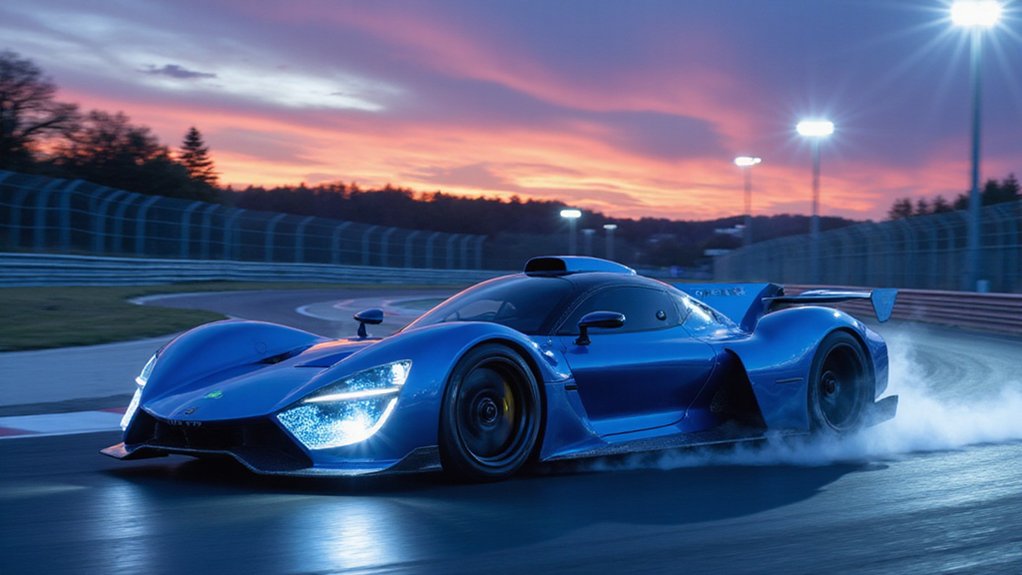

Racing history will be made at the 2025 24 Hours of Le Mans when Bosch’s groundbreaking Liquid Hydrogen Storage Control Unit (L-HSCU) debuts on the track. This system will mark the first time a cryogenic liquid hydrogen system competes in a high-level endurance race, integrated into the H24EVO race car.
The move from gaseous to liquid hydrogen represents a major technical leap forward. Bosch Engineering GmbH developed this innovation to help hydrogen-powered racers compete with traditional combustion engines. The H24EVO prototype is expected to reach impressive speeds of up to 340km/h during competition. The L-HSCU is specifically engineered to maintain hydrogen at extremely low temperatures of -253°C while managing 5 bar pressure.
Technical Director Bassel Aslan leads the team pushing liquid hydrogen technology into racing. This shift isn’t just about being different – liquid hydrogen offers higher energy density than gaseous storage, allowing cars to race longer without refueling, a significant advantage in endurance events like the 24-hour race. The transition to liquid hydrogen storage is expected to increase the car’s range to 40 minutes runtime, a substantial improvement for endurance racing.
The Mission H24 initiative stands behind this zero-emission racing effort. The project has already proven gaseous hydrogen’s potential and is now advancing to the next level. Innovation Director Bernard Niclot works alongside Aslan to develop truly competitive hydrogen race vehicles.
Progress has been steady. The Ligier JS2 RH2 hydrogen racer already hit speeds over 280 km/h in testing and completed more than 5,000 kilometers of testing – equivalent to a full Le Mans race distance. This car made its public debut with a demonstration lap on June 15, 2024.
The Automobile Club de l’Ouest (ACO), which organizes Le Mans, strongly supports these efforts. ACO President Pierre Fillon has committed to achieving zero CO2 emissions in motor racing, welcoming various hydrogen technologies including both fuel cells and hydrogen combustion engines.
This development follows Le Mans’ long tradition as a testing ground for automotive innovation. The technologies demonstrated on track aim to influence the broader automotive industry, potentially shaping future mobility solutions beyond racing.
References
- https://www.hydrogenfuelnews.com/hydrogen-fuel-cells-take-center-stage-at-le-mans-with-boschs-liquid-hydrogen-tech/8570888/
- https://www.racecar-engineering.com/articles/sportscar/le-mans-h24evo-hydrogen-racer-switches-to-liquid-storage/
- https://www.automotivepowertraintechnologyinternational.com/news/sustainable-fuels/bosch-to-introduce-h2-concept-at-le-mans-24-hours.html
- https://drivinghydrogen.com/2025/01/30/le-mans-missionh24-h24evo-ditches-hydrogen-gas-for-liquid-hydrogen/
- https://ligierautomotive.com/en/news/le-mans-24h-the-ligier-js2-rh2-with-hydrogen-engine-shows-the-sustainable-future-of-motorsport/