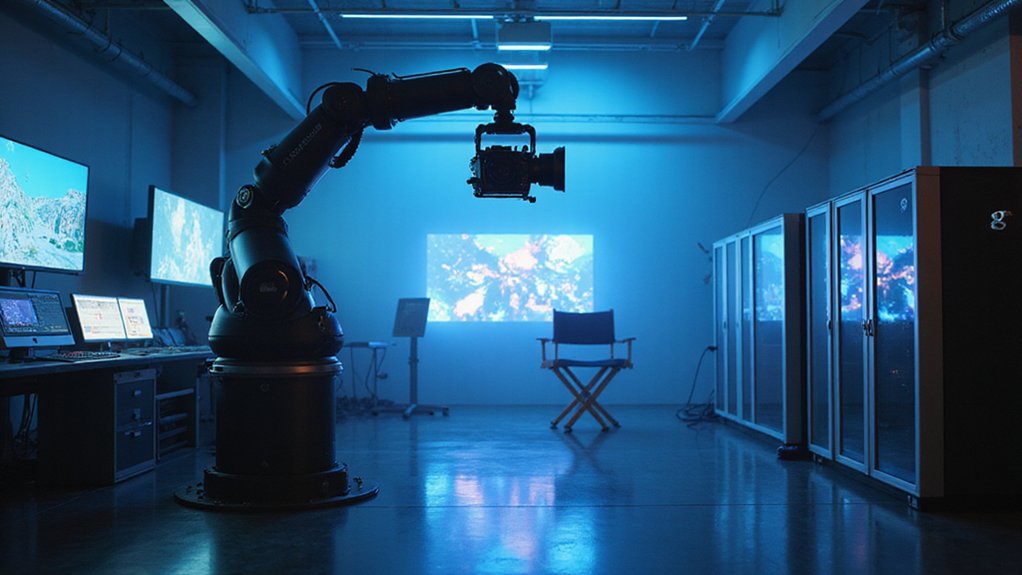

Google’s throwing money at Hollywood to fix its robot problem. The tech giant is sick of seeing AI portrayed as humanity’s inevitable doom in movies and TV shows. So they’re funding filmmakers to create stories where artificial intelligence doesn’t, you know, murder everyone.
Google’s bankrolling Hollywood to stop making AI the villain in every damn movie.
The company partnered with Darren Aronofsky’s production outfit, Primordial Soup, to make three short films using Google DeepMind’s fancy text-to-video tool called Veo. Director Eliza McNitt’s “Ancestra” mixes real footage with AI-generated visuals and will premiere at Tribeca Festival. Two more films, “Sweetwater” and “Lucid,” are coming down the pipeline. These aren’t just YouTube experiments either. Google wants them on major streaming platforms where actual humans will watch them.
Google’s not alone in this PR makeover attempt. Meta, Runway, and Lionsgate are all cozying up to Hollywood creators, desperate to show AI as something other than the villain. Range Media Partnerships jumped on board with Google’s “AI on Screen” and “100 Zeros” initiatives. Silicon Valley meets Tinseltown, and everyone pretends it’s about art.
The whole operation runs on a $430 million investment fund. That’s serious cash for changing hearts and minds. At Google I/O 2025, they showed off more AI filmmaking apps like “Flow,” because apparently we need more ways to generate content. The Flow tool lets users create cinematic clips from text descriptions with features for controlling camera angles and seamless scene transitions. The projects explore human-AI relationships, societal impacts, and ethical challenges. Basically everything except killer robots.
Google’s giving filmmakers access to their most advanced tools, hoping they’ll create content that makes people think “helpful assistant” instead of “Terminator.” They want AI portrayed as a creative partner, not humanity’s replacement. The films aim to highlight emotional and ethical dimensions of AI integration. How touching.
This isn’t just about entertainment. It’s a calculated move to shape public perception before regulations get too strict or people get too scared. Much like the shared values in major AI ethics frameworks, these films emphasize transparency and human oversight rather than dystopian outcomes. Tech companies realize they need better stories if they want society to embrace their products. The push comes after AI issues sparked the 2023 writers’ and actors’ strikes, with Hollywood workers fearing their jobs and creative work would be replaced by machines.
Whether audiences will buy this new narrative remains to be seen. But with major streaming distribution and Hollywood talent involved, Google’s betting big that they can rewrite AI’s script.
References
- https://www.latimes.com/entertainment-arts/business/story/2025-05-22/tech-companies-turn-to-hollywood-to-help-sell-ai
- https://afrotech.com/googleio-2025
- https://blog.google/technology/ai/google-io-2025-all-our-announcements/
- https://www.latimes.com/entertainment-arts/business/story/2025-05-20/darren-aronofsky-venture-teams-up-with-google-deepmind-on-ai
- https://www.eweek.com/news/google-range-media-film-tv-storytelling-ai/