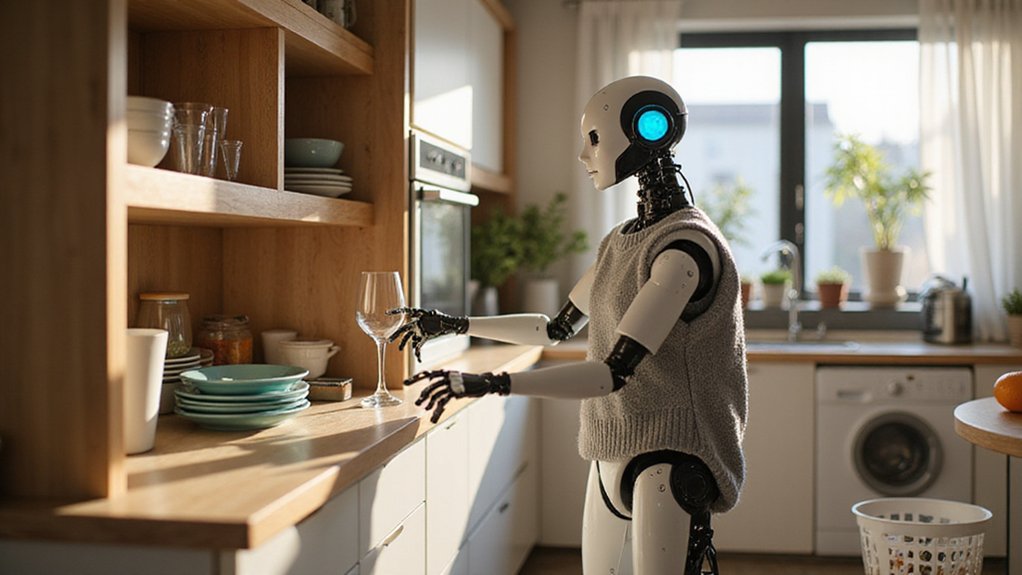

Forget the Roomba spinning in circles. The latest humanoid robots are doing your dishes, organizing your groceries, and even sitting down for a break afterward. These machines don’t just vacuum—they’re handling wine glasses without breaking them and putting away unfamiliar items they’ve never seen before.
Picture this: a robot in a soft knit sweater squats down, picks up your laundry basket, and carries it upstairs. It’s not science fiction anymore. These robots move with coordinated arm swings, looking almost human as they navigate around your dog and that pile of shoes you keep meaning to organize. The 3D-printed nylon suits aren’t just for show either—they prevent your grandmother’s china from getting scratched when the robot reaches into cabinets.
The brain upgrade is the real game-changer. Tell it to “put the groceries away,” and it figures out the rest. No programming required. The robot knows where cereal goes versus where you keep the wine. It’s using semantic intelligence to understand that bananas don’t belong in the freezer, even if it’s never seen your specific brand before. Multi-microphone arrays catch your commands over the TV noise, while the robot responds with synthesized voices and ear indicators that light up. Yes, ears. Nvidia’s new Cosmos AI trains these robots on 20 million hours of human activity footage, teaching them to navigate real-world scenarios in your home.
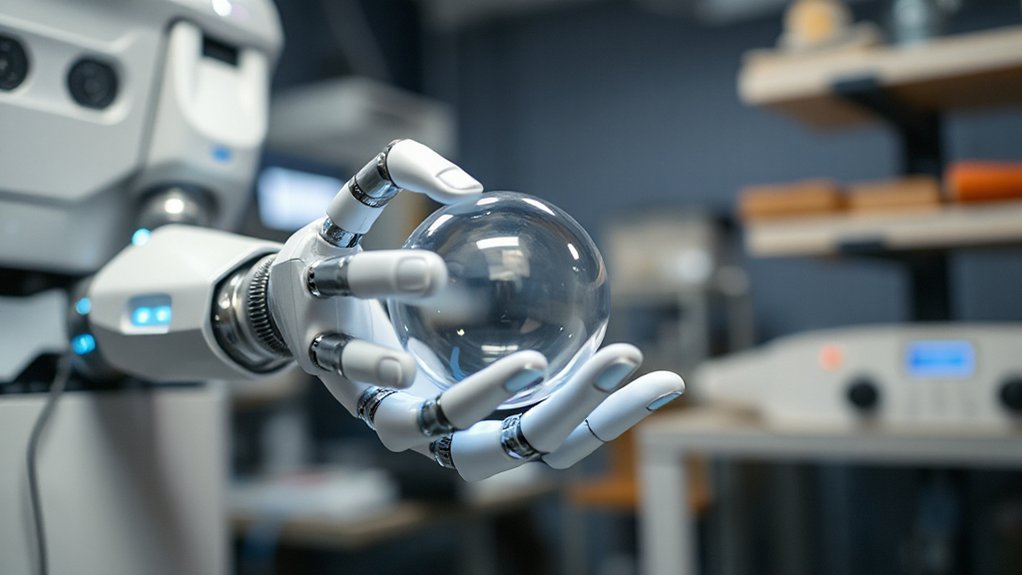
These machines run whole-body controllers at 100 Hz, which is tech-speak for “they move smoothly instead of jerking around like old robots.” They’re washing windows, tidying up your mess, and adapting to whatever chaos your home throws at them. Force sensors and tactile feedback mean they won’t crush your tomatoes or drop your favorite mug. Advanced systems achieve 98.7% recognition accuracy in identifying and handling household objects, from coffee cups to cleaning supplies. These humanoids employ computer vision technology to examine and interpret your home environment, similar to how doctors use AI to analyze medical scans.
The modular design lets manufacturers tweak these robots for different homes and needs. Got low shelves? High counters? Narrow hallways? They adapt. Motion capture data from actual humans taught them how to move naturally, so watching them work doesn’t feel like witnessing a mechanical nightmare.
Sure, they can’t fold fitted sheets yet—nobody can—but they’re getting close to replacing that chore list stuck to your fridge. The future of housework wears a sweater and speaks your language.
References
- https://www.youtube.com/watch?v=7zj-YGvp7TM
- https://lucidbots.com/robot-rundown/future-at-your-fingertips
- https://www.freethink.com/artificial-intelligence/humanoid-1x
- https://www.designboom.com/technology/humanoid-robot-neo-gamma-house-chores-home-owners-autonomous-assistant-02-26-2025/
- https://www.youtube.com/watch?v=hHA4-nEBer8