
While the world was busy scrolling through internet-dependent social media, Jack Dorsey quietly launched something different. Bitchat, his new peer-to-peer messaging service, doesn’t need Wi-Fi, cellular data, or even the internet. Yeah, you read that right. No internet required. The former Twitter CEO’s weekend experiment might just change how we communicate when traditional networks fail.
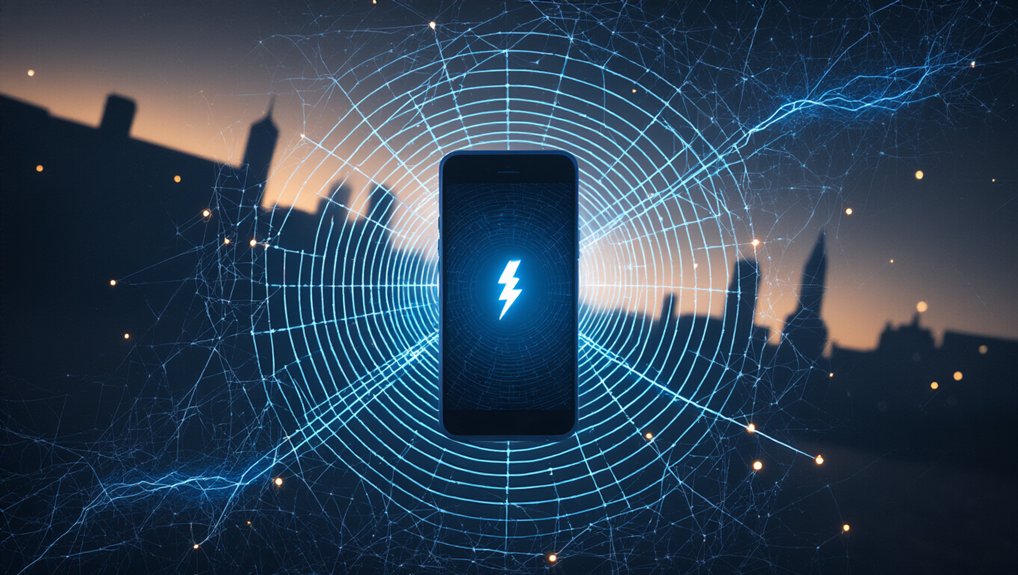
The app works on Bluetooth mesh networks. Devices talk directly to each other, no middleman needed. Each phone becomes a node, extending the network’s reach up to 300 meters—way beyond typical Bluetooth range. Messages hop from device to device until they reach their destination. Pretty clever, honestly.
Bluetooth mesh turns your phone into a relay station. No internet? No problem. Message hops work their magic invisibly.
No phone numbers. No email addresses. No accounts. Bitchat doesn’t care who you are, and that’s the point. The app encrypts everything end-to-end and messages vanish after delivery. Nothing gets stored online because, well, there is no online. It’s communication stripped down to its essentials.
The beta release maxed out at 10,000 users almost immediately. The detailed white paper published on GitHub explains the app’s decentralized protocol and its resilience to network outages. Turns out people actually want privacy. Who knew?
Dorsey’s creation shines in situations where internet access fails or gets blocked. Think massive festivals with overloaded cell towers. Or protests where governments shut down communications. The app’s inspiration partially comes from Bridgefy, which Hong Kong protesters used when facing internet blackouts.
Group chats work through hashtags, and you can password-protect them if you’re feeling paranoid. If someone’s temporarily offline, Bitchat will store and forward messages when they reconnect. Future versions may incorporate Wi-Fi Direct for better speed and range. The app’s message encryption models ensure your conversations remain private even as they bounce between devices.
This isn’t Dorsey’s first rodeo with decentralized tech. After Twitter, he’s been pushing for user control and privacy across various projects. Bitchat reflects that philosophy—communication that can’t be monitored, censored, or shut down by authorities.
No central servers. No data collection. No tracking. Just direct, encrypted communication between people. Transformative? Maybe. Useful? Definitely.
References
- https://www.firstpost.com/explainers/bitchat-jack-dorsey-messaging-app-without-internet-13904130.html
- https://www.engadget.com/apps/jack-dorsey-just-released-a-bluetooth-messaging-app-that-doesnt-need-the-internet-191023870.html
- https://techcrunch.com/2025/07/07/jack-dorsey-working-on-bluetooth-messaging-app-bitchat/
- https://www.indiatoday.in/technology/news/story/jack-dorsey-builds-offline-messaging-app-bitchat-that-works-without-wi-fi-or-mobile-network-2752635-2025-07-08
- https://9to5mac.com/2025/07/07/bitchat-bluetooth-based-app-jack-dorsey/