Elon Musk’s company xAI has revealed Grok 3.5, an AI model that claims to generate answers without using internet sources. Instead, it relies on “first-principles reasoning” to solve problems by breaking them down into basic concepts. The model requires substantial computing power, including a supercomputer with one million GPUs. This approach differs from competitors that depend on pattern matching and online information. The shift raises important questions about fact verification and industry applications.
Elon Musk shook up the AI world this week with a bold announcement about his company’s latest creation. His AI firm xAI is developing Grok 3.5, which he claims will provide answers without using internet sources. This marks a major shift from how most AI systems currently work, including earlier versions of Grok.
The new approach relies on what Musk calls “first-principles reasoning.” Instead of gathering information from websites, Grok 3.5 will break down complex problems into basic concepts and work through them logically. This method is meant to set Grok apart from competitors that primarily match patterns or combine information from online sources.
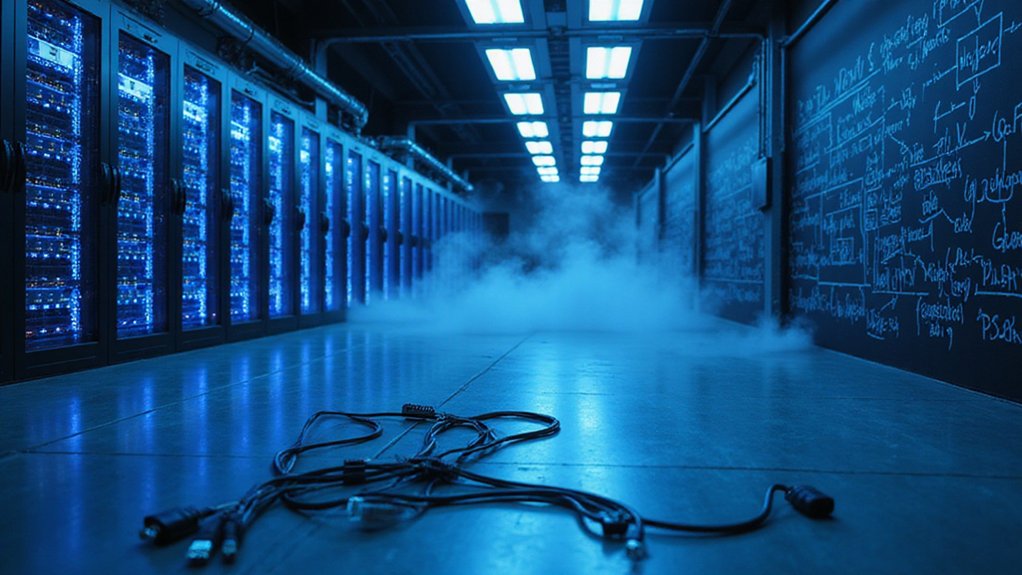
Powering this reasoning capability requires massive computing resources. Grok 3.5 runs on an xAI supercomputer with one million GPUs, highlighting the intense processing power needed for this approach. These requirements may limit who can access the technology due to high costs and energy demands. Recent allegations suggest Grok’s current operations may use illegal generators at their Colossus facility to meet these heavy power requirements.
The computational demands of Grok 3.5 create an AI divide, where only those with deep pockets can access its reasoning powers.
The shift away from internet sources raises important questions about fact-checking. Without clear citations or references, users might find it harder to verify Grok 3.5’s answers. This could create challenges for use in fields like journalism, education, and healthcare, where knowing information sources is vital. This approach mirrors the broader trend toward retrieval-augmented generation for managing information, though Grok takes this in a unique direction by eliminating external retrieval entirely.
Earlier Grok versions and competing AI models typically rely on internet data for answers. Grok 3 offers a “DeepSearch” mode for web searches when needed, but Grok 3.5’s standard mode won’t include this feature. Meanwhile, other new AI systems like Alibaba’s Qwen3 continue using internet-based information.
Industry experts believe Grok 3.5 could transform fields needing deep analytical thinking, such as engineering and software development. However, concerns about verification and high resource requirements might slow adoption. In previous benchmarks, Grok models have outperformed GPT-4 in math and science disciplines, suggesting potential advantages to this reasoning-focused approach.
The approach represents an interesting experiment in making AI less dependent on external content, potentially pushing competitors to explore similar methods if successful.
References
- https://www.tomshardware.com/tech-industry/artificial-intelligence/elon-musk-says-grok-3-5-will-provide-answers-that-arent-from-internet-sources
- https://opentools.ai/news/elon-musk-unveils-grok-35-an-ai-model-to-outthink-all
- https://www.scmp.com/tech/big-tech/article/3308405/elon-musk-teases-grok-35-hours-after-alibabas-qwen3-generates-buzz-amid-us-china-ai-race
- https://www.youtube.com/watch?v=sVBfyDNpzFA
- https://assignmentgpt.ai/blog/grok-3