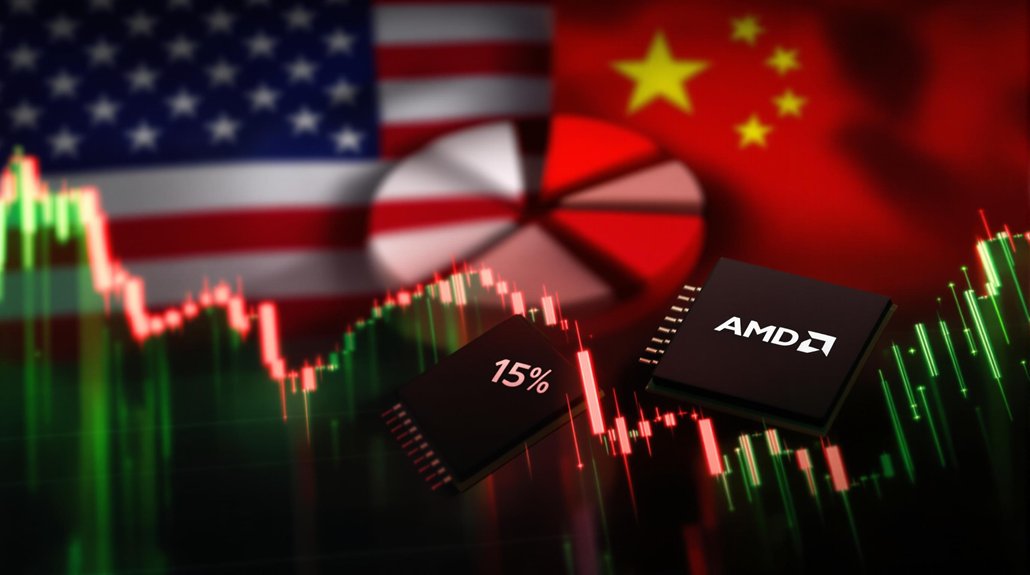

Nvidia and AMD shares tumbled in premarket trading after reports surfaced that the Trump administration wants a 15% cut of their China AI chip sales. Nvidia dropped about 1% while AMD fell 3% on the news. Not exactly the Monday morning surprise investors wanted.
The arrangement is tied to export licenses for specific chips — Nvidia’s H20 and AMD’s MI308. Want to sell AI chips to China? Fork over 15% to Uncle Sam. The Bureau of Industry and Security started issuing these licenses last week with the new strings attached. Nobody’s seen anything quite like this before. Analysts are scratching their heads, saying there’s no precedent for U.S. companies sharing revenue with the government just to get export approval.
Fork over 15% to Uncle Sam — nobody’s seen anything quite like this before.
This whole mess started after Trump reversed a ban on H20 shipments to China back in June. Jensen Huang, Nvidia’s CEO, had a White House meeting, and suddenly the doors opened again. The deal’s being sold as a way to let companies access the China market while meeting policy goals. Whatever that means.
The numbers make this sting even more. Bernstein estimates Nvidia could ship about 1.5 million H20 chips to China in 2025, potentially generating $23 billion in revenue. Take 15% off the top, and we’re talking billions flowing to the U.S. government. The Treasury hasn’t even figured out what to do with the money yet.
Both companies had been riding high this year. Nvidia was up 36% year-to-date as of August 11, while AMD had gained 43%. Now they’re dealing with a new reality where executive branch decisions can slice into their bottom lines overnight. Meanwhile, Intel’s CEO is meeting with Trump today, potentially positioning the company to benefit from any semiconductor sector shifts resulting from these new policies.
The policy puts semiconductor stocks squarely in the political crosshairs. Multiple compression risk, margin pressure, earnings sensitivity — pick your poison. Every China sale now comes with a government tax that wasn’t there before. China’s projected AI investments of $1.4 trillion by 2030 makes this market too valuable for U.S. chipmakers to ignore, despite the new fees. Other chip exporters are probably sweating, wondering if they’re next. National security experts are sounding alarms that the H20 could boost China’s military AI capabilities, but the revenue-sharing arrangement is moving forward anyway.
The market’s message is clear. Policy risk isn’t just theoretical anymore. It’s real, it’s expensive, and it just showed up demanding its cut of the action.