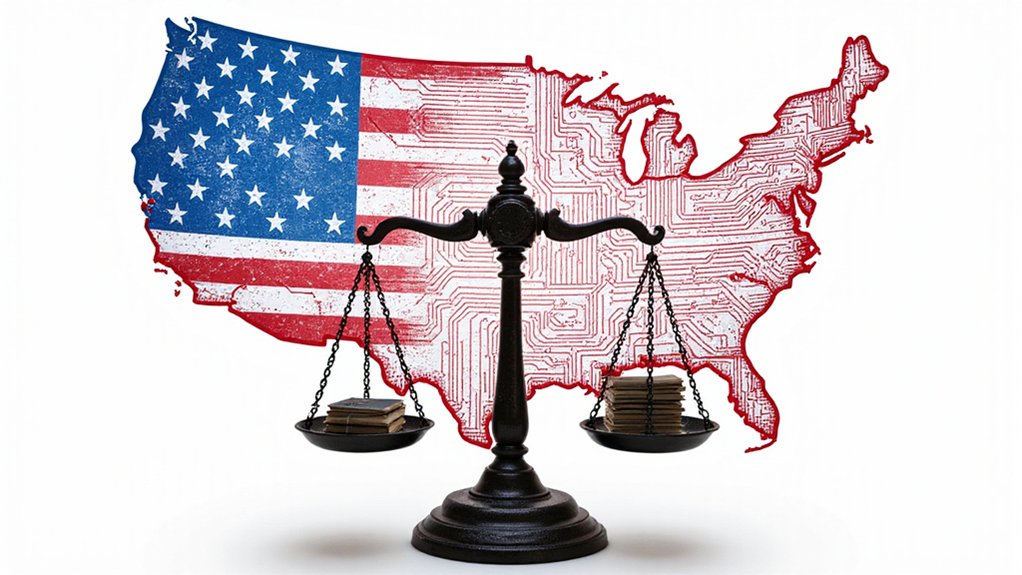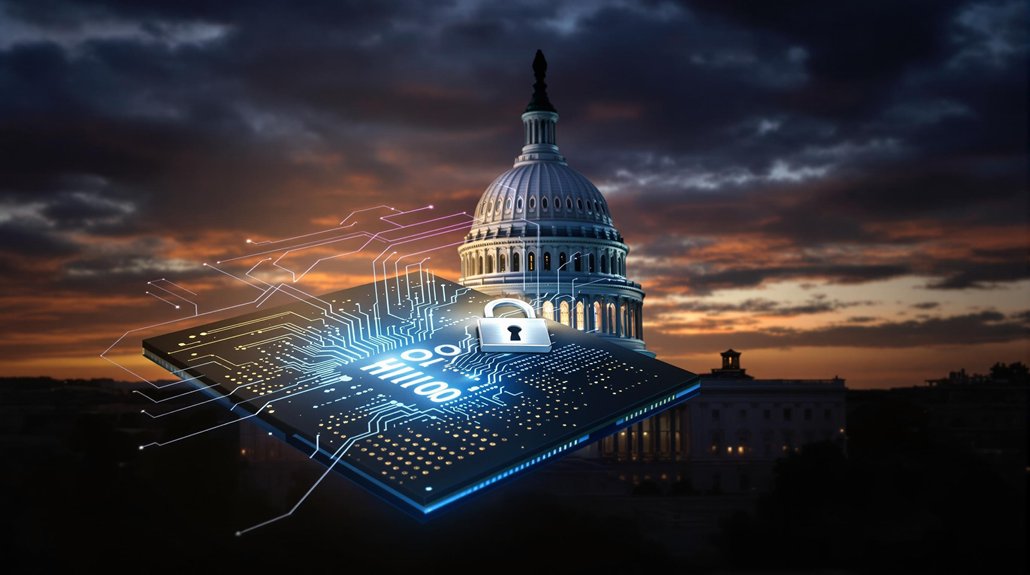

Nvidia wants Washington to back off. The GPU giant is pushing hard against export controls that keep choking off their ability to sell advanced AI chips to whoever they want. And they’re not being quiet about it.
The Biden administration slapped strict export controls on AI chips, creating this whole tier system that basically told countries like China they couldn’t have the good stuff. Trump’s team? They doubled down, making the rules even tighter. The Commerce Department keeps warning everyone about the scary risks of Chinese AI chips while simultaneously making it harder for American companies to compete globally. Makes total sense, right?
Nvidia’s CEO has been practically shouting from the rooftops that these restrictions are killing American innovation. The company argues that overlapping regulations and increased controls are handing market share to competitors on a silver platter. They want policies that spread American AI tech around the world, not lock it in a vault. Jensen Huang specifically criticized the Biden’s AI Diffusion Rule, claiming it actually supports competitors like China rather than protecting American interests.
Export controls are handing market share to competitors on a silver platter while killing American innovation.
Here’s the thing: these export rules mean non-allied countries can only get tiny amounts of top-tier GPUs like the H100. Need more? Better get ready for a mountain of paperwork and approvals. Dozens of countries got downgraded to limited access status, which is doing wonders for diplomatic relations. Research labs and tech companies worldwide that depend on Nvidia hardware are basically stuck.
Meanwhile, Nvidia keeps talking about their commitment to safe, transparent AI. They’ve signed onto White House voluntary commitments and say they’re all about privacy, fairness, and making sure their AI doesn’t go rogue. Critics warn that without proper guardrails, unrestricted AI access could enable the creation of advanced weapons systems and sophisticated cyberattacks. They emphasize explainability and technical excellence as core principles. This messaging particularly resonates with their core audience of government professionals and policy analysts who need to understand how AI decisions are made.
The company’s also fighting another battle: they want the feds to handle AI regulation, not individual states. They’re lobbying for a moratorium on state-level controls because dealing with fifty different sets of rules is a nightmare. Congress is still debating what to do while tech giants like Nvidia work the halls trying to shape whatever comes next.
The export controls aren’t going away anytime soon. Washington calls them essential for national security. Nvidia calls them innovation killers. Round and round we go.
References
- https://www.tomshardware.com/tech-industry/artificial-intelligence/nvidia-asks-us-government-to-ease-ai-gpu-export-rules-but-trump-administration-plans-tighter-controls
- https://www.bis.gov/press-release/department-commerce-announces-recission-biden-era-artificial-intelligence-diffusion-rule-strengthens-chip
- https://subscriber.politicopro.com/article/2025/06/nvidia-supports-10-year-pause-on-states-regulating-ai-00393062
- https://www.nvidia.com/en-us/trust-center/trustworthy-ai/
- https://www.nvidia.com/en-us/industries/public-sector/