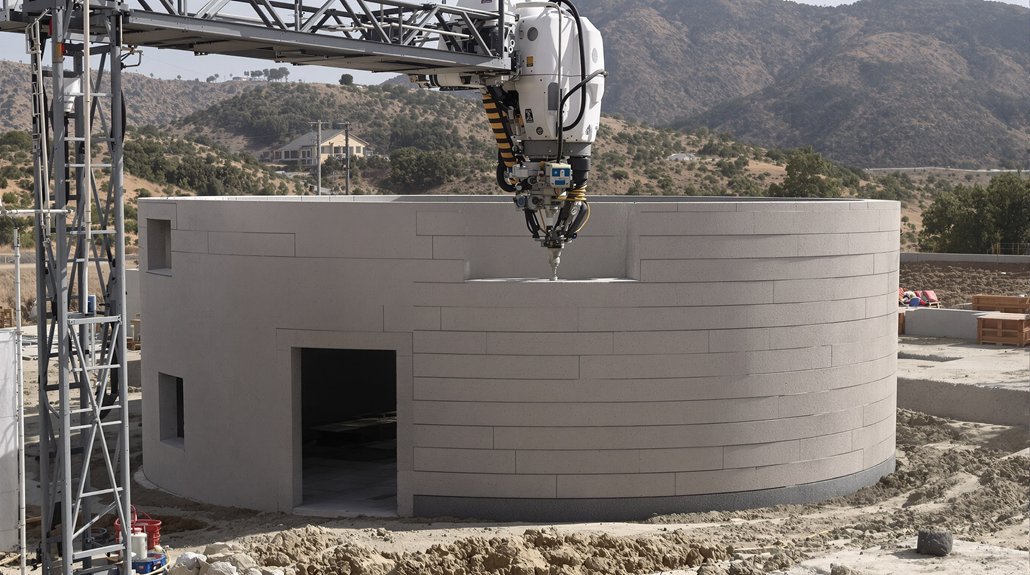

Giant robots are transforming home construction by 3D printing fire-proof concrete houses in just 16 days. These automated machines build walls by layering concrete without using wood or nails, creating structures that can’t burn in wildfires.
The robotic construction process works through precise automation. Mobile robots arrive at building sites with specialized equipment that prints exterior and load-bearing walls. Some companies use robotic microfactories that produce custom wall panels right where the home will stand. AI and computer vision guide these machines to verify every layer meets exact specifications. The robots work continuously, laying concrete in precise patterns while maintaining consistent quality throughout the build.
These concrete homes offer exceptional protection against disasters. The non-combustible material exceeds standard fire safety codes in high-risk areas. Builders reinforce weak points like eave vents and windows to prevent fire from entering. Some designs replace wooden roofs with light steel and fire-resistant boards for complete fire protection. The same structures that resist fire also withstand hurricanes, floods, and earthquakes. Reinforced walls and foundations provide strength against multiple natural hazards. Most homes lost in wildfires actually ignite from embers and minor flames, not direct contact with the main fire.
The speed of robotic construction dramatically reduces building time. While basic models take just 16 days, factory-built versions reach completion in about one month. Robots don’t need breaks and can work in various weather conditions. Real-time data helps coordinate tasks and deliveries, keeping projects on schedule. Preassembled modules like bathroom pods fit directly into the concrete structure, saving additional time. Streamlined project timelines significantly reduce both labor costs and construction waste throughout the building process.
Cost savings make these homes more affordable than traditional construction. Robots reduce the need for human workers and create less waste material. The automated process uses materials efficiently, cutting overhead expenses. Homeowners save money long-term through lower insurance rates and reduced maintenance costs. The concrete’s energy efficiency also decreases utility bills.
Companies plan to build over 100 fire-resistant units in wildfire-affected areas by 2027. These homes include modern features like solar panels, battery backups, and water recycling systems. The combination of disaster resistance and sustainability makes robotic concrete construction an important advancement for communities facing climate challenges.
As natural disasters become more frequent, these groundbreaking building methods offer safer, faster, and more affordable housing solutions.
References
- https://ricrobotics.com
- https://drj.com/industry_news/u-s-s-first-fire-resistant-3d-printed-concrete-adu-starts-construction/
- https://www.concretegeorgia.com/construction-technology-wildfire-recovery/
- https://www.onxhomes.com/press/concrete-homes-are-designed-to-be-built-quickly-resistant-to-fire-wind-and-water-damage-and-this-company-is-building-thousands-of-them/
- https://cybe.eu/affordable-housing/earthquake-proof-houses/