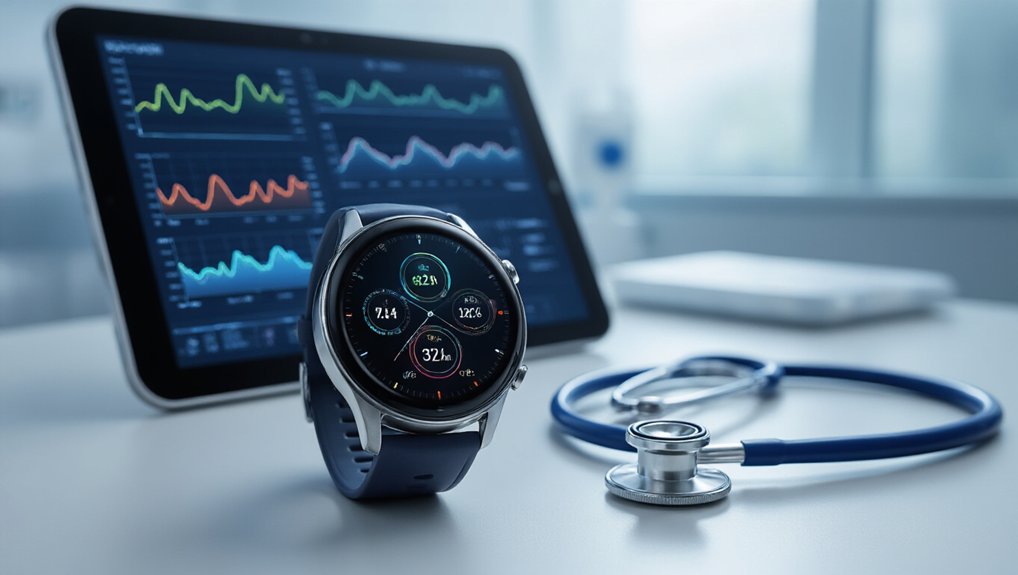
The fragmentation ends now. Samsung’s newly announced Health Hub is tossing the scattered pieces of health tech into one tidy package, letting your doctor peek directly at your Galaxy Watch data. No more excuses about forgetting your step count or sleep patterns. Everything’s right there, stored centrally, ready for medical judgment.
Samsung’s not messing around with this integration. They’re building a system where your Galaxy devices don’t just collect dust and data—they connect. Your heart rate, sleep cycles, and that workout you barely finished? All beamed straight to healthcare providers in real-time. Doctors can now set goals for patients and follow up when those goals mysteriously remain unmet. Funny how accountability works.
Patients will get personalized reminders about medications and exercise routines directly from their physicians. “Take your pills” hits different when it’s coming from the doctor who prescribed them. The platform fundamentally creates a digital nag that follows you everywhere. For your health, of course.
Health Hub transforms your Galaxy Watch into your doctor’s persistent voice, following you from bedroom to bathroom to gym. Unavoidable accountability.
The rollout has already begun in beta form for Galaxy Watch users in the U.S. and South Korea, with more features coming when One UI 8 drops. Samsung’s busy stitching together their device ecosystem to make this health platform actually useful, not just another abandoned app.
Galaxy AI is the invisible brain making this work, analyzing sleep patterns and heart data to generate those insights doctors love and patients ignore. The AI doesn’t just collect numbers—it spots trends and potential issues before they become expensive problems.
Samsung’s tackling the “siloed” health tech environment head-on. Currently, your fitness app doesn’t talk to your doctor’s records, which don’t communicate with your nutrition tracker. It’s a mess. Health Hub wants to be the translator between all these isolated systems. As Dr. Hon Pak emphasized, this platform creates an integrated ecosystem that bridges the gap between patients and healthcare providers.
Samsung’s position as the Android wearable market leader gives them a strong foundation for this healthcare initiative, though they still have ground to cover against Apple’s dominance in the overall wearable space.
Whether patients actually want their doctors seeing every missed workout remains to be seen.
References
- https://www.pymnts.com/healthcare/2025/samsung-health-hub-aims-to-simplify-doctor-patient-communication/
- https://ctrlf5.software/blog/samsung-unveils-health-hub-to-connect-patients-and-doctors-through-galaxy-devices/
- https://www.technewsworld.com/story/samsung-plans-health-hub-to-connect-doctors-with-patient-data-179792.html
- https://www.medboundtimes.com/medbound-blog/samsung-health-hub-share-patient-data-with-doctors
- https://partners.smartthings.com/press-release/samsung-electronics-unveils-latest-smartthings-update