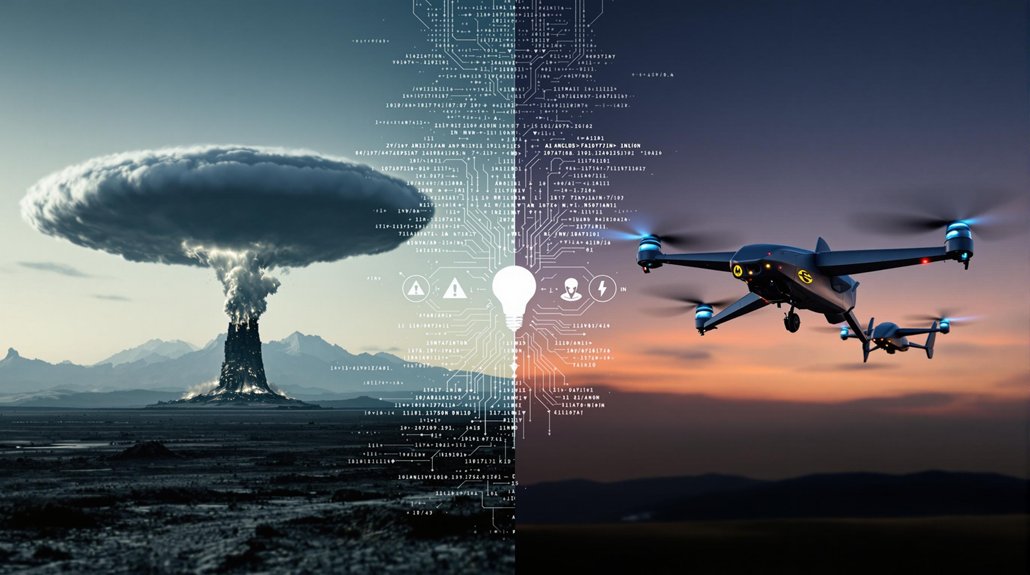

AI weapons are creating challenges similar to those faced during the nuclear age. Autonomous systems can make life-or-death decisions with minimal human oversight, raising ethical and legal concerns. Like nuclear weapons, military AI poses risks of accidents and unintended escalation. Traditional arms control approaches don’t work well for this dual-use technology. Growing competition between nations to develop advanced AI weapons mirrors historical arms races. New disarmament thinking is essential for managing these emerging threats.
As nations around the world continue developing artificial intelligence for military use, experts are increasingly concerned about the potential risks these technologies pose. The development of AI weapons isn’t entirely new – autonomous systems like heat-seeking missiles have existed for decades. However, today’s AI has dramatically expanded these capabilities with self-operating drones and robots that can make decisions without human input.
Many security experts draw parallels between today’s AI weapons and nuclear weapons from the 20th century. Both technologies changed warfare completely and created global security challenges. The risk of accidents, misuse, or unintended escalation exists with both. This is especially concerning when AI gets integrated into nuclear command systems, potentially making them less stable.
Unlike nuclear weapons, AI technology is harder to control through traditional arms agreements. It’s a dual-use technology with both civilian and military applications. This makes verification difficult – how can inspectors check if an algorithm is designed for peaceful or military purposes? Nations also disagree about basic rules for military AI, further complicating global cooperation.
AI weapons also raise unique ethical questions. When machines make life-or-death decisions, who’s responsible for mistakes? International humanitarian law requires human judgment in warfare, but autonomous weapons blur this requirement. There’s also concern that AI could make biological or chemical weapons easier to develop when combined with other technologies. The reduced human cost of deploying AI-powered weapons may make countries more willing to engage in conflicts with fewer political consequences. The potential for ethical concerns without clear explanations behind AI decisions adds another layer of complexity to military applications.
The geopolitical competition around military AI is intensifying. Countries are racing to develop the most advanced systems, creating instability similar to past arms races. This rush might lead nations to deploy AI weapons before fully understanding their risks. History has shown similar conservativeness in nuclear weapons technology, where many operations still rely on outdated technology like floppy disks.
Addressing these challenges requires new thinking about arms control. Traditional approaches won’t work for AI’s decentralized, widely available nature. Whatever solutions emerge must balance security needs with ethical considerations while preventing potentially catastrophic outcomes from this rapidly evolving technology.