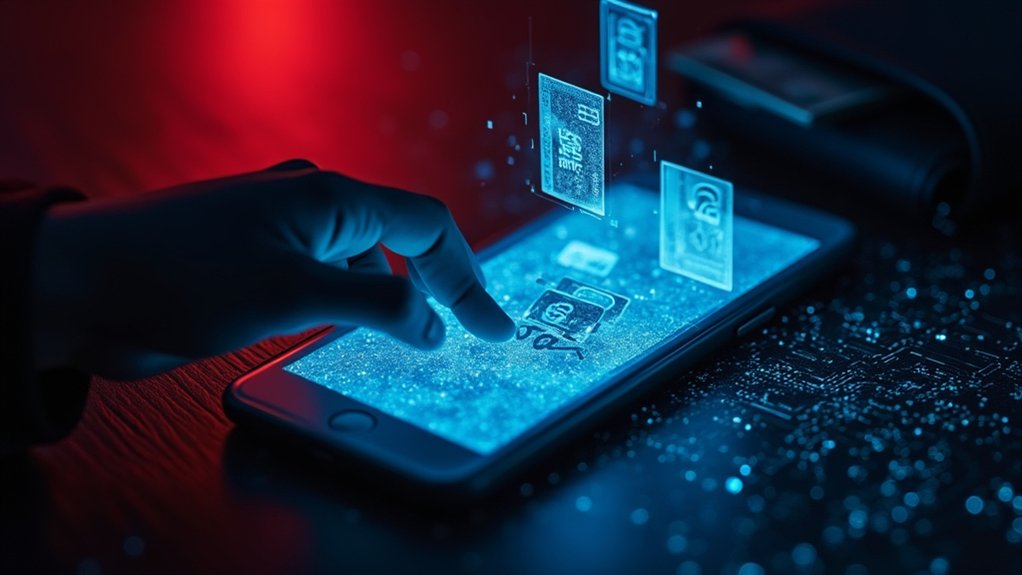
Deception has found a new voice. Scammers are now using artificial intelligence to clone human speech. They copy voices of relatives, bosses, coworkers, and customer service agents. With just a few seconds of audio, criminals can build a convincing fake voice. Research shows this cloning method can reach an 85% accurate match using only three seconds of recorded audio. This technology has made impersonation scams cheaper and easier to pull off.
These scams often target urgent situations. Victims may be asked to send emergency payments, recover an account, or approve a payroll change. Some are tricked into buying gift cards. Business leaders face particular risk, as CEO deepfake fraud reportedly targets nearly 400 companies every day. Fraudsters often pair fake voices with spoofed caller ID numbers. They add pressure and emotional urgency to make the scheme feel real.
Fraudsters pair fake voices with spoofed caller IDs, using urgency and pressure to make scams feel real.
The numbers show fast growth. One 2026 industry summary reported deepfake fraud attempts jumped more than 1,300% in a single year. A 2025 analysis found a 2,137% rise over three years. Deepfake files reportedly grew from 500,000 in 2023 to 8 million in 2025. A European Parliament briefing said attacks were happening every five minutes in 2024. A 2026 consumer report found that one in four Americans got a deepfake voice call in the past year.
Financial losses are large. Enterprise losses averaged $680,000 per voice fraud attack, according to a 2026 summary. A 2024 survey found average damages over $450,000 per incident. Global deepfake fraud losses topped $200 million in 2025. The FBI’s 2025 Internet Crime Report tied $893 million in losses to AI-related scams. The FTC recorded more than $1.9 billion in losses from phone and impersonation scams in 2023.
Some cases show how costly this can get. In 2019, a German company lost about $240,000 to a voice-clone wire fraud. In 2024, the firm Arup reportedly lost around $25 million after a deepfake video call fooled employees.
Detecting these fakes isn’t easy. One study found humans could spot deepfake audio only 73% of the time. Another statistic put accurate detection at just 0.1%. Warning signs include odd pacing, flat emotion, or unusual pauses. Sudden urgency and secrecy are also common red flags. Compounding this danger, AI systems frequently express high confidence in generated outputs even when the information is unreliable, making fraudulent interactions harder for victims to question.
Experts note that call-back verification through known numbers remains one method used to check unusual requests.
References
- https://sqmagazine.co.uk/ai-voice-cloning-fraud-statistics/
- https://app.stationx.net/articles/deepfake-statistics
- https://www.vectra.ai/topics/ai-scams
- https://www.europarl.europa.eu/RegData/etudes/ATAG/2025/777940/EPRS_ATA(2025)777940_EN.pdf
- https://www.adaptivesecurity.com/blog/ai-deepfake-scams
- https://voxbooster.com/blog/voice-cloning-fraud-statistics-2027/
- https://agentry.news/no-2026-deepfake-fraud-cases-verified-in-major-crime-databases
- https://www.unesco.org/en/articles/deepfakes-and-crisis-knowing
- https://news.un.org/en/story/2026/03/1167144
- https://pmc.ncbi.nlm.nih.gov/articles/PMC11991371/