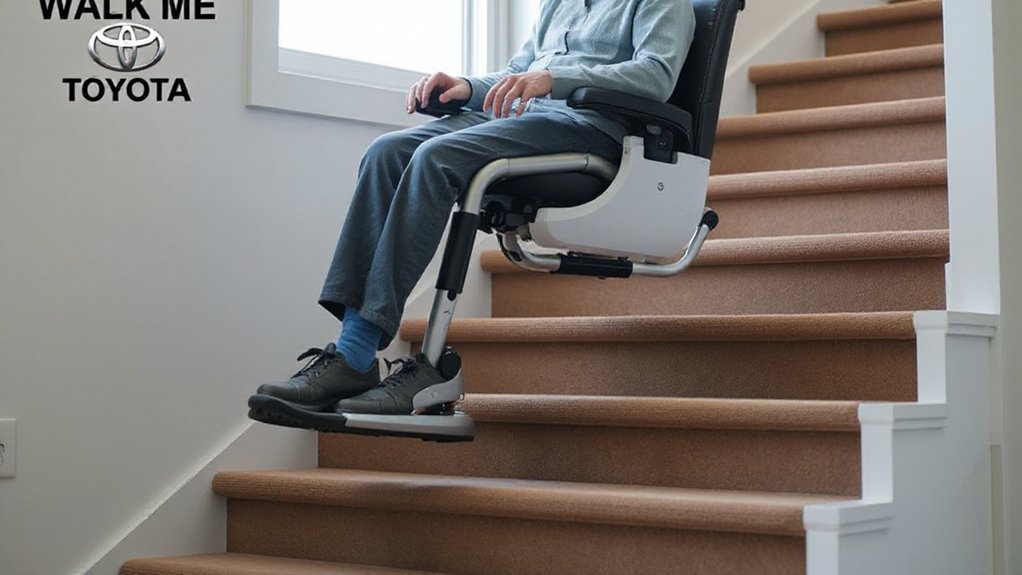

Stepping into the future of mobility, Toyota has disclosed an innovative chair that walks instead of rolls. The “Walk Me” prototype, introduced at the Japan Mobility Show 2025, features four robotic legs that replace traditional wheels. These motorized legs can bend, lift, and adjust like an animal’s movement, allowing the chair to navigate obstacles that stop regular wheelchairs.
The robotic chair can climb stairs, cross gravel paths, and handle uneven terrain. It can even lift users to help them reach vehicles or higher platforms. This solves common problems like sunken entrances in Japanese homes or tight elevators where standard wheelchairs struggle.
Conquering stairs, gravel, and uneven ground, the Walk Me chair elevates users when needed, tackling accessibility challenges traditional wheelchairs cannot overcome.
Each leg moves independently and can change its stride. Users can choose a short, slow shuffle or a longer, faster march. The legs fold up when not in use, making the chair compact for storage or transport.
The Walk Me‘s built-in safety features include weight sensors that confirm the user is centered before moving and collision radars that detect obstacles. The prototype employs smart sensors and algorithms to maintain perfect balance even on the most complex surfaces.
Users control the chair through side handles or a digital interface. Voice commands are also available – saying “slow” shortens the stride while “faster” lengthens it. The design draws inspiration from goat movements on rocky terrain, enabling it to navigate challenging landscapes with remarkable stability. A small screen on the armrest displays battery life and distance traveled, along with a simple map for navigation.
The chair’s battery hides behind the seat and provides enough power for a full day’s use. It charges overnight using a standard wall outlet. The design includes soft, velvety covers to protect the internal mechanisms and sensors while cushioning bumps.
Toyota’s Walk Me represents a significant advance in assistive technology. It’s designed to keep users upright and balanced, even on inclines. The base widens and the seat tilts back when needed to prevent tipping.
Though still a prototype not available for purchase, the Walk Me showcases Toyota’s vision for intelligent, adaptive mobility solutions that improve accessibility for people with limited mobility.
References
- https://www.dpccars.com/blog/forget-wheels-toyotas-robotic-chair-walks-like-an-animal/
- https://www.techeblog.com/toyota-walk-me-robot-chair/
- https://www.youtube.com/watch?v=VzD9bhUIaK4
- https://parametric-architecture.com/toyotas-japan-mobility-show-2025/
- https://www.topgear.com/car-news/first-look/toyota-working-walking-wheelchairs-a-robo-car-kids-and-a-truck-africa