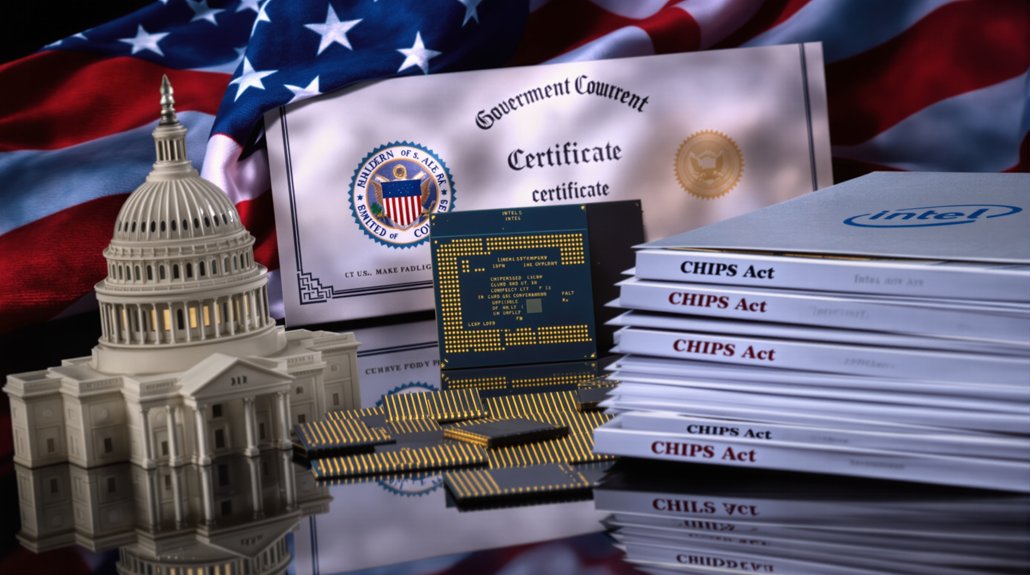

The Trump administration is converting $5.7 billion in unpaid semiconductor grants into ownership of Intel stock, giving the U.S. government a 9.9% stake in the tech giant. The deal transforms money that Intel was supposed to receive through the CHIPS Act into 433.3 million shares purchased at $20.47 each.
The government’s getting these shares at a discount compared to Intel’s current market price. An extra $3.2 billion from the Secure Enclave program brings total support to $8.9 billion. This isn’t new money though. It’s a reallocation of funds already promised to Intel.
Government acquires Intel shares below market value through $8.9 billion reallocation of previously promised funds.
The government won’t have any say in how Intel runs its business. It’s a passive investment with no board seats or voting rights, except in limited situations. The government agreed to vote with Intel’s board on most matters. Previous rules about clawing back money and sharing profits have been eliminated.
Intel had already received $2.2 billion from CHIPS Act funds. The remaining grants got delayed because of complex requirements about social programs and infrastructure. The original CHIPS Act tied funding to things like childcare and housing, which slowed down the money’s distribution.
This equity conversion marks a major shift in how the government supports American chip manufacturing. Instead of just giving subsidies, the government’s now taking ownership stakes. Officials say they’re doing this to secure America’s semiconductor supply chain and reduce dependence on foreign manufacturers. Trump has publicly criticized the CHIPS Act as a “horrible, horrible thing” while simultaneously claiming this deal benefits America.
The deal includes a five-year warrant that lets the government buy more shares if Intel loses majority control of its foundry business. Intel hired PJT Partners as its financial advisor for the agreement.
For existing Intel shareholders, this means dilution. The government’s new shares reduce their ownership percentage. Intel says the deal will benefit both taxpayers and shareholders in the long run through business success. The government’s financial stake raises questions about regulatory fairness when making decisions that could affect Intel’s competitors in the semiconductor industry. Similar concerns about government oversight exist with Nvidia, which faces export controls aimed at preventing advanced AI chips from reaching China.
The move comes as Intel faces challenges in its foundry business while competitors like NVIDIA dominate the AI chip market. The government’s strategy focuses on strengthening domestic chip production for national security, especially for AI and defense applications. This direct ownership approach represents a departure from previous administrations’ focus on manufacturing incentives.
References
- https://techcrunch.com/2025/08/23/the-trump-administrations-big-intel-investment-comes-from-already-awarded-grants/
- https://cei.org/opeds_articles/when-washington-buys-intel-it-owns-you-too/
- https://itif.org/publications/2025/08/21/the-trump-administration-should-refrain-from-taking-equity-in-semiconductor-companies/
- https://newsroom.intel.com/corporate/intel-and-trump-administration-reach-historic-agreement
- https://oregonbusiness.com/trump-administration-will-pay-8-9b-for-intel-stake/