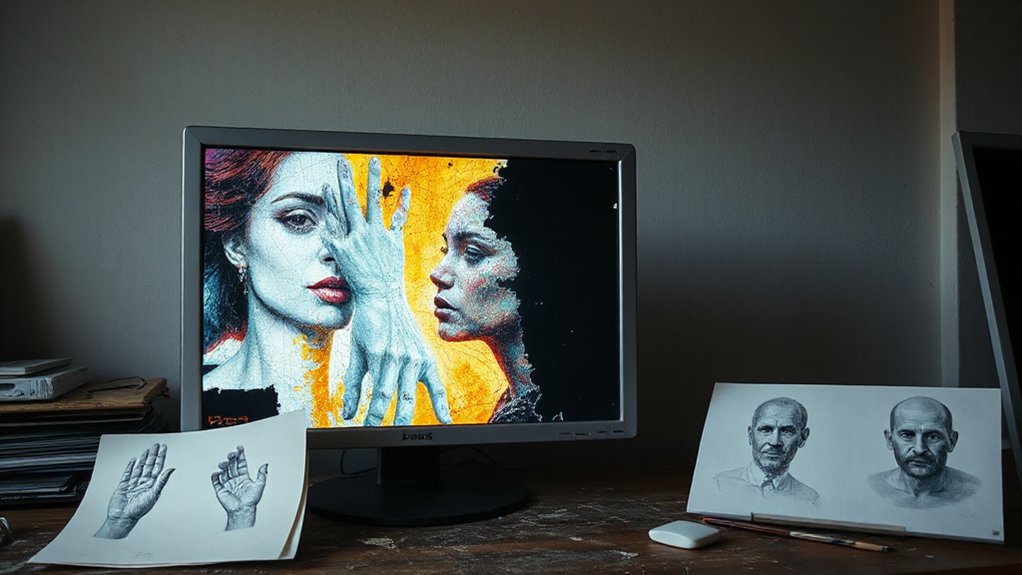
Artificial intelligence can now create stunning images in seconds. But many experts say these images are missing something important. They say AI art lacks the heart and soul that make human-created work truly beautiful.
Human artists feel joy, frustration, and satisfaction when they create. Those emotions show up in their work. AI systems don’t experience any of those feelings. That means the images they produce don’t carry the same emotional weight. A watercolor landscape painted by hand tells a story. An AI-generated image just rearranges pixels based on data.
Human emotions breathe life into art. Without them, even the most stunning image is just rearranged pixels.
AI also can’t take real creative risks. It works within fixed rules and looks for patterns in existing artwork. It defaults to what’s already popular or familiar. Groundbreaking art requires stepping outside boundaries. Algorithms can’t do that. They’re limited by their training data and can only remix what already exists.
This creates another problem. When AI keeps pulling from existing work, it produces more and more of the same thing. Art starts to look identical. Diversity in the creative world shrinks. Some experts worry that artists who rely too heavily on AI tools may lose their own creative drive over time.
There’s also the question of meaning. Human artists create with a purpose. They want to tell stories, process emotions, and comment on the world around them. AI doesn’t understand meaning at all. It can’t appreciate why a piece of art matters or what makes one style more powerful than another. Machine-generated images might look technically correct, but they often lack depth and nuance.
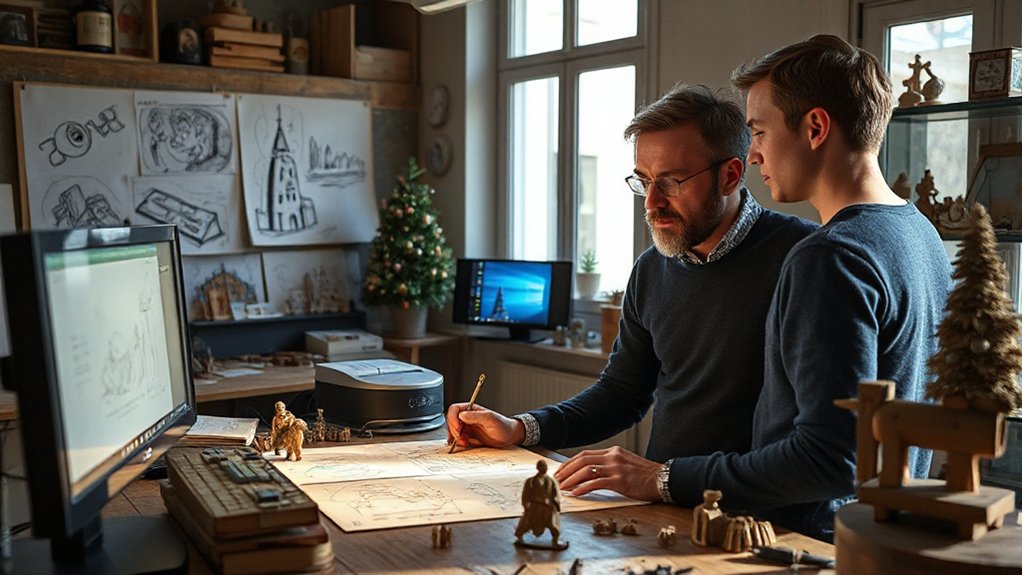
Social experiences also shape human art. Artists draw inspiration from people, places, and political events. Those real-world connections drive creativity in ways that data sets simply can’t replicate. AI has no lived experience. It only knows what it’s been trained on. Unlike human artists, AI lacks the emotional intelligence and empathy needed to transform personal and shared experiences into truly resonant creative work.
Experts say AI-generated images can be impressive at first glance. But they’re not the same as authentic artistic expression. Many artists are also unaware that their work may be used to train AI without their consent or fair compensation. Training AI models is also associated with significant energy costs and carbon emissions, raising further questions about the true price of this technology. Until machines can truly feel, imagine, and intend, many believe they won’t be able to create genuinely beautiful art.