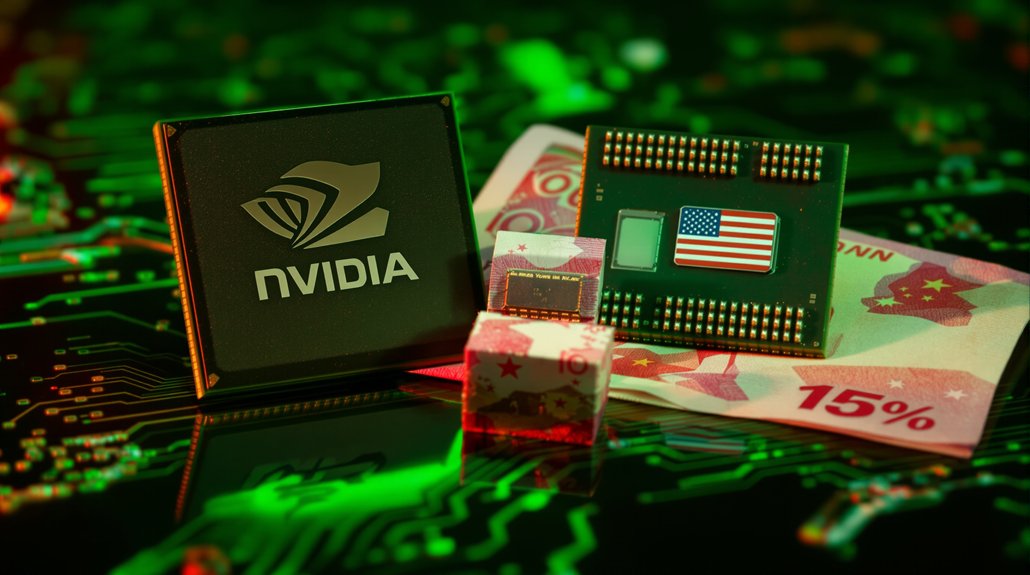

The Trump administration struck a deal that lets Nvidia sell computer chips to China again, but there’s a catch — the tech giant must hand over 15% of its Chinese sales revenue to the U.S. government.
This new arrangement reverses the April 2025 ban that blocked Nvidia from selling certain chips to China. The company can now export its H20 GPUs and other select chips, but they need export licenses that’ll be automatically approved. These H20 chips aren’t as powerful as Nvidia’s top AI processors. They’re specifically designed to meet U.S. export rules by limiting their computational power.
The 15% revenue cut applies to all chips approved for export to China, including Nvidia’s H20 and AMD’s MI308. This requirement marks a major change in how the U.S. handles tech exports. Instead of focusing only on national security concerns, the government’s now collecting what some analysts call a “windfall tax” in exchange for market access.
U.S. takes 15% cut from tech giants’ China chip sales, shifting from security-first to revenue-sharing export policy
For Nvidia, China’s a huge market that makes up about 13% of its total revenue. The country’s also home to half of all AI developers worldwide. When the export ban was in place, Nvidia lost about $4.5 billion in quarterly sales. Now that restrictions are lifted, the company’s stock jumped 4.5% as investors celebrated the news.
The Bureau of Industry and Security at the Commerce Department still oversees Nvidia’s export licenses, but approval’s now just a formality for the less powerful chips. The Commerce Department maintains the Entity List that identifies foreign companies engaged in activities against U.S. national security interests. Nvidia still can’t export its most advanced processors to China. The Biden administration first imposed these export controls in October 2022 to prevent China from accessing high-end AI chips that could enhance military capabilities.
This policy shift has raised eyebrows in Washington. Congressional leaders worry about setting a precedent where the government takes a cut of private companies’ foreign sales. Security officials warn that even these “downgraded” chips could help China advance its AI capabilities.
Some analysts question whether economic interests now matter more than national security. The original export controls were meant to prevent China from using advanced chips for military and surveillance purposes. Now, with the revenue-sharing model, critics wonder if the U.S. is putting profits ahead of security concerns.
References
- https://builtin.com/articles/trump-lifts-ai-chip-ban-china-nvidia
- https://www.everycrsreport.com/reports/R48642.html
- https://www.thomasnet.com/insights/nvidia-ai-chips-china/
- https://www.americanactionforum.org/insight/trumps-political-tax-on-nvidia-chips-to-china/
- https://www.fdd.org/analysis/2025/07/16/reversing-previous-restrictions-washington-allows-nvidia-to-sell-advanced-chips-to-china/