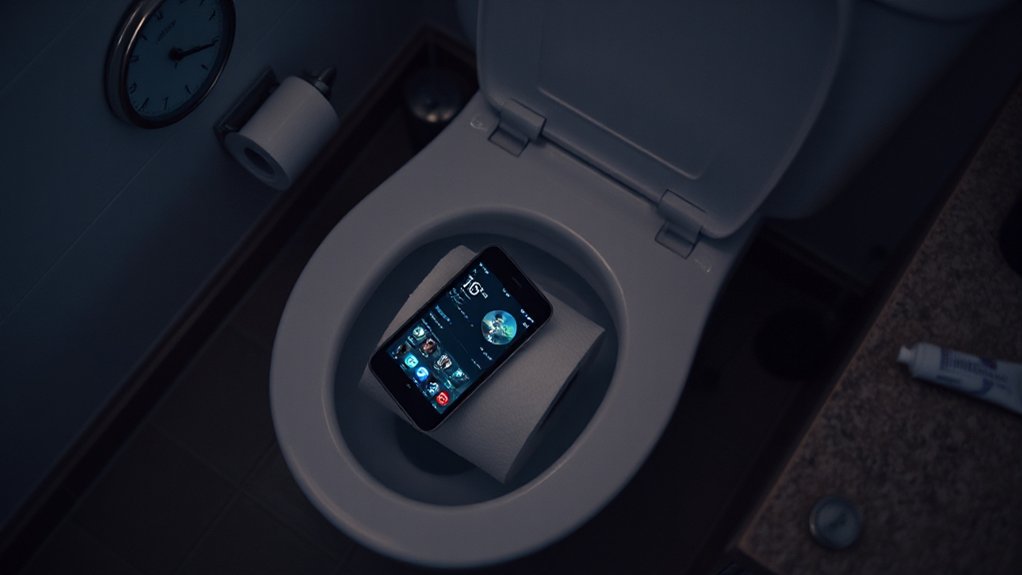
Why can’t people put down their phones, even in the bathroom? According to recent statistics, 66% of adults use their smartphones while on the toilet. The numbers are even higher for specific groups: 88% of Android users, 76% of iPhone users, and a whopping 96% of Gen Z members bring their phones to the bathroom.
The bathroom has become our last scrolling sanctuary, with most adults unable to disconnect even during nature’s call.
This habit isn’t just about staying connected. It’s changing how long people spend in the bathroom. About 37% of smartphone users spend more than 5 minutes per toilet session, compared to only 7.1% of non-users. Most people are scrolling through social media or reading news rather than focusing on the actual purpose of being there.
The health consequences are becoming clearer. Research shows smartphone use on the toilet corresponds to a 46% increased risk of hemorrhoids. In one study, 43% of all participants were found to have hemorrhoids confirmed by colonoscopy. It’s not straining that’s causing the problem—it’s simply sitting too long because of digital distraction.
Hemorrhoids aren’t just uncomfortable—they can lead to blood clots, skin tags, and infections. The medical recommendation for a healthy bowel movement is just a few minutes, but many people are sitting much longer while distracted by their devices.
The behavior seems to follow generational lines. While 93% of Americans under 40 are frequent “toilet texters,” only 11% of the “silent generation” (born before 1945) bring phones to the bathroom. This pattern aligns with broader digital dependency trends.
Beyond physical health, constant phone use is linked to higher anxiety and stress levels. Many people experience separation anxiety when they don’t have their phones, even for brief periods. The addictive design of many apps encourages mindless scrolling and longer sitting times.
As smartphone ownership reaches 91% of Americans, health professionals are increasingly concerned about this bathroom habit and its long-term effects on both physical and mental health. These concerns are well-founded as hemorrhoids lead to nearly 4 million doctor visits annually in the U.S. Additionally, despite 90% of Americans washing their hands after using the toilet, only 16.5% clean their phones, creating a concerning hygiene risk.
References
- https://www.bankmycell.com/blog/cell-phone-usage-in-toilet-survey
- https://www.scimex.org/newsfeed/scrolling-on-the-toilet-linked-to-haemorrhoids
- https://www.discovermagazine.com/prolonged-smartphone-use-during-bathroom-breaks-may-raise-the-risks-of-hemorrhoids-47997
- https://www.axios.com/2025/09/04/hemorrhoids-smartphone-toilet-phone-study-symptoms
- https://newatlas.com/health-wellbeing/toilet-smartphone-use-hemorrhoids/