Some AI achievements sound like science fiction, but this one’s just practical. Artificial intelligence is now writing concrete formulas that slash carbon emissions by up to 40%. Not bad for algorithms that work faster than a barista making your morning latte.
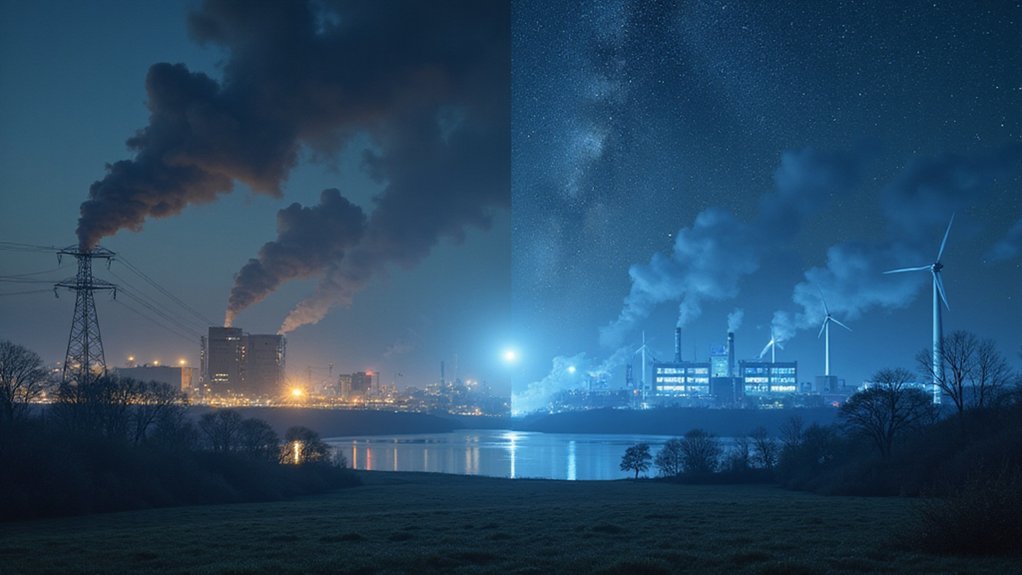
The concrete industry pumps out roughly 8% of global carbon emissions.
The concrete industry pumps out roughly 8% of global carbon emissions. That’s a lot of climate damage from gray slurry. But researchers at MIT, the University of Illinois, and Meta have released AI models that generate new cement recipes in weeks instead of months.
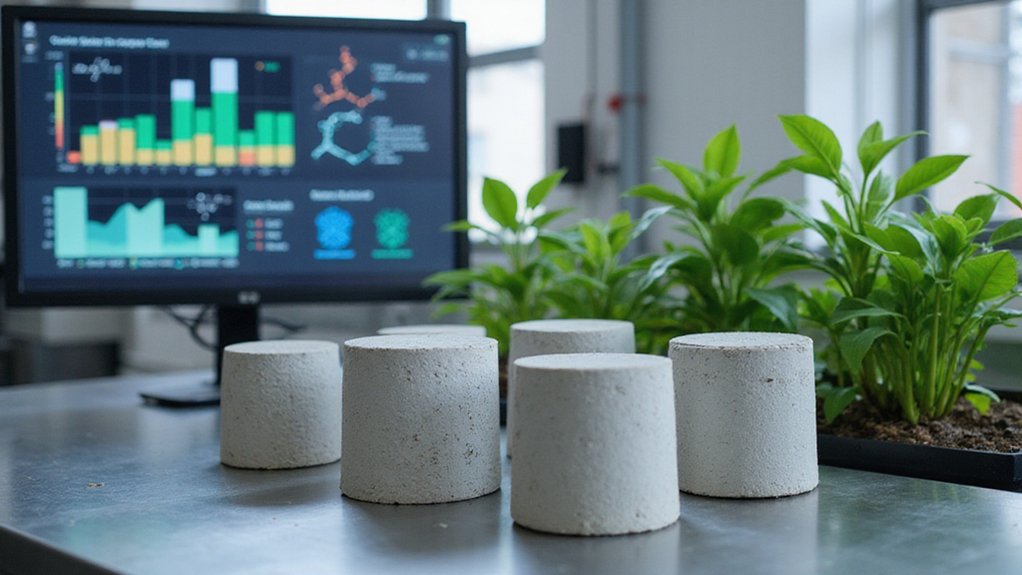
These digital chemists are replacing traditional cement with fly ash and slag – industrial byproducts that would otherwise end up as waste. MIT’s framework also identified ceramics like old tiles and pottery as promising cement substitutes.
Here’s the twist: some AI-created formulas replace 70% of the cement. Seventy percent. Traditional concrete engineers would’ve called that impossible, but computers don’t care about tradition. They just crunch numbers and spit out mixes that work.
The new formulas aren’t some lab experiment either. Meta’s DeKalb data center already has AI-designed concrete in its floor slabs. The stuff meets or exceeds standard strength requirements while dramatically cutting emissions.
Field tests confirm what the algorithms predicted – these mixes can handle real-world abuse. Ozinga refined the recipes for cold weather conditions and local material availability, proving the AI’s flexibility.
Speed matters too. While human engineers plod through trial-and-error testing, AI evalu
This environmental innovation comes despite concerns that training such AI models can emit substantial carbon emissions equivalent to five cars over their lifetimes.
References
- https://news.mit.edu/2025/ai-stirs-recipe-for-concrete-0602
- https://cee.illinois.edu/news/artificial-intelligence-produces-recipe-lower-carbon-concrete
- https://tech.facebook.com/engineering/2022/4/sustainable-concrete/
- https://csl.illinois.edu/news-and-media/researchers-use-ai-discover-stronger-and-more-environmentally-friendly-formula-concrete
- https://www.enn.com/articles/76650-ai-stirs-up-the-recipe-for-concrete-in-mit-study