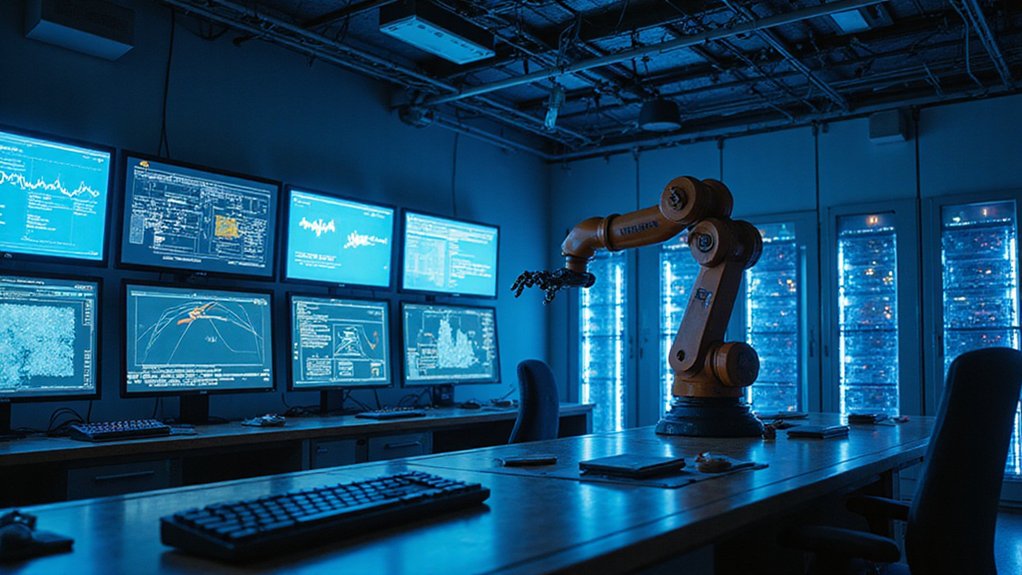

The engineering soul of AI goes beyond coding skills. It combines technical expertise with ethical awareness and human-centered design. Engineers must master version control, system monitoring, and bias testing while maintaining transparency with users. They balance complex statistics with programming knowledge to create systems that assist rather than replace humans. Today’s AI professionals earn competitive salaries as they develop machines that serve humanity. The path to true AI mastery involves more than just technical ability.
Behind every intelligent machine lies a carefully crafted framework of ethics, technical expertise, and human-centered design. Today’s AI engineers don’t just write code – they build systems that shape our world. These experts follow key practices that guarantee AI works properly. They use version control for data and models, monitor systems constantly, and can roll back changes when needed.
Good AI engineering isn’t just about technical skills. Engineers need strong programming abilities and knowledge of statistics, but they also need to take into account ethics. Most professionals earn competitive salaries reflecting their specialized expertise and market demand. Teams now perform risk assessments before deployment and work hard to make systems fair and private. They test for social bias in their training data to prevent perpetuating harmful stereotypes. They tell users when AI is being used and explain how decisions are made.
AI excellence demands both technical mastery and ethical vigilance to ensure systems serve humanity with fairness and transparency.
AI systems work best when they blend machine efficiency with human creativity. Engineers focus on creating algorithms that help people rather than replace them. This approach uses principles from behavioral science and keeps humans involved throughout development.
The field faces several major challenges. Models are becoming more complex while data quality issues remain. Engineers must protect systems from attacks while making them understandable to users. This balance is difficult but essential.
In professional settings, firms are creating clear rules for AI use. They’re teaching staff to use specific, discrete queries instead of long, complicated prompts. Teams verify AI results against human expertise and protect confidential information. Unlike humans with intentional thinking, AI systems operate by following instructions without any inherent purpose or motivation.
The future of AI engineering points toward systems that truly complement human thinking. Some researchers are exploring artificial general intelligence, while others focus on adding humanities knowledge to make AI reasoning more human-like. There’s growing interest in building systems with ethical reasoning abilities.
Through careful engineering practices and ethical reflections, AI developers are creating technology that upholds human values while pushing technical boundaries. This balance forms the true engineering soul of artificial intelligence.