
Recent research shows increased AI use may weaken critical thinking skills. Studies involving 666 participants found a strong negative correlation (r = -0.68) between AI dependency and analytical abilities. Younger users aged 17-25 show the highest rates of dependency. Experts worry this trend affects both educational settings and workplaces, where problem-solving skills remain essential. Effects vary based on education level, but the overall decline in mental engagement raises important questions about our cognitive future.
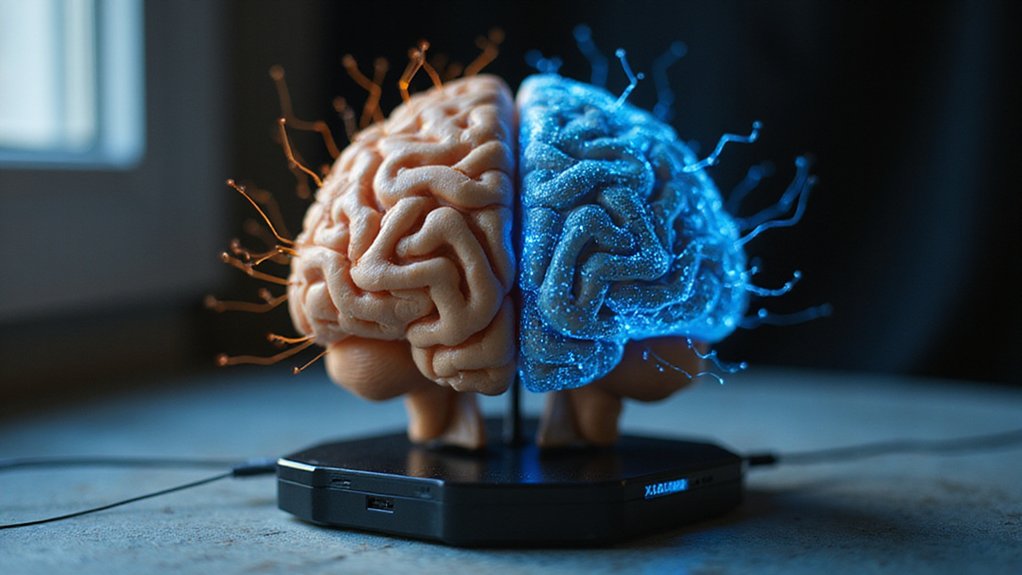
As artificial intelligence tools become more integrated into daily life, researchers are raising alarms about their impact on human thinking abilities. New studies show that frequent AI usage leads to cognitive offloading, where people delegate mental tasks to technology instead of using their own analytical skills.
Research indicates that users who regularly rely on AI for problem-solving show weaker critical thinking skills. The convenience of getting quick answers from AI reduces opportunities for deep thinking and reflection. This is especially true for younger users between 17 and 25 years old, who show the highest rates of AI dependency.
Studies consistently find a connection between greater AI reliance and lower critical thinking scores. A comprehensive study with 666 participants recently confirmed this negative correlation through both surveys and interviews. The research revealed a significant negative correlation between AI tool usage and critical thinking with a strong coefficient of r = -0.68, p < 0.001. The research reveals diminishing returns on thinking skills as AI usage increases past certain levels. Many people admit they worry that regular AI use undermines their ability to make independent judgments.
The impact on education is particularly concerning. Researchers warn that unless schools actively teach critical thinking alongside AI use, students may lose important cognitive skills. Digital literacy programs could help students learn to question AI-generated content rather than accepting it without thought.
In workplaces, increased AI use may weaken employees’ decision-making and problem-solving abilities. As more tasks become automated, people risk losing adaptive reasoning skills. Organizations might need to provide special training to help workers maintain their critical analysis capabilities. With job market impact showing that up to 40% of global jobs could be exposed to AI by 2030, maintaining human critical thinking becomes even more crucial.
The research shows that the negative effects aren’t the same for everyone. People with higher education levels tend to maintain stronger critical thinking despite using AI regularly. However, the overall trend points to a concerning pattern where the convenience of AI leads to less mental engagement.
Experts suggest designing AI systems that encourage user participation rather than passive acceptance. They emphasize that maintaining human analytical skills will become increasingly important as AI continues to handle more cognitive tasks in our daily lives.
References
- https://www.mdpi.com/2075-4698/15/1/6
- https://phys.org/news/2025-01-ai-linked-eroding-critical-skills.html
- https://www.sps.nyu.edu/homepage/metaverse/metaverse-blog/Thinking-with-AI-Pros-and-Cons-Language-Logic-and-Loops.html
- https://www.nsta.org/blog/think-or-not-think-impact-ai-critical-thinking-skills
- https://www.psypost.org/ai-tools-may-weaken-critical-thinking-skills-by-encouraging-cognitive-offloading-study-suggests/