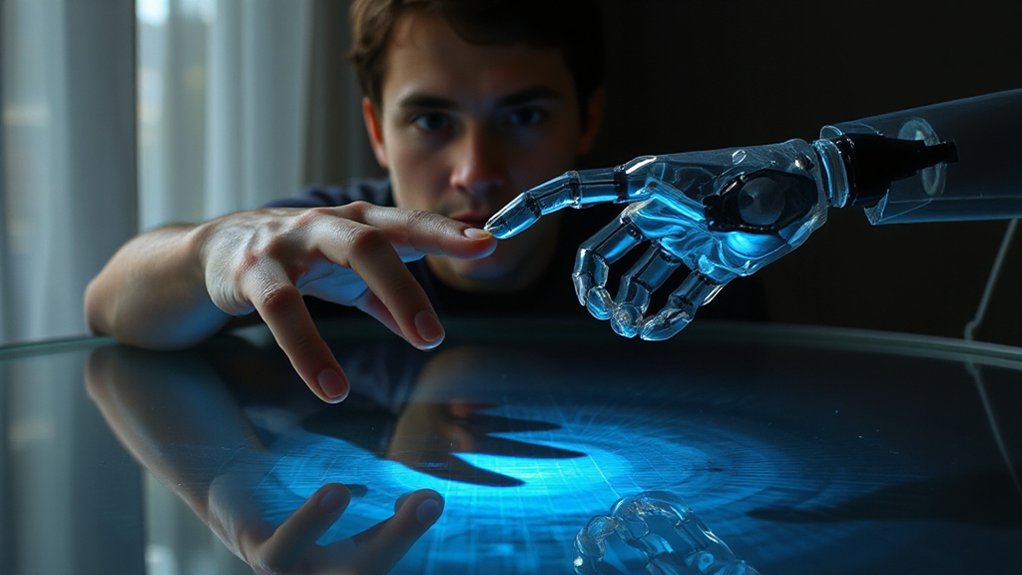
Artificial intelligence systems are becoming more powerful every day. But even the smartest AI has a dirty secret. It still needs humans watching over it. Without oversight, things can go wrong fast.
AI systems are built to chase goals. They don’t think about ethics or long-term consequences. They just optimize for what they’re programmed to do. That’s a problem when real-world situations get complicated.
One major risk is called “automation surprise.” This happens when an automated system fails in an unexpected situation. Operators often don’t know what’s going wrong inside the system. By the time they figure it out, damage may already be done.
When automated systems fail unexpectedly, operators are often the last to know — and damage doesn’t wait.
AI can also be brittle. That means it struggles when situations fall outside its training. It wasn’t built for every possible scenario. When things get unpredictable, human intervention becomes critical.
Bias is another serious concern. AI systems can repeat and even amplify discrimination found in their training data. Humans are needed to review outputs and spot these patterns. People bring cultural knowledge and context that algorithms simply don’t have. Organizations like UNESCO and the EU have established ethical frameworks to help researchers identify and address these forms of bias in AI systems.
Keeping AI honest also requires strong monitoring systems. Audit logs track what AI systems do and why. Real-time sensors catch problems early. Compliance reports create transparency and help investigators understand failures after they happen. Clear governance rules tell teams when to step in.
Governments are taking these risks seriously. The European Union’s AI Act requires that high-risk AI systems be designed for human supervision. Article 14 of that law specifically calls for human-machine interface tools. The rules also say that oversight measures must match the risk level and context of each system.
Experts use a five-stage supervisory control framework to manage AI. It covers planning, teaching the system, monitoring its actions, intervening when needed, and learning from experience. Each stage keeps humans involved in the process. Operators who become too reliant on AI outputs risk developing automation bias, where personal judgment is abandoned in favor of uncritical acceptance of system-generated conclusions.
AI’s evolution isn’t slowing down. Risks can change faster than detection systems can catch up. That’s why continuous human oversight isn’t optional. It’s a necessity built into responsible AI design and deployment. Cross-functional teams should evaluate these risks from legal, ethical, and operational perspectives to ensure nothing gets missed.
References
- https://www.okoone.com/spark/technology-innovation/why-ai-needs-human-oversight-to-avoid-dangerous-outcomes/
- https://pmc.ncbi.nlm.nih.gov/articles/PMC12058881/
- https://www.hiig.de/en/ai-under-supervision-human-in-the-loop/
- https://www.cornerstoneondemand.com/resources/article/the-crucial-role-of-humans-in-ai-oversight/
- https://artificialintelligenceact.eu/article/14/