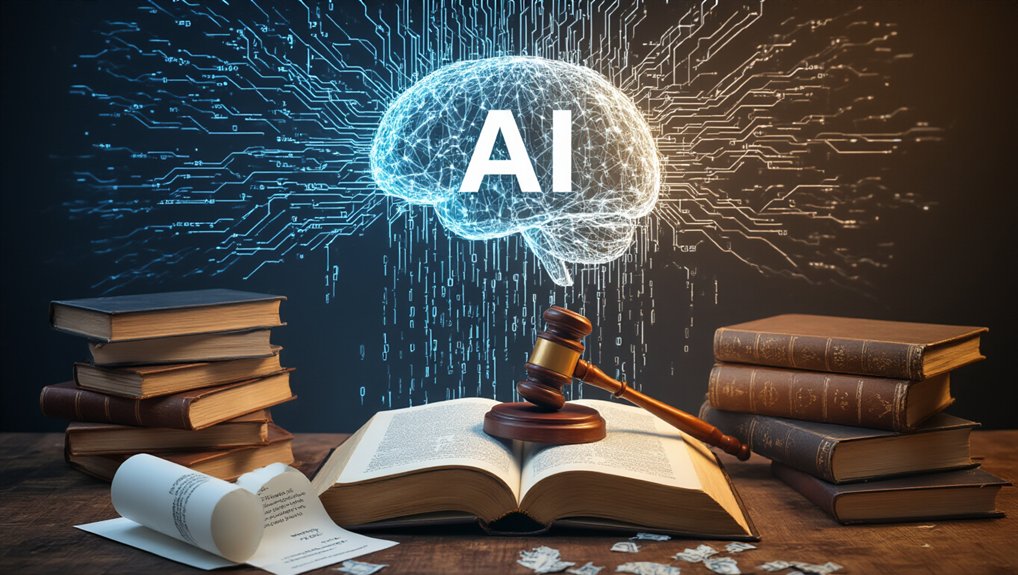
While AI technology races ahead at breakneck speed, authors’ rights are struggling to keep up. The creative environment has become a legal battlefield with over 40 copyright lawsuits pending in U.S. courts. It’s a mess. Companies like Anthropic find themselves caught between innovation and accusations of wholesale piracy.
Courts can’t seem to agree on whether training AI on books is infringement or not. Some judges say yes. Others shrug and say no. Meanwhile, authors watch their work get consumed by algorithms that spit out competing content faster than any human could write. Talk about unfair competition.
The legal system flounders while algorithms devour creative works at lightning speed—a digital feast with authors as the unwilling main course.
The fair use doctrine isn’t providing much clarity either. Regulators have flatly rejected the cute notion that AI learns “just like humans do.” Nice try. They’ve called this comparison “mistaken” and emphasized that AI training is evaluated on a case-by-case basis. When AI-generated content competes directly with human authors, courts and regulators have raised concerns about whether such use is sufficiently transformative to qualify as fair use.
The economic impact is real and growing. AI can flood markets with content, diluting sales and crushing opportunities for human creators. Imagine spending years perfecting your craft only to compete with a machine that can produce 500 books before your morning coffee. The Copyright Office acknowledges the transformative purpose could potentially justify copying entire works, but still recognizes serious risks of market erosion. The USCO has specifically warned that commercial use of copyrighted materials to generate competing expressive content raises significant fair use concerns.
What about compensation? That’s still “uncharted territory.” Authors believe they deserve licensing fees when their books feed the AI beast. But without clear precedent, it’s a tough battle.
Lawmakers are scrambling to catch up, considering new federal protections against unauthorized AI training. The final chapter of this story remains unwritten. For now, authors continue fighting for recognition in a system that wasn’t designed for algorithmic creativity.
And AI companies? They’re hoping the courts will give them a happy ending—one that authors fear might be their own tragic conclusion.
References
- https://www.copyright.gov/ai/Copyright-and-Artificial-Intelligence-Part-3-Generative-AI-Training-Report-Pre-Publication-Version.pdf
- https://www.skadden.com/insights/publications/2025/05/copyright-office-report
- https://www.msk.com/newsroom-alerts-copyright-office-ai-report
- https://sites.usc.edu/iptls/2025/02/04/ai-copyright-and-the-law-the-ongoing-battle-over-intellectual-property-rights/
- https://www.copyright.gov/newsnet/2025/1060.html