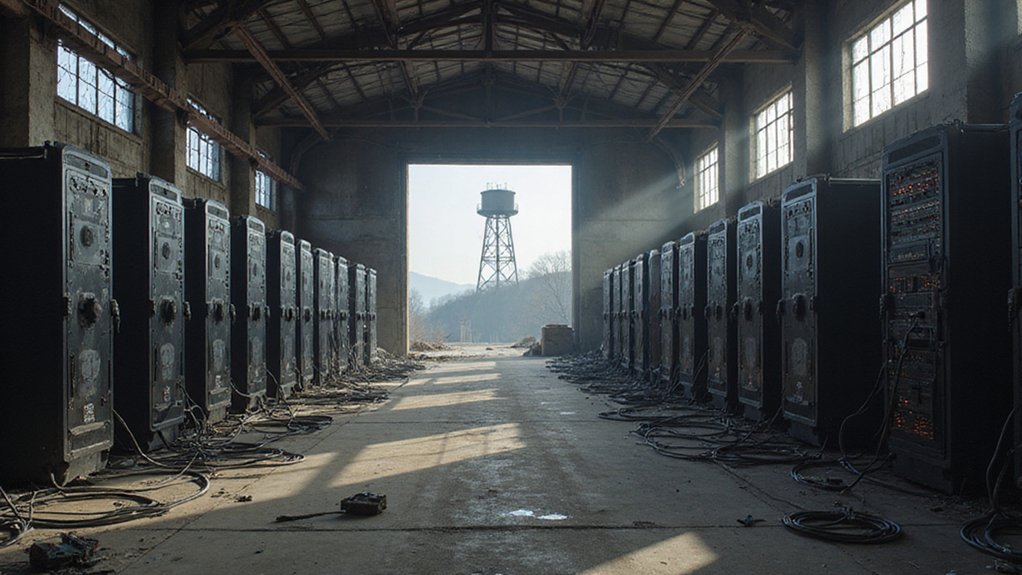

Bitcoin miners rushed into Kentucky’s coal country in 2021, promising jobs and prosperity for struggling communities. Companies from New York, Texas, and San Francisco raced to find sites across the state. They filled abandoned coal mines with computers that process cryptocurrency transactions.
At its peak, Kentucky powered about 20% of America’s Bitcoin mining operations. In 2022, the state handled nearly one-fifth of the country’s proof-of-work mining computing power. Local leaders welcomed these businesses as economic saviors for eastern Kentucky’s declining coal regions.
The reality hasn’t matched the promises. Many mining operations have already shut down. Lawyer Anna Whites says these companies often lacked sustainable business models. They’d set up quickly, lease property, then suddenly close. They frequently left behind unpaid bills and broken promises to local communities.
These operations consume massive amounts of electricity. Three Bitcoin mining companies now buy nearly 20% of Paducah Power’s electricity. That number could rise to 33% by 2025. Utility companies consider miners good customers because they run at full power constantly. Miners can shut down during extreme weather, helping balance the electric grid. Despite initial fears from city commissioners, residential rates actually declined by 3.18% over three years.
Kentucky’s embrace of crypto mining has environmental costs. The state produces more carbon dioxide from cryptocurrency mining than any other state. It has the second-highest carbon intensity for crypto nationwide. The mining boom threatens to keep dirty coal power plants running longer. Fifteen states create over 90% of Bitcoin’s 15.1 megaton carbon footprint in America.
State laws allow utilities to offer special Economic Development Rates to crypto miners. These subsidized rates have drawn criticism from public interest groups, Kentucky’s Attorney General, and other businesses. Critics say the rate breaks aren’t justified because mining creates few jobs. Governor Andy Beshear signed a Bitcoin Rights bill supporting cryptocurrency, but this legislative backing hasn’t prevented the industry’s struggles.
The Mohawk Energy case shows how quickly fortunes can change. State Senator Brandon Smith co-founded the company in 2022. They bought a 41,000-square-foot facility in Jenkins, Kentucky. The venture initially employed 28 families. But within 18 months, their partnership with a Chinese crypto firm fell apart.
Kentucky’s crypto gold rush hasn’t delivered on its grand promises. Instead of prosperity, many communities face abandoned facilities and environmental damage.
References
- https://lexingtonky.news/2025/05/23/kentuckys-bitcoin-boom-falters-as-crypto-mining-bust-hits-coal-country/
- https://theminermag.com/news/2025-01-29/kentucky-paducah-power-bitcoin
- https://earthjustice.org/feature/cryptocurrency-mining-kentucky
- https://www.riotplatforms.com/bitcoin-mining/kentucky/
- https://www.context.news/digital-divides/long-read/coal-to-crypto-the-gold-rush-bringing-bitcoin-miners-to-kentucky