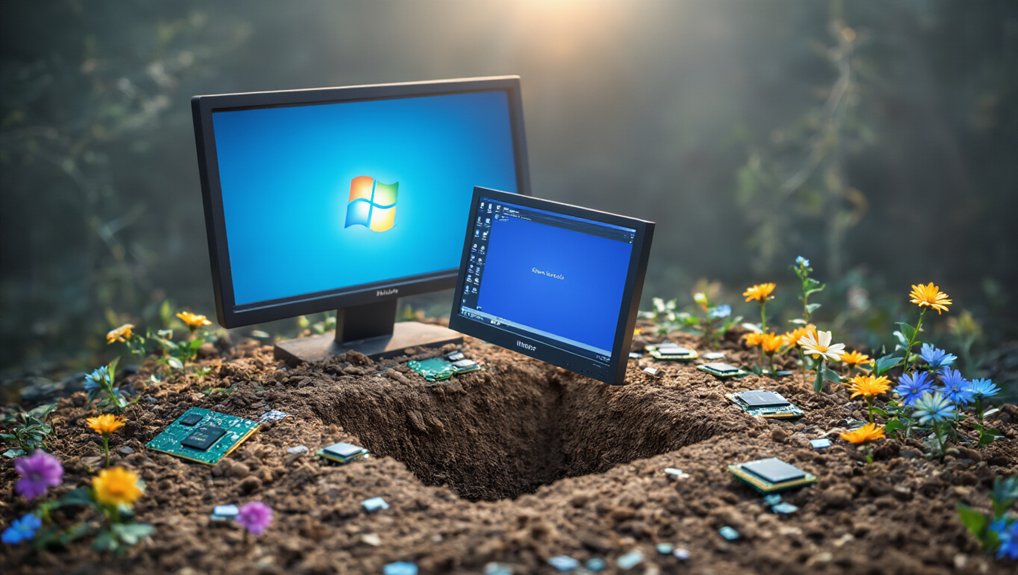

Microsoft has officially pulled the plug on one of computing’s most recognizable symbols of failure. The Blue Screen of Death (BSOD), which has terrorized Windows users since 1990, will be permanently retired in 2025. In its place? A stark black error screen that some tech insiders are already dubbing the “Black Death.” Progress, right?
The BSOD’s history stretches back to Windows 3, but it was Windows NT 3.1 in 1993 that established the format we’ve come to dread. Featuring white text on that unmistakable blue background, these screens have ruined countless deadlines and destroyed innumerable unsaved documents. Windows 95 made the blue screen famous as millions of new computer users experienced the joy of system crashes.
The blue screen of death: Microsoft’s most consistent feature since 1993, destroying productivity with ruthless efficiency.
Over the decades, Microsoft has tweaked the design. Windows 8 added QR codes and friendlier language—like putting a bow tie on a grizzly bear. Windows 10 briefly flirted with black screens in preview builds before returning to tradition. Windows 11 initially launched with black error screens before reverting to blue. They just couldn’t quit it.
The timing is interesting. Just months after the catastrophic July 2024 global outage that plastered blue screens across airports, news stations, and stock exchanges worldwide, Microsoft decides to rebrand its failure notification system. During that incident, Microsoft worked to resolve issues by addressing configuration changes in Azure’s backend infrastructure. Coincidence? Probably not.
The BSOD has transcended mere technical function to become a cultural icon. It’s the universal symbol for “your computer is toast.” Now it’s going the way of Clippy and dial-up modems. Perhaps the most memorable BSOD moment was when Bill Gates’ presentation crashed at COMDEX in 1998, earning applause from the audience as Windows 98 demonstrated its reliability in real-time.
For IT professionals, the screen’s technical data has been invaluable for diagnosing system failures caused by faulty drivers or hardware issues. The new black screen will maintain this functionality but with updated aesthetics.
Love it or hate it, the blue screen has been our constant companion through 34 years of Windows frustration. Pour one out for the BSOD—the most honest thing Microsoft ever created. It never pretended everything was fine when it wasn’t.
References
- https://en.wikipedia.org/wiki/Blue_screen_of_death
- https://www.cm-alliance.com/cybersecurity-blog/blue-screen-of-death-live-timeline-of-the-microsoft-outage-impact
- https://www.martinnobel.com/techresearch/windows-blue-screen-bsod-evolution
- https://www.youtube.com/watch?v=RoEaP7NgZHo
- https://www.solveiq.com/news/a-history-of-the-blue-screen-of-death/