
Apple Watch and Garmin watches are often compared when it comes to GPS accuracy. A recent test put both brands through tough challenges to see which one tracks better. The results were close, but each brand had its strengths.
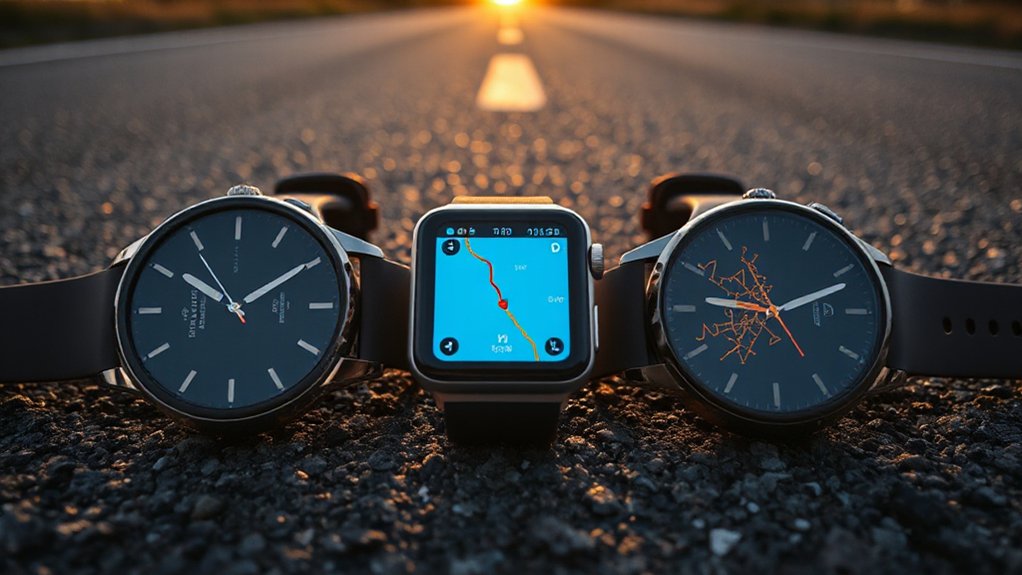
In a New York City urban GPS test, four watches recorded similar distances. The Apple Watch Ultra got 15.50km, the Series 8 got 15.56km, the Garmin Epix got 15.58km, and the Garmin Forerunner 955 got 15.43km. The numbers were close across all four devices.
Four watches, one city route — and the GPS results were nearly identical across every device tested.
Step counting told a different story. In three walks, testers counted steps manually and compared them to both watches. The Garmin Forerunner 265 was only off by 86 steps total. The Apple Watch 10 missed 465 steps. Garmin’s step tracking was clearly more accurate in this test.
Apple Watch models use different GPS technology depending on the version. The Series 9 and SE use single-band GPS. The Ultra 2 uses dual-band GPS, which reads both L1 and L5 satellite signals. That makes it more accurate in cities, forests, and canyons. Single-band GPS is still good enough for most everyday routes, with deviations under 0.1 mile.
During a full marathon, the Apple Watch Ultra 2 recorded 42.38km, adding about 0.4km of extra distance. Garmin uses SatIQ multiband GPS. Apple Watch splits time to the nearest second, while Garmin goes down to 10 milliseconds.
Heart rate results were mixed. The Apple Watch Ultra tracked an average heart rate of 168 BPM during the marathon. Garmin’s reading was higher, and Apple underestimated calories burned by 117.
For pace, Apple Watch was less consistent on instant pace readings. Run cadence was nearly identical, with Garmin at 168 steps per minute and Apple at 167.
Battery life is where Garmin pulls ahead. It also offers more detailed training and strength metrics. Apple Watch performs well, especially when a phone is nearby. Health experts recommend 10,000 steps daily as a foundational target for fitness and overall well-being.
Both watches track distance, pace, cadence, elevation, and power. Garmin watches also provide multiple calibration methods for their barometric altimeter, giving them an edge in elevation tracking accuracy for outdoor activities. Both devices generate large amounts of fitness data, and managing large datasets effectively can influence how accurately trends and performance insights are identified over time. Choosing between them depends on what a runner values most.
References
- https://www.dcrainmaker.com/2022/10/apple-watch-accuracy.html
- https://www.tomsguide.com/wellness/fitness-trackers/i-walked-7-000-steps-with-the-apple-watch-10-and-garmin-forerunner-265-and-one-was-way-more-accurate
- https://weartesters.com/can-i-use-my-apple-watch-for-running-which-is-best/
- https://www.youtube.com/watch?v=VkiWpHgfyfE
- https://www.techradar.com/health-fitness/i-ran-an-entire-marathon-with-a-garmin-an-apple-watch-and-strava-here-are-all-the-differences
- https://www.apple.com/watch/compare/
- https://www.petematheson.com/apple-watch-vs-garmin-after-1-year-i-was-wrong/