
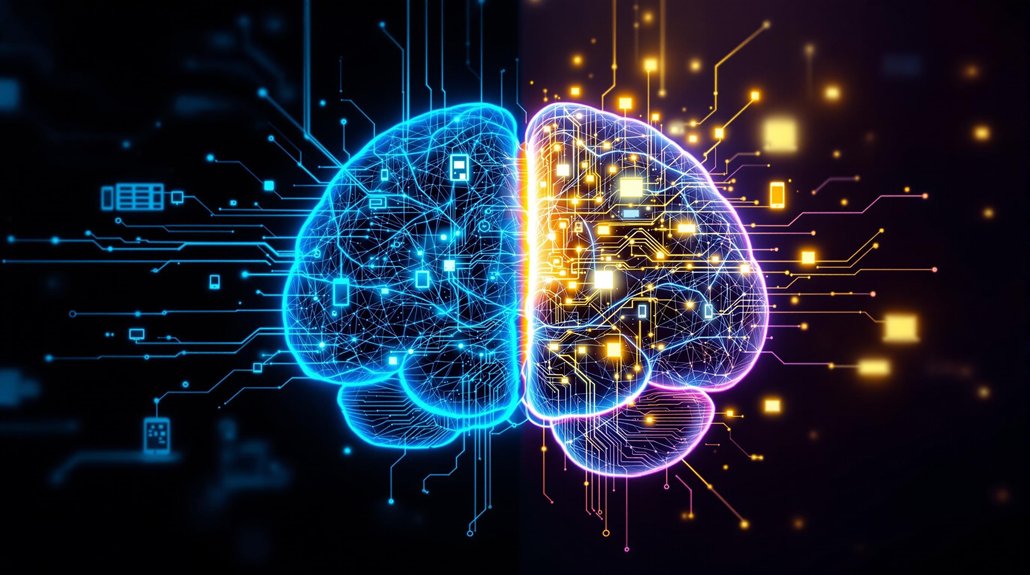
ChatGPT functions through advanced neural networks and transformer technology. It processes text using self-attention mechanisms and billions of calculations. The AI undergoes three training phases: unsupervised learning from vast text sources, supervised learning with examples, and reinforcement learning from human feedback. While it can maintain coherent conversations and discuss complex topics, ChatGPT still has limitations including factual errors and bias. These inner workings reveal both the power and challenges of modern AI.
Curiosity about artificial intelligence has grown as tools like ChatGPT become more common in daily life. Behind ChatGPT’s ability to chat like a human lies complex technology called the Generative Pre-trained Transformer. This system uses special neural networks designed to understand and generate human language.
ChatGPT processes text through something called a Transformer network. This network uses self-attention mechanisms to figure out how words relate to each other in sentences. When you ask ChatGPT a question, it performs billions of calculations to create a meaningful response.
Transformer networks power ChatGPT, analyzing word relationships and crunching billions of calculations to answer your questions.
The AI’s training happens in multiple stages. First, it learns from massive amounts of text from books, articles, and websites through unsupervised learning. Then it receives guidance through supervised learning, where it’s shown examples of good responses. Finally, human feedback helps refine its answers through a process called Reinforcement Learning from Human Feedback.
ChatGPT can remember what you’ve said earlier in your conversation thanks to its context window. This allows it to keep track of thousands of words at once and maintain a coherent discussion. However, it doesn’t remember anything after your conversation ends. The model differs from traditional NLP tools by offering more human-like responses rather than performing only specific limited tasks.
After basic training, ChatGPT goes through fine-tuning. This process adapts the model for specific uses and reduces harmful or biased outputs. The AI gets regular updates based on user feedback to improve its performance. With 100 trillion parameters, GPT-4 demonstrates significantly enhanced capabilities over its predecessor GPT-3, allowing for more nuanced understanding of complex topics.
While ChatGPT is impressive at creating human-like text on many topics, it has limitations. Sometimes it makes factual errors or creates plausible-sounding but incorrect information. It can also reflect biases found in its training data. The model doesn’t truly understand content the way humans do – it predicts what words should come next based on patterns it learned.
Despite these limitations, ChatGPT represents a major advancement in AI technology, showing how machines can process and generate language in increasingly sophisticated ways. Training these models requires substantial computational resources, leading to significant environmental concerns due to their massive electricity consumption.