Thermodynamic computing is emerging as a potential challenger to Nvidia’s AI dominance. This technology mimics brain efficiency by using natural energy fluctuations instead of traditional transistors. Companies like Extropic are developing chips that could process information thousands of times faster while using far less power than current methods. These innovations might soon appear as specialized cards in existing computers. The industry stands at the edge of an energy-efficient computing transformation that could reshape AI’s future landscape.
While today’s computers struggle with increasing energy demands, a new approach called thermodynamic computing is emerging that could change everything about how AI works. This innovative technology harnesses nature’s own processes to perform calculations, using the random movements and energy fluctuations of matter that traditional computers try to eliminate.
Companies like Extropic are developing systems that could process information thousands to millions of times faster than today’s digital computers while using dramatically less power. These thermodynamic computers work more like our brains, which are remarkably energy-efficient compared to digital machines.
Thermodynamic computers mirror the brain’s efficiency, promising lightning-fast processing while slashing energy consumption.
The technology couldn’t come at a better time. Traditional computing based on the von Neumann architecture, which separates memory and processing, is hitting physical limits. Moore’s Law, which predicted regular increases in computing power, is slowing down as transistors can’t get much smaller without running into atomic-scale problems.
Thermodynamic computing shows particular promise for AI applications. It can accelerate complex calculations used in neural networks and pattern recognition tasks that current systems struggle with. By implementing energy-based models directly as analog circuits, these systems could make current AI processes up to 10,000 times more efficient.
Unlike conventional systems that fight against noise, thermodynamic computing actively embraces natural fluctuations as essential components for efficient computation.
With computational power for AI currently doubling every 100 days, the need for more energy-efficient computing approaches has never been more urgent.
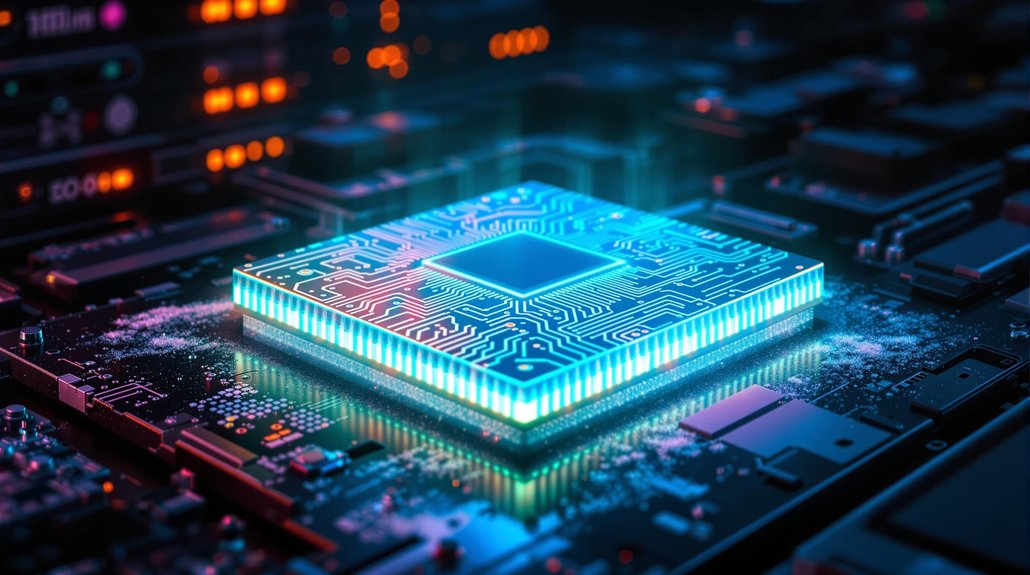
Extropic’s approach includes both superconducting chips and room-temperature semiconductor devices that will eventually fit into a GPU-like card in existing computers. Unlike today’s processors, superconducting chips only consume energy when being used or adjusted.
This technology isn’t ready for market yet. Researchers are still addressing challenges with materials, manufacturing, and designing AI algorithms specifically for thermodynamic hardware. The shift from theory to practical implementation is ongoing.
If successful, thermodynamic computing could transform our approach to computational power and potentially dethrone Nvidia’s dominance in AI hardware. It promises to enable advanced AI capabilities that are simply impossible with current technology, including large-scale Bayesian deep learning and automated statistical analysis, while solving the energy crisis that threatens to limit AI’s future growth.