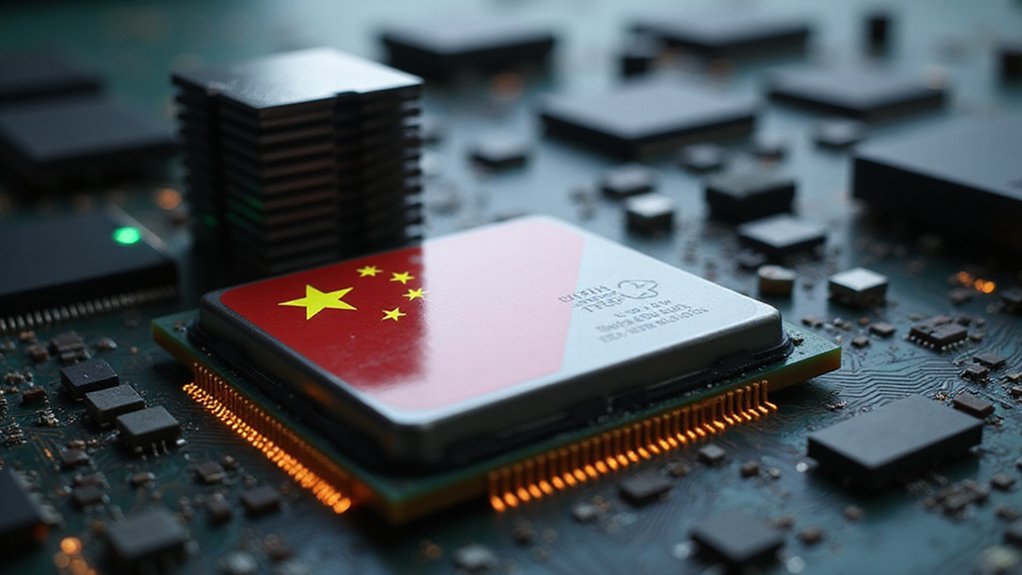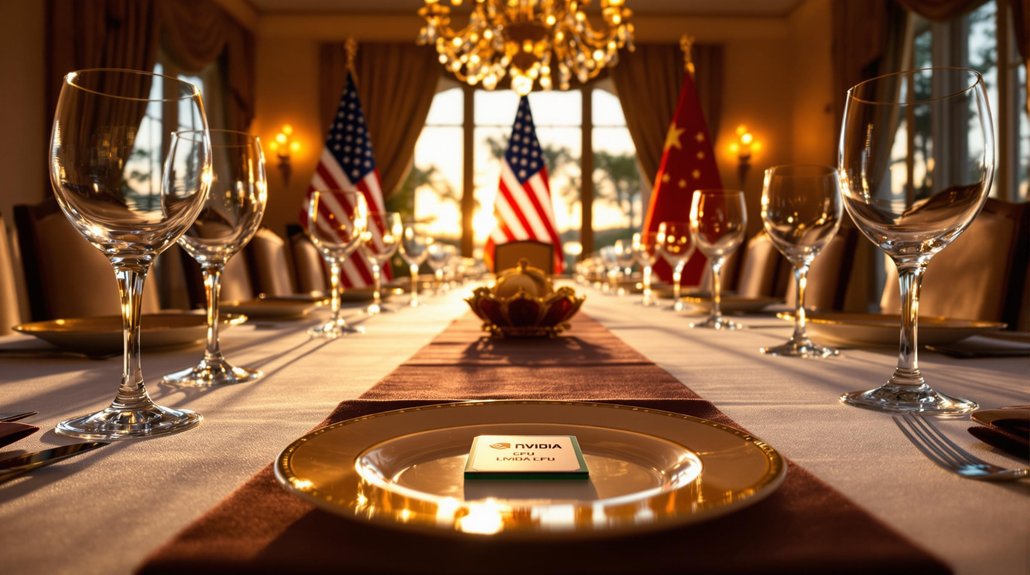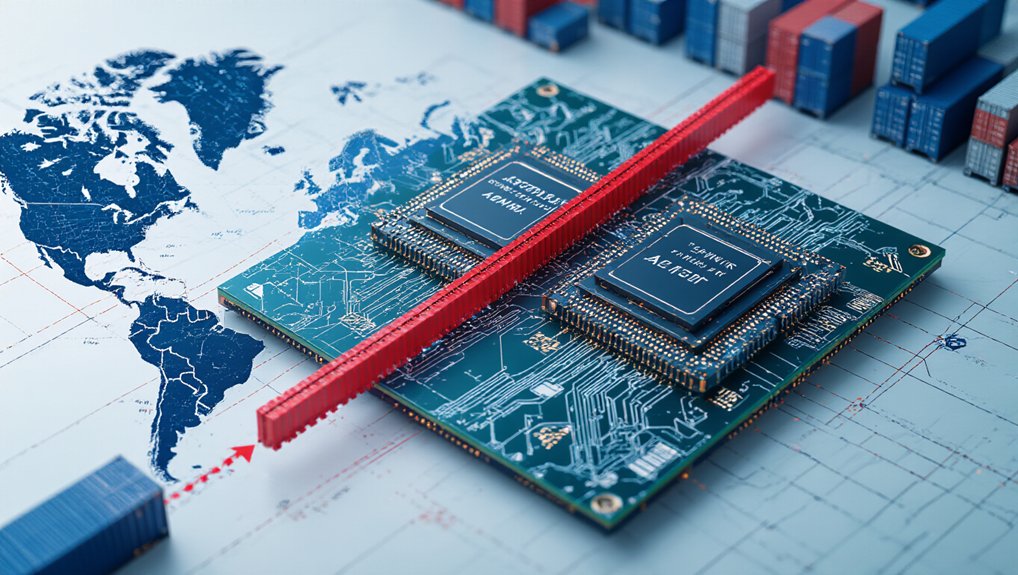

The United States is slamming the door shut on AI chip exports to Malaysia and Thailand. The Commerce Department’s draft regulation aims to cut off sneaky backdoor routes to China for advanced AI processors from companies like Nvidia.
Funny how China keeps finding ways around America’s tech blockades, isn’t it?
The tech cold war continues, with China playing a perpetual game of whack-a-mole against American export controls.
Intelligence reports spotted a troubling trend: Malaysian and Thai businesses becoming convenient “transit points” for chips ultimately headed to Beijing. Not exactly subtle.
Malaysian authorities recently had to investigate local Chinese firms training AI models on Nvidia-equipped servers. Because of course they were.
The proposed rules would block most high-end AI chip shipments to these Southeast Asian hubs while carving out exceptions for American companies and allies. Treasury Secretary indicated that allies can buy AI chips only if they’re used in US-approved data centers.
Can’t disrupt the whole supply chain, after all. That would be bad for business. The guidelines include a grace period before full enforcement kicks in – how thoughtful.
This isn’t America’s first rodeo. Previous restrictions in 2022 and 2023 expanded AI chip bans to over 40 countries.
Yet China keeps getting access through third-party data centers in Southeast Asia. Turns out geography is merely a suggestion when billions in tech advantages are at stake.
Washington’s approach tries threading a needle. Southeast Asia plays a vital role in global chip packaging and testing.
China’s open-source strategies have proven effective at navigating around U.S. restrictions while accelerating their AI development.
Mess that up, and everyone suffers. The exemptions aim to protect legitimate business while closing loopholes big enough to drive a server farm through.
The move reflects growing bipartisan consensus that China’s AI ambitions need checking. America wants to maintain its tech leadership – shocking, right?
But global tech firms worry about the increasing complexity of compliance. Try tracking a chip through today’s tangled supply chains.
Meanwhile, the tug-of-war continues. New rules, new workarounds, new rules again.
The great tech chess match of the century, with Southeast Asia caught in the middle. These restrictions are part of the broader trade war tensions between Washington and Beijing that have intensified in recent years. And chips? Just the most valuable pawns on the board.
References
- https://www.nationthailand.com/news/world/40052163
- https://timesofindia.indiatimes.com/world/us/us-eyes-ai-chip-curbs-on-malaysia-thailand-over-china-concerns/articleshow/122259734.cms
- https://w.media/malaysia-thailand-targeted-for-ai-chip-curbs-over-china-concerns-sources/
- https://www.latimes.com/business/story/2025-07-05/u-s-plans-ai-chip-curbs-on-malaysia-thailand-over-china-concerns
- https://www.financialexpress.com/world-news/us-mulling-ai-chip-export-curbs-on-malaysia-thailand-to-block-china-access/3903682/