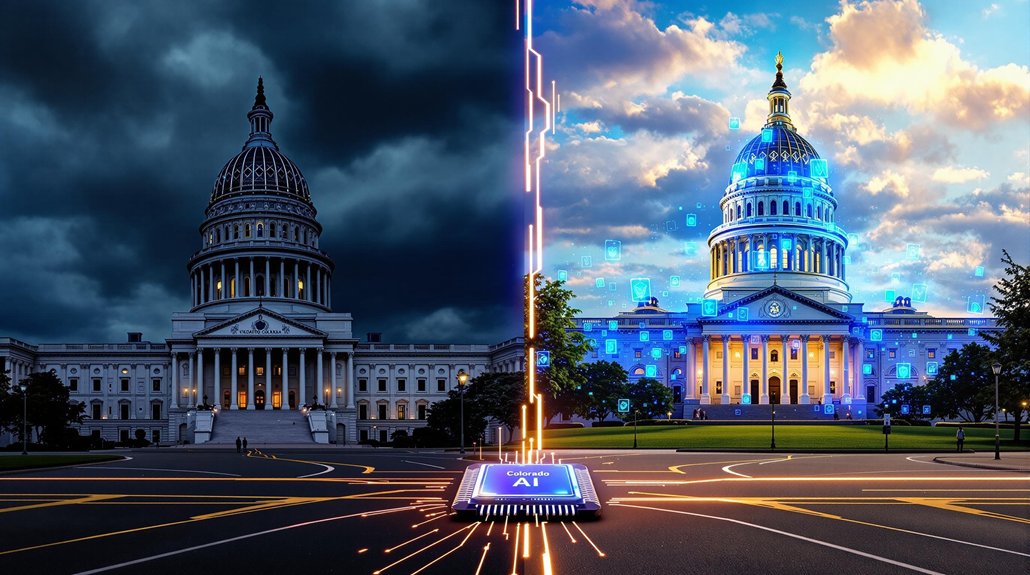

Virginia Governor Glenn Youngkin recently vetoed a bill aimed at regulating high-risk AI systems. He argued the regulations would hurt innovation and burden small businesses. Meanwhile, Colorado took the opposite approach, becoming the first state to implement extensive AI consumer protections. These contrasting decisions highlight America’s struggle to balance technological advancement with consumer safety. As more states consider AI legislation, the outcomes in Virginia and Colorado may influence which path others choose to follow.
Virginia Governor Glenn Youngkin has struck down a bill aimed at protecting consumers from harmful AI systems. The bill, known as the High-Risk Artificial Intelligence Developer and Deployer Act, would have regulated AI systems used in important areas like education, jobs, healthcare, and legal services.
The governor vetoed the legislation on March 24, 2025, arguing it would create a “burdensome artificial intelligence regulatory framework.” He claimed the bill would hurt innovation and economic growth in Virginia, especially for small companies and startups that don’t have large compliance teams. The veto aligns with the governor’s broader goal of enabling innovators rather than imposing restrictive regulations.
The vetoed bill would have required AI developers to take reasonable care to prevent discrimination. Companies would have needed to share information about their AI systems, including intended uses, benefits, and risks. AI deployers would have had to create risk management policies and tell consumers when AI was being used.
Governor Youngkin said existing state and federal laws already address discrimination and consumer protection concerns. He pointed to his January 2024 executive order that set rules for responsible AI use in government and created an AI task force to advise on governance issues. This approach focuses more on risk assessment processes to identify potential problems rather than implementing comprehensive regulations. The governor’s approach to AI regulation mirrors the Trump Administration’s philosophy that prioritizes innovation over strict oversight.
Existing laws suffice to protect consumers, while my executive order already established responsible AI guidelines for government use.
Had it passed, Virginia would have joined Colorado as the second state with extensive AI consumer protection laws. Virginia’s proposed regulations were similar to Colorado’s groundbreaking law but had fewer requirements overall.
The bill had narrow margins of victory in the legislature, passing by just two votes in the Senate and four in the House. Overriding the governor’s veto would require a two-thirds majority in both chambers, making it unlikely to become law.
The veto highlights growing tensions between those who want strong AI regulations to protect consumers and those who believe fewer regulations will help technology companies grow. As AI becomes more common in everyday life, the question of how to balance innovation with consumer protection remains a key challenge for lawmakers across the country.