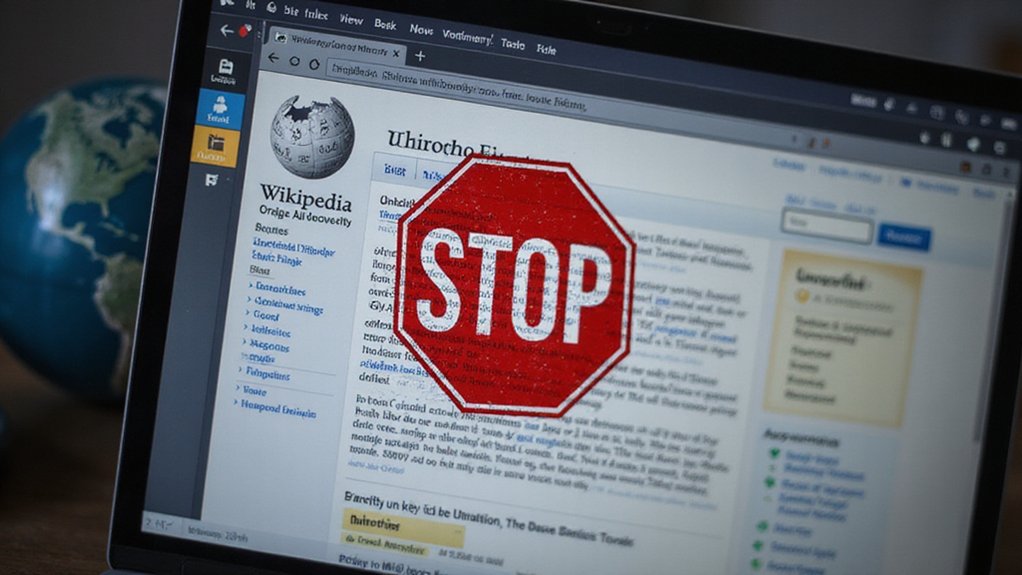
Wikipedia yanked the plug on its AI-generated article summaries faster than you can say “artificial intelligence.” The Wikimedia Foundation‘s test launch, which kicked off in early June 2025, crashed and burned after editors released a torrent of criticism that would make a grown chatbot cry.
The feature, branded as “Simple Article Summaries,” promised to make Wikipedia more accessible. AI would whip up concise summaries and slap them at the top of selected articles. Users had to click to expand these summaries, which came with a yellow “unverified” label. Like that would somehow make everything okay.
Wikipedia editors weren’t having it. The backlash was swift, brutal, and unanimous. “Very bad idea,” they said. “Absolutely not,” they typed furiously into discussion forums. Some editors gave their “strongest possible oppose” to the initiative, warning about “irreparable” and “irreversible” harm to Wikipedia’s reputation. They weren’t being dramatic – they were terrified about misinformation spreading like wildfire.
Wikipedia editors gave their strongest possible oppose, warning of irreparable harm to the encyclopedia’s reputation
The editorial community‘s message was crystal clear: AI summaries would degrade their beloved encyclopedia. They worried the bot-generated content would be worse than existing human summaries. Plus, it would add another layer of editorial complexity to an already complex system. Nobody asked for this headache.
Wikimedia Foundation got the message loud and clear. They suspended the entire experiment, halting any further tests involving AI content at article tops. The foundation pulled the plug just one day after announcing the test to the community. The organization emphasized that community trust and editorial feedback remain central to any changes. Translation: they remembered who actually runs Wikipedia.
The motivation behind the AI summaries wasn’t entirely bonkers. During Wikimania 2024, discussions explored how AI could help simplify dense, technical content for broader audiences. Some community members even saw potential if the content was clearly labeled and easily flagged for errors.
But the Wikipedia community has bigger fish to fry. They’re already drowning in low-quality AI contributions. WikiProject AI Cleanup exists specifically to deal with this mess. Forums regularly debate banning AI-generated articles and images, with only narrow exceptions for content about AI itself. Concerns about automation bias have heightened awareness of how trust in algorithms can reinforce discriminatory outcomes. The Russian Wikipedia even voted to ban article creation by anonymous and newly registered users in June 2023, with 114 in favor versus 63 against, specifically due to AI-related risks.
The experiment’s failure sends a message: Wikipedia editors won’t let robots take over their turf without a fight.
References
- https://gigazine.net/gsc_news/en/20250612-wikipedia-pauses-ai-generated-summaries
- https://en.wikipedia.org/wiki/Wikipedia:Wikipedia_Signpost/2025-05-01/In_focus
- https://en.wikipedia.org/wiki/Wikipedia:Artificial_intelligence
- https://en.wikipedia.org/wiki/Wikipedia:WikiProject_AI_Cleanup
- https://www.404media.co/wikipedia-pauses-ai-generated-summaries-after-editor-backlash/