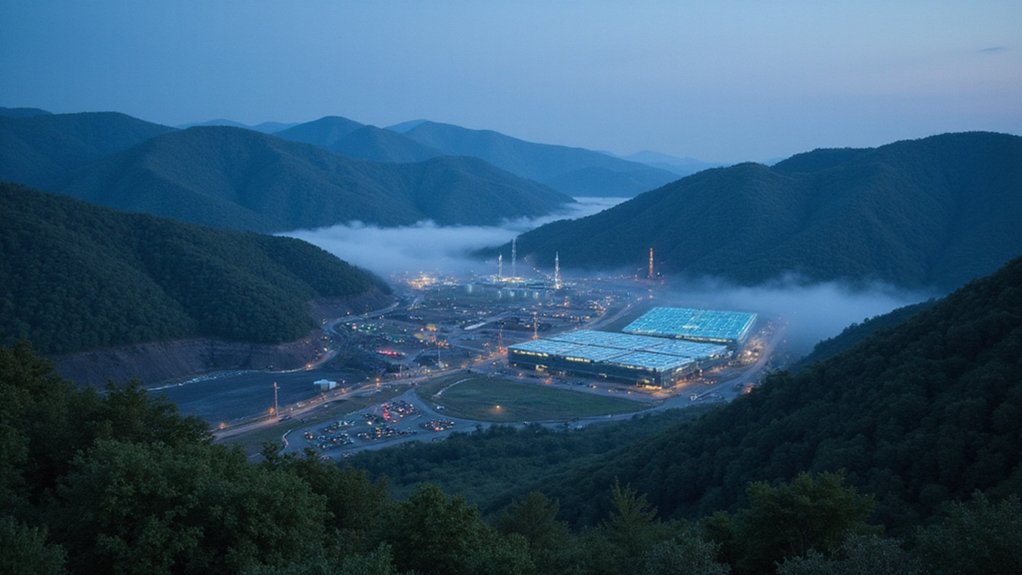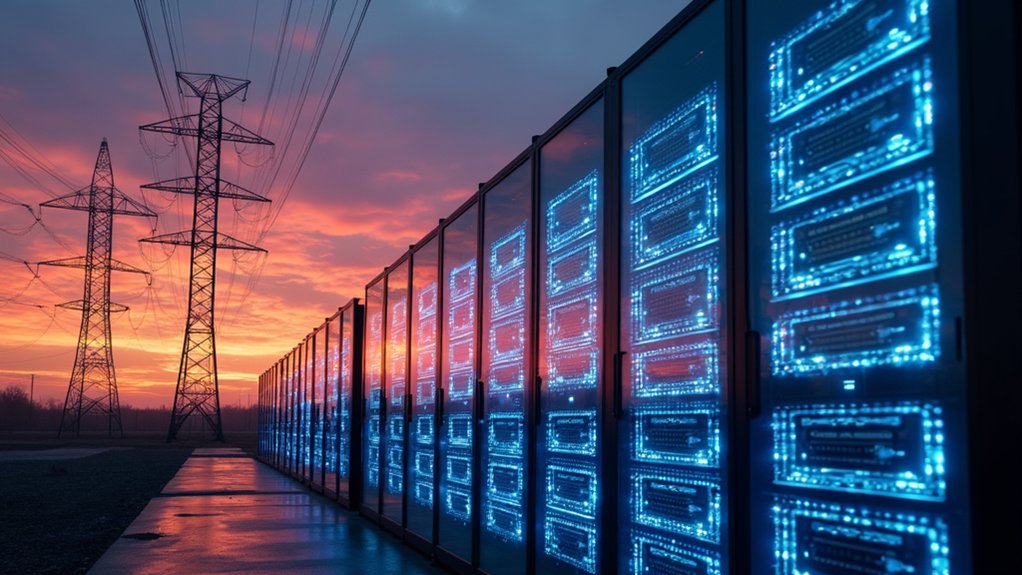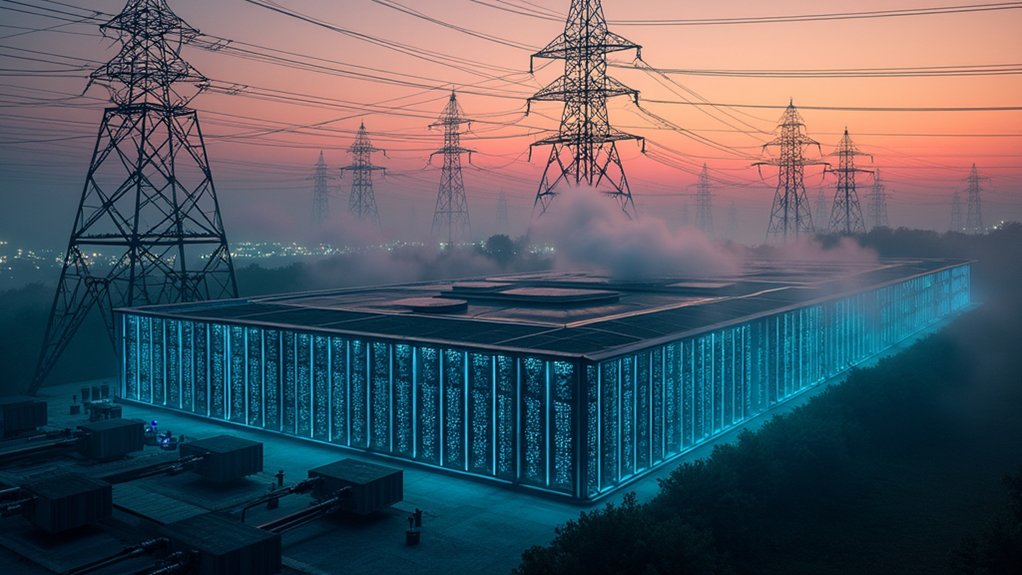

Progress comes with a price, and artificial intelligence‘s bill is landing on the world’s power grid. Data centers powering AI and other technologies consumed about 500 terawatt-hours of electricity in 2023. That’s more than double what they used between 2015 and 2019.
AI’s electricity appetite has more than doubled, straining global power grids at unprecedented rates.
The numbers are staggering. Data centers currently use as much electricity as entire countries like Germany or France. By 2030, they’ll need as much power as India, the world’s third-largest electricity user. The International Energy Agency predicts data center electricity consumption will reach 945 terawatt-hours by 2030. OPEC thinks it could triple to 1,500 terawatt-hours.
The United States hosts the world’s largest concentration of data centers, and they’re growing fast. American data centers will likely consume 88 terawatt-hours annually by 2030, about 1.6 times current levels. McKinsey’s projections are even higher. They estimate US server farms could need more than 600 terawatt-hours by decade’s end. In advanced economies, data centers will drive over 20% of growth in electricity demand through 2030.
AI is the main culprit behind this surge. The race to develop generative AI has created unprecedented demand for high-density data centers. AI-driven workloads will account for 27% of the data center market by 2027. Cloud services will represent 50%, while traditional workloads will make up 23%.
These growing power demands are straining electrical grids worldwide. Goldman Sachs forecasts global data center power demand will increase 50% by 2027, reaching 84 gigawatts. Some estimates suggest demand could rise 165% by 2030 compared to 2023 levels. Experts warn that AI computational power doubles every 100 days, creating an exponential energy demand that far outpaces our infrastructure’s capacity.
The environmental impact is significant. Under current energy policies, AI’s electricity demands could add 1.7 gigatons of greenhouse gas emissions starting in 2025. The United States alone will need tens of gigawatts of new power plant capacity just for AI operations.
The situation has already prompted unusual solutions. Microsoft struck a deal to reopen the Three Mile Island nuclear plant specifically to power its AI operations. If electricity supply fails to keep pace with demand, steep cost increases could hurt both consumers and businesses while potentially curbing the AI industry’s growth.
As the International Monetary Fund notes, AI promises economic growth and productivity gains. But the technology’s hidden power hunger is reshaping global electricity infrastructure in ways few anticipated.
References
- https://www.imf.org/en/Blogs/Articles/2025/05/13/ai-needs-more-abundant-power-supplies-to-keep-driving-economic-growth
- https://www.iea.org/news/ai-is-set-to-drive-surging-electricity-demand-from-data-centres-while-offering-the-potential-to-transform-how-the-energy-sector-works
- https://www.morganlewis.com/blogs/datacenterbytes/2025/02/artificial-intelligence-and-data-centers-predicted-to-drive-record-high-energy-demand
- https://www.energypolicy.columbia.edu/projecting-the-electricity-demand-growth-of-generative-ai-large-language-models-in-the-us/
- https://www.asme.org/topics-resources/content/energy-blog-is-ai-too-power-hungry-for-our-own-good