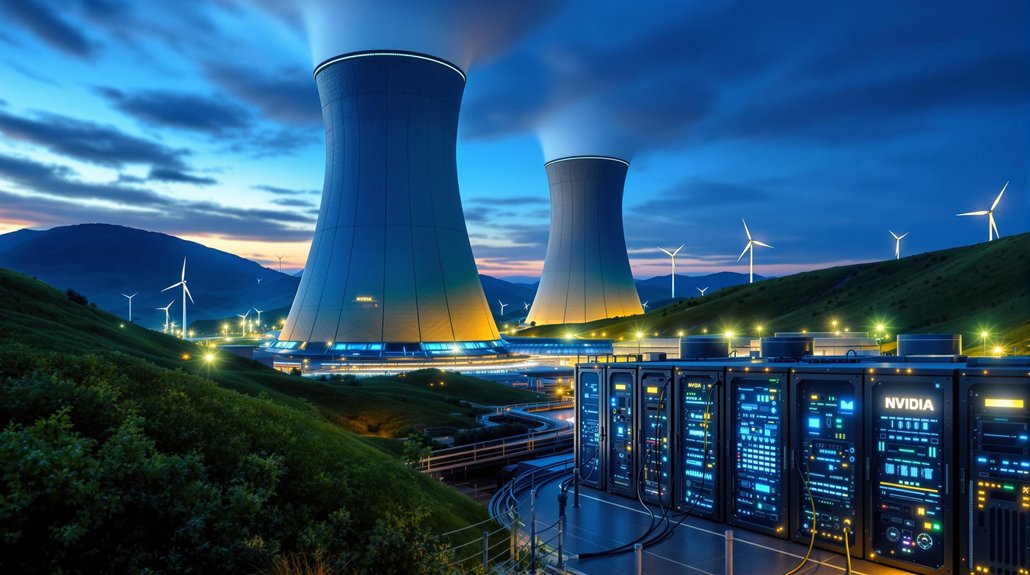

The integration of AI at Diablo Canyon nuclear plant marks a major shift in America’s energy landscape. Using NVIDIA H100 GPUs and Neutron Enterprise AI tools, this first-of-its-kind facility is responding to surging power demands from tech giants. Microsoft and Amazon are already securing nuclear partnerships as data centers require enormous, stable energy supplies. Meanwhile, smaller modular reactors offer flexible alternatives despite regulatory concerns. This technological marriage may redefine America’s power priorities.
Diablo Canyon power plant has disrupted the traditional energy landscape by becoming the first U.S. nuclear facility to integrate advanced AI technology. The plant has installed NVIDIA H100 GPUs to power AI operations, marking a significant shift in how nuclear facilities operate. The Neutron Enterprise AI tool developed by Atomic Canyon aims to navigate millions of NRC pages, significantly reducing database search times. A tool called Neutron Enterprise now helps staff navigate complex regulatory reports, making daily operations more efficient.
This integration comes as AI data centers are causing electricity demand to surge across the country. Experts predict energy needs for AI will triple by 2030. Training these sophisticated AI systems requires substantial energy consumption, with models like GPT-3 using up to 1,300 megawatt hours during development. These data centers require stable, uninterrupted power that’s carbon-free – making nuclear energy an attractive option. Nuclear power’s high energy density and reliability match perfectly with AI’s growing appetite for electricity.
Tech giants aren’t waiting to secure this power. Microsoft recently signed a 20-year contract with Three Mile Island‘s reactor, while other companies like Amazon are forming similar partnerships. These agreements aim to provide the estimated 50 gigawatts of power AI data centers will soon demand.
Tech giants race to lock down nuclear partnerships as AI’s voracious power appetite threatens to outpace traditional energy supplies.
Small modular reactors (SMRs) are emerging as a flexible solution to meet these needs. Unlike traditional nuclear plants, SMRs offer shorter construction times, lower costs, and better scalability. These innovative reactors often feature passive safety systems that can default to safe modes without requiring power. They’re designed to power regional AI data hubs without the massive infrastructure requirements of conventional reactors.
However, challenges remain. Lawmakers worry about safety and have called for stricter regulations as AI expands into nuclear systems. Critics question whether AI is necessary in reactor operations that already function well with traditional control systems. The high initial investment and complex regulations also slow progress.
Regulators from the U.S., U.K., and Canada are working together to create safety frameworks for this new technology. Currently, AI applications are limited to data processing and compliance rather than direct operational control of reactors.
As the partnership between AI and nuclear power grows, it promises to reshape America’s energy future, balancing the tech industry’s massive power demands with the need for reliable, carbon-free electricity sources.