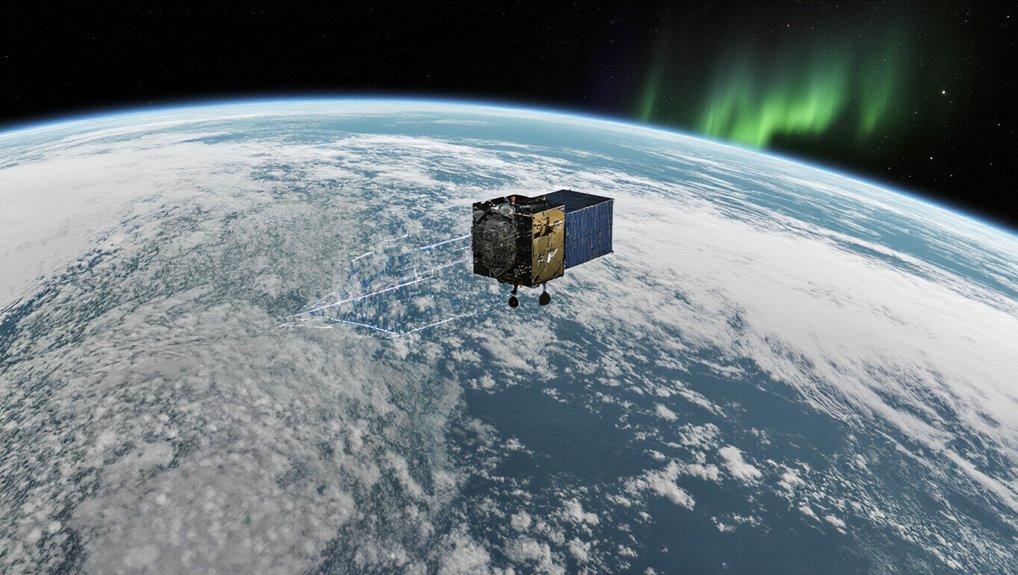

A $88 million satellite funded by Jeff Bezos has disappeared into the void of space. MethaneSAT, launched in March 2024, simply stopped talking to its controllers around June 20, 2025. Ground teams tried desperately to reestablish contact for over a week. No luck. By July 1, they confirmed what everyone feared: total power loss. The satellite was last seen over Svalbard, Norway, before it ghosted Earth completely.
The spacecraft wasn’t just another of Bezos’ expensive toys. This one actually mattered. Jointly funded by Bezos’ Earth Fund, the New Zealand government, and the Environmental Defense Fund, MethaneSAT was designed to monitor global methane emissions with unprecedented detail. The satellite aimed to enforce commitments from 50 oil and gas firms that made pledges at the COP28 climate summit in December 2023. Turns out methane is the second-biggest contributor to climate change after carbon dioxide. Who knew?
Unlike Bezos’ other extravagant ventures, MethaneSAT actually had a meaningful climate mission tracking our planet’s second-worst greenhouse gas.
During its short life, MethaneSAT actually did its job. It gathered high-resolution data from drilling sites, pipelines, and processing plants worldwide. The satellite helped develop algorithms to calculate emissions and was supposed to hold countries accountable for their methane reduction pledges. Key word: supposed to.
The environmental community is, predictably, putting on a brave face. The Environmental Defense Fund called it a “setback, not a failure.” That’s a pretty glass-half-full way of looking at $88 million floating aimlessly through space. They’re promising to use the algorithms and software developed for future projects. Silver linings and all that. The team developed Google Cloud-powered algorithms specifically designed to monitor methane emissions in unprecedented detail. The loss comes at a critical time when renewable energy has just surpassed fossil fuels in U.S. electricity production for the first time in history.
Space missions are risky business. The satellite had been experiencing technical problems before its final disappearing act. Still, losing contact completely wasn’t in anyone’s mission objectives.
Despite the satellite’s untimely demise, the project did advance satellite emissions monitoring techniques. Scientists continue analyzing the data it sent before vanishing. The mission also created a template for international cooperation on climate satellite projects.
References
- https://timesofindia.indiatimes.com/science/methane-tracking-satellite-backed-by-bezos-lost-in-space/articleshow/122203727.cms
- https://www.engadget.com/science/space/bezos-funded-satellite-tracking-methane-emissions-loses-power-in-space-130034666.html
- https://www.dw.com/en/methane-tracking-satellite-backed-by-jeff-bezos-lost-in-space/a-73113795
- https://phys.org/news/2025-07-bezos-methane-tracking-satellite-lost.html
- https://kfgo.com/2025/07/01/exclusive-bezos-backed-methane-tracking-satellite-is-lost-in-space/