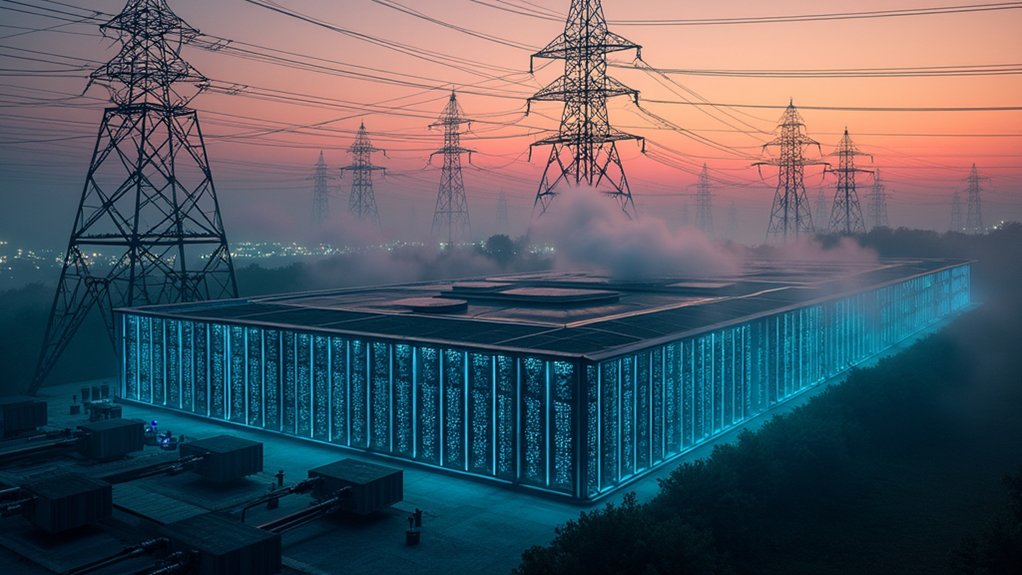

Scientists have made a breakthrough with laser technology that could change how America gets its energy. The National Ignition Facility used 192 powerful lasers to create more energy than they put in—a process called fusion ignition. This method produces clean nuclear energy without dangerous radioactive waste or meltdown risks. The technology could provide unlimited power while helping meet climate goals. The question remains: when will this transformative approach reach American homes?
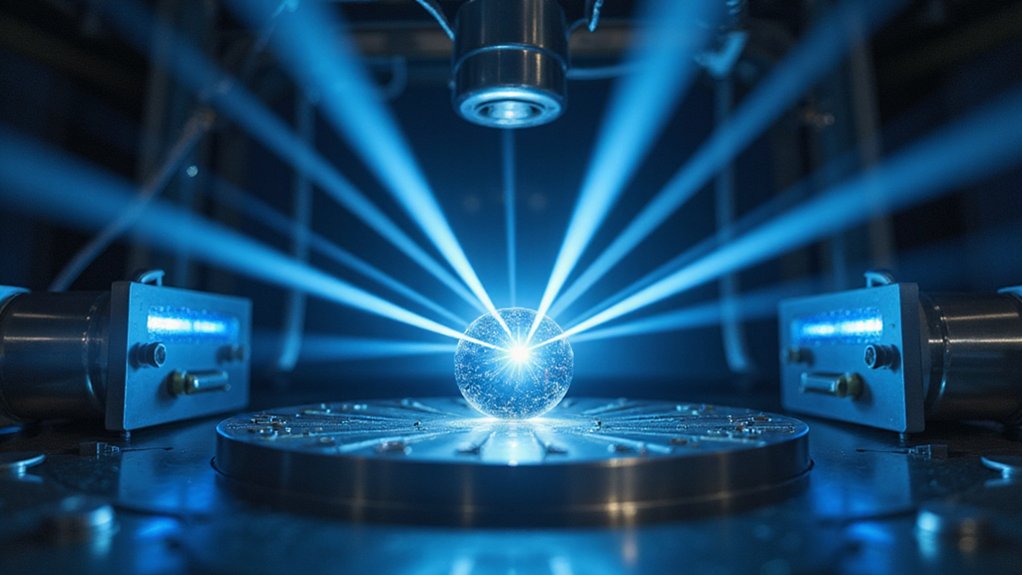
Scientists at the National Ignition Facility have achieved a major breakthrough in nuclear fusion technology. On February 23, 2025, they reached fusion ignition for the seventh time, setting a new record. The facility used 192 powerful lasers to create energy similar to what’s found in the core of stars.
This achievement shows how laser-driven fusion is becoming more reliable. The process works by using lasers to compress and heat hydrogen fuel to extreme temperatures. When the fuel is compressed, it moves at speeds over 400 kilometers per second, which is faster than most rockets.
The lasers create x-rays that push on a tiny fuel capsule from all sides. This causes it to implode, creating the perfect conditions for fusion to happen. The fuel contains special forms of hydrogen called deuterium and tritium.
What’s exciting is that the energy produced was 2.44 times more than the laser energy used to start the reaction. This is a major step toward making fusion energy practical for everyday use.
The fusion reaction’s 2.44-fold energy return marks a crucial advancement toward practical, everyday clean energy solutions.
Private companies are now racing to develop this technology for commercial use. The National Ignition Facility remains the only entity to date that has achieved actual energy breakeven in fusion reactions. Some researchers are even exploring a different approach using hydrogen and boron. This method could generate electricity directly, without the need for steam or turbines. The approach represents one of several inertial confinement methods being developed alongside magnetic confinement systems.
Fusion energy offers major benefits over current nuclear power. It doesn’t create long-lasting radioactive waste and can’t have dangerous meltdowns. It’s also carbon-free, which helps fight climate change while providing energy security. Nuclear fusion aligns with the goal set by COP28 delegates to expand clean energy capacity for meeting growing global demand.
Experts now believe commercial fusion power plants could become reality within the next twenty years. This would transform energy markets by providing an almost limitless power source. Recent advances in laser design and precision have solved many technical challenges that once seemed impossible.
If development continues at this pace, laser fusion could eventually become a cornerstone of America’s clean energy future, offering an abundant energy supply with minimal environmental impact.
References
- https://ignition-news.com/the-state-of-fusion-2025/
- https://lasers.llnl.gov/science/achieving-fusion-ignition
- https://www.science.org/content/article/private-companies-aim-demonstrate-working-fusion-reactors-2025
- https://www.globenewswire.com/news-release/2025/04/30/3071147/0/en/Nuclear-Fusion-Energy-Industry-Forecast-2025-2045-Unprecedented-Private-Capital-Technological-Breakthroughs-and-Climate-Urgency-are-Accelerating-Development-Timelines.html
- https://world-nuclear.org/information-library/current-and-future-generation/nuclear-fusion-power